

Buying at auction is different from making a normal offer. You have less room to fix mistakes after you bid.
If you win at a Queensland auction, the contract is binding. There is no cooling-off period and normally no finance or building and pest condition to fall back on. Before auction day, you need to check the contract, inspect the property, confirm the finance and decide the highest price you will pay.
I can help you check what your pre-approval covers, whether the bank will accept the property and how much cash you need. I cannot tell you what the property is worth, so you still need to research recent sales and set your own limit.
This guide covers the 7 checks to complete before bidding, what to have ready on auction day and what happens after the hammer falls.
![What No One Tells You About Auctions! [AVOID THESE MISTAKES IN 2026]](https://i.ytimg.com/vi/vZkRu0vWzxg/maxresdefault.jpg)
What Are Property Auctions?
A property auction is a public sale where registered buyers bid against each other. If the reserve is met and the auctioneer accepts the highest bid, the winning bidder signs the contract and pays the deposit required under the auction conditions.
The rule to remember
Buying at auction is final. If you win, you must buy the property. There is no cooling-off period and no finance or building and pest condition. Check the contract, property and loan before you bid. Set your top price. Do not go over it.
Private treaty versus a Queensland auction
A private treaty is a regular property sale. You make an offer through the real estate agent and can ask for conditions, such as finance or building and pest. The seller can accept, reject or negotiate your offer. An auction works differently.
| Question | Regular sale (private treaty) | Queensland auction |
|---|---|---|
| Cooling off | Usually 5 business days. Some exceptions apply. | None for the winning bidder. |
| Finance and inspection clauses | You can negotiate finance, building and pest or other conditions before signing. | None if you win at auction. The Queensland Government says the winner must settle even if inspections fail or they cannot afford the purchase. |
| Seller disclosure | The seller normally gives you the required documents before you sign. | If you register before the auction, the seller must give you the documents before it starts. Different rules apply if you register late. |
| Deposit | Paid as the contract requires, commonly after the contract becomes binding. | Paid after the win in the amount and method stated in the auction conditions. Confirm the transfer limit before auction day. |
| Settlement timing | You can negotiate the settlement date. The Queensland Government says 30 to 90 days is common, with 4 to 6 weeks the most usual. | The auction contract sets the date. In Queensland, 30 to 45 days is common. Check it before you bid and ask your solicitor to negotiate any change beforehand. |
| Price guide | The property may be advertised with a price or range. | Queensland law prohibits the seller or agent from giving a price guide for the auction property. A portal price filter is not a guide. |
Once you win, you must settle, even if an inspection finds a problem, you change your mind or you cannot get the money. Read the official Queensland guide to buying property at auction. Then ask your solicitor how the rules apply to your contract.
1. Know what your pre-approval actually covers
A pre-approval is a good start. It is not a green light to bid up to the number on the letter.
Buyers often get caught here. The lender may have checked your income and debts, but not the property. It may still need a valuation, updated payslips or lenders mortgage insurance approval. If your job, spending or deposit has changed, that can matter too.
You also need to check the property before you bid. A lender may be happy with your finances but reject the home or lend less against it. See the section below on checking whether the bank can finance the property.
Recheck your pre-approval before you bid
- Expiry date: Is it within 14 days of expiring? Ask your broker whether it needs to be refreshed.
- Job changes: Have you changed roles, hours or employment type, or started probation?
- New debts: Have you opened a credit card, car loan or buy now, pay later account?
- Spending or deposit changes: Has your regular spending changed, or is your available deposit lower?
- Rate changes: Have home loan rates moved since approval? The lender may need to test your ability to repay again.
- Gifted funds: If part of the deposit is a gift, has the money reached your account and is the evidence ready?
- Fixed rate: If you plan to fix, have you checked whether a rate lock is available and worthwhile?
Remember: a lender's "yes" to you is not always a "yes" to the property. Check the property with your broker before you bid.
Moneysmart explains that pre-approval does not commit the lender. Our guide to getting a fully assessed home loan pre-approval shows you what to check before you bid.
Keep these numbers ready: your pre-approval amount, available cash, buying costs, expected repayments and the cash buffer you want left after settlement. Do not set the final bid limit yet. First read the contract, inspect the property and check that the lender will accept it. Later in this guide, you will bring everything together and set the real walk away number.
Be careful with automated pre-approvals
You can spend 6 months saving, get pre-approved, win at auction and still have the bank say no. Nothing about your position needs to have changed. The problem may be that no credit officer assessed the application in the first place.
Some lenders issue automated pre-approvals. They are fast and they look official, but a computer-generated result is not the same as a fully assessed pre-approval. Before you bid, ask whether a bank credit officer has reviewed your income, debts, deposit and supporting documents.
My view: if no person at the lender has looked at the file, do not treat the pre-approval as auction-ready.
2. Read the contract and seller disclosure before auction day
Queensland's seller disclosure rules started on 1 August 2025. The seller will usually give you a Form 2 and set documents before you sign. At auction, the timing depends on when you register.
The disclosure pack is useful, but it does not cover every risk. It is not a building report or a flood guarantee. The official Form 2 tells buyers to make their own checks.
The contract needs to go to a Queensland solicitor before the auction, not after. Ask them to check the title, easements, special terms, settlement date and deposit. Ask which searches are needed too. That may include title, land tax clearance and pool checks. They should also explain what can happen if you cannot settle. Put any agreed change in writing before you bid.
Ask again on auction day: "Has anything in the contract changed since my solicitor checked it?" The auctioneer must announce the conditions of sale, but I would still ask the question.
Your pre-auction support team
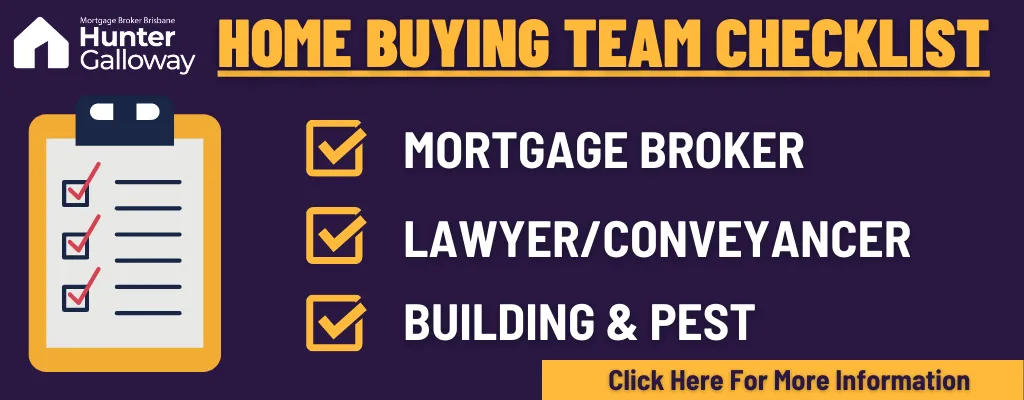
- a Queensland solicitor to review the contract, disclosure and agreed variations
- a mortgage broker to check the approval conditions, property type and valuation risk
- an independent building and pest inspector to explain the defects and likely repair work
- an experienced bidder or buyer's agent if you need someone else to hold the walk away limit
Use the official Queensland seller disclosure scheme guide and the Queensland Seller Disclosure Statement Form 2.
Be careful for 2 business days after a failed auction
If you registered to bid and then sign a contract in this period, you do not get the normal cooling-off period. Calling it a private sale does not change this. Check the Queensland cooling off exemptions before you sign.
Check to see if you are eligible for a home loan
3. Inspect what you are buying
At a private sale you may negotiate a building and pest condition. At auction you should assume the inspections need to be finished before bidding.

What I would check before bidding
- get your own independent building and pest inspection
- get quotes for urgent repairs or specialist advice where the report recommends it
- check flood, overland flow and insurance for the exact address
- for a unit, read the body corporate records, insurance and planned works
- check any pool, approvals, easements and included fixtures with your solicitor
- if the property is tenanted, read the lease and confirm when vacant possession is available
For a house in Brisbane's inner south, get a Brisbane City Council FloodWise Property Report. A low river or creek risk does not rule out water flowing over the land. Flooding can also affect access and insurance. Get an insurance quote for the address.

For a Gold Coast unit, get a body corporate records search. Check the insurance, defects, planned works, special levies, cladding, leaks and past disputes. You can also search body corporate adjudication orders.
Our FloodWise Property Report guide, apartment mortgage guide and body corporate guide explain what the bank may check next.
Use our 11-point auction bidding checklist to make sure the inspection, finance, valuation, legal and deposit jobs are all finished before auction day.
4. Check whether the bank can finance this property
The lender has to be comfortable with two things: you and the property. A pre-approval mainly deals with you. The property still has to pass the lender's checks.
Your income may be fine and the bank can still reject the property. It may also value the property below your winning bid.
Send your broker the listing link, address, contract, floor plan and anything you have from the body corporate. That gives us enough detail to check the property against the lender's rules.
Property issues to check with your broker
- Small apartments and studios: lenders may set a minimum internal living area, require a larger deposit or rule out the property.
- High-density or restricted developments: a lender may restrict the postcode or building, or already have too much exposure in the development.
- Dual-key and serviced apartments: some lenders treat these as specialised or unacceptable security.
- Flood exposure: this can narrow your insurance and lender options, change the valuation and reduce how much the lender will advance.
- Heritage and character properties: restrictions can affect the valuation, future saleability and maximum loan-to-value ratio.
- Existing tenancy: if you plan to live there but the lease continues after settlement, tell your broker. It may affect the loan type, borrowing limit or rate.
- Home Guarantee eligibility: buyers using the scheme must move in within 6 months of settlement. A tenanted property can still work if the lease ends in time. If it does not, the lender may require LMI. Check our Home Guarantee Scheme eligibility guide before bidding.
- Unusual titles or property use: company title, leasehold, acreage, commercial use or management agreements may narrow the lender options.
Ask whether an upfront valuation is available and useful. Small units, high-density buildings, heritage properties and flood-affected homes may need a full valuation rather than a quick automated estimate. That takes longer and may expose a lower value.
If the valuation comes back below the winning bid, the lender will usually calculate the loan using the lower value. You cover the gap. For example, if you bid $800,000 and the lender values the property at $760,000, the missing $40,000 does not automatically get added to the loan.
See how to challenge a bank valuation and calculate the cash shortfall. Then review the difference between a letter and a fully assessed pre-approval before auction day.
Before moving on, write down the maximum purchase price the lender will support, the cash deposit you need and any valuation gap you would have to cover.
5. Set the real walk away number
You should now have the facts from the first 4 rules: what the pre-approval covers, what is in the contract, what the property needs and what the lender will accept. Now turn those checks into one firm bid limit.
I cannot tell a buyer what a property is worth. My job is to confirm the finance limit and show them where the risks are. The price decision has to come from the sales evidence and what they are comfortable paying.
An auction does not prove the property's value. It only shows what the final competing bidder was willing to pay on that day.
Start with recent settled sales for similar homes. Do not rely on the portal's price filter or the agent's reaction to your number. In Queensland, the seller and agent cannot give you an auction price guide. The online search bracket is not a guide. Use our Brisbane property market research checklist to work through the evidence.

Property-value research checklist
- collect 3 to 5 recent settled sales for the same property type and nearby streets
- compare land size, internal area, bedrooms, bathrooms, parking, condition and renovation quality
- check the property's previous sale and listing history
- separate current asking prices from settled evidence
- adjust for flood exposure, defects, easements, body corporate levies and immediate repairs
- ask whether an upfront lender valuation is available before auction day
Your walk away price is the lowest of these 4 limits
A lender valuation can expose a shortfall or property-policy problem, but it does not tell you what the home is worth to you.
- Market limit: what the best comparable settled sales support.
- Finance limit: what you can buy after loan size, deposit, duty and costs.
- Property risk: cash needed for repairs, flood insurance, levies or other known issues.
- Comfort limit: the repayment and buffer you can live with after the excitement is gone.
Whichever of those 4 numbers is lowest is your walk away price. Write it down. If you know you might chase the property, give the bidding job to someone who will stop.

Questions worth asking the selling agent
- Why is the owner selling, and what settlement timing do they want?
- Will the seller consider a written offer before auction?
- Have the contract or disclosure documents changed during the campaign?
- Are there known notices, defects, insurance issues or body corporate works?
- Will the seller agree before the auction to a different deposit amount or settlement date?
The agent works for the seller. Ask useful questions, but keep your pre-approval amount and walk away price private.
Calculate the upfront costs with our Queensland stamp duty calculator and home deposit calculator. Do this before you set your top price.
6. Sort registration, authority and deposit money
You must register before you can bid in Queensland. Ask the agent what ID to bring and when registration closes.
If you are buying jointly but your partner will not be there, ask the auctioneer for the required Authority to Bid form before auction day. Get your solicitor to check the buyer names and the form. Do the same if you are bidding for another person, a company or a trust. Register in the capacity that will appear on the contract. Do not win in one name and assume you can add someone later. That can create contract, duty and lending problems.
Where does the auction deposit come from?
Your own available money. The lender does not send the deposit on auction day. The approved loan funds are provided at settlement.
The auction deposit is not an extra fee. It forms part of the purchase price and is usually credited at settlement. You still need enough cash for transfer duty, legal fees, settlement adjustments and other buying costs. If the bank valuation is low, you may also need to cover a shortfall.
How do you transfer it on a Saturday?
Ask the agent before the auction. Confirm the deposit amount, account details, payment method and deadline. The Queensland Government also tells buyers to check the deposit percentage and payment method before auction day.
Usually, the easiest option is to call your bank and arrange a one-off increase to your transfer limit. Some banks can do this over the phone, sometimes on the day. Do not assume yours will. Check before the weekend and ask how long the higher limit will stay in place.
If that will not work, ask the agent whether the seller will agree to a lower deposit, a bank cheque or another payment method. Some agents use a direct-debit or auction-payment system. The contract controls what is accepted, so get any change agreed in writing before you bid.
The official Queensland Property Occupations Regulation 2014 covers bidder registration and vendor bids.
7. Bid to your plan, not the auctioneer's rhythm
The auctioneer works for the seller. Your job is simpler: make clear bids, keep track of the full price and stop at the number you set earlier.
If you have never bid before, go and watch 2 or 3 auctions first. It is much easier to understand the pace, vendor bids and pressure when your own deposit is not on the line.

Vendor bids are legal in Queensland before the reserve is reached, but the auctioneer must announce them. A vendor bid tells you the property has not reached reserve. It is not evidence another buyer is willing to pay that amount. Vendor bids above reserve and dummy bids are illegal.
If the auctioneer says the property is "on the market", the reserve has been reached and the property must sell to the highest bidder. The auctioneer does not have to make this announcement. If you are unsure, ask whether the property is on the market.
If the property is passed in, the highest bidder may be invited to negotiate first. Slow down. The 2 business day cooling off exemption can catch a registered bidder here. Call your solicitor before signing the post-auction contract.
Read the Queensland Government explanation of vendor bids and illegal dummy bids.
![Buying At Auction Story [DON'T MAKE THIS MISTAKE]](https://i.ytimg.com/vi/TLlAAhwR830/maxresdefault.jpg)
Would you like to learn about your situation?
What happens after the hammer falls?
If you win
- sign the contract in the correct buyer name
- pay the deposit exactly as required
- send the signed contract to your solicitor
- send the contract to your broker or lender
- order any outstanding valuation immediately
- confirm the settlement date and document deadlines
- arrange building insurance straight away. In most Queensland contracts, risk passes at 5pm on the next business day. Ask your solicitor to confirm your contract
- keep the cash buffer untouched until settlement
If your finance fails, call your solicitor and broker at once. You may need more cash or another lender before settlement. You can ask the seller for more time, but they do not have to agree.
If you fail to settle, the consequences can go beyond losing the deposit. You may be pursued for the cost of re-auctioning the property, a shortfall on the later sale or the amount of your winning bid. Do not wait and hope it sorts itself out.
Once the loan is moving, follow our step-by-step guide from contract signing to settlement.
Are auctions stacked against buyers?
They are designed to create a clear deadline and competition for the seller. That does not mean every auction is fake or every winning buyer overpays.
The useful part is that genuine competing bids happen in public. The hard part is that the reserve stays private, legal vendor bids can move the auction before reserve, and the winning buyer takes an unconditional contract. An auction is a sale method, not a bargain signal.
If the risk does not suit your finance or temperament, keep looking at private treaty properties. Walking away is a strategy too.
Frequently asked questions
Is there a cooling-off period after a Queensland property auction?
No. If you are the winning bidder, the contract is binding and you must settle.
How do I work out my maximum auction bid?
Use the lowest of 4 numbers: what comparable sales support, what your finance allows, what the property risks may cost and the repayment you are comfortable carrying. Work through the loan, contract, inspection and lender property checks first. A broker can confirm your finance limit, but they cannot tell you what to pay for the property.
Can I make a conditional offer before the auction?
Yes, you can ask. The seller may still prefer auction conditions, which are usually unconditional. Make sure any finance, building and pest or other conditions are written into the contract and checked by your solicitor before you sign.
Can the bank value the property before the auction?
Sometimes. Your broker may be able to check an automated estimate or ask whether an upfront valuation is available. A formal valuation may not be available without a signed contract, so do not treat an estimate as guaranteed approval.
Does the auction deposit come from my home loan?
No. You normally pay the auction deposit from your own available funds after you win. The lender provides the approved loan funds at settlement, not at the auction.
Is the auction deposit an extra cost?
No. The auction deposit forms part of the purchase price and is usually credited at settlement. You still need to budget separately for transfer duty, legal fees, settlement adjustments and any other buying costs.
How do I pay the auction deposit on a weekend?
Ask the agent about the amount, account, payment method and deadline before auction day. Calling your bank to arrange a one-off transfer limit increase is often the easiest option. You can also ask whether the seller will accept a lower deposit or a bank cheque, but agree any change in writing before bidding.
What if the bank valuation is lower than my winning bid?
The lender will usually calculate the loan using the lower valuation. You may need to cover the shortfall with more cash or find another finance option. The auction contract does not disappear because the valuation is low.
What should I send my broker before bidding on an apartment?
Send the address, contract, development name, floor plan, internal living area and body corporate information. Your broker can then check for postcode, development, floor-area, high-density and other property restrictions before you bid.
Can an expired pre-approval or job change affect my auction finance?
Yes. Pre-approvals are time-limited, and changes to your job, income, debts, spending or deposit can change the result. Tell your broker before bidding so the lender can reassess anything that has changed.
Are vendor bids legal in Queensland?
Yes, before the reserve is reached and when announced by the auctioneer. Vendor bids above the reserve and dummy bids are illegal.
Queensland sources used for this guide
- Queensland Government guide to buying property at auction
- Queensland Government cooling off period and auction exemptions
- Queensland seller disclosure scheme
- Queensland Government home and contents insurance guidance
- Queensland Property Law Act 2023, seller disclosure provisions
- Queensland Property Occupations Regulation 2014
- Brisbane City Council FloodWise Property Report