


Search the address on Brisbane City Council’s Flood Awareness Map, select the property, then choose Technical FloodWise Property Report. It downloads in about 20 seconds and is free.
Get the report
Get the free report from Council’s website using the property address or lot details.
Check the address
Check the exact property, not just the suburb. Flood risk can vary along the same street.
Compare the levels
Compare the report information with the land and floor levels.
Check finance and insurance
Check the lender’s requirements and get an insurance quote before you commit to buying.
Get your FloodWise report from Council
You can download the report free from Council. Follow the steps below, then use our worked example to read it.
Open the Brisbane City Council Flood Awareness Map, search the address and select the property. In the overview panel, choose Technical FloodWise Property Report to download it.
If the address does not appear, try the lot and plan details. The report only covers Brisbane City Council properties. For another council area, use the council report and map directory below.
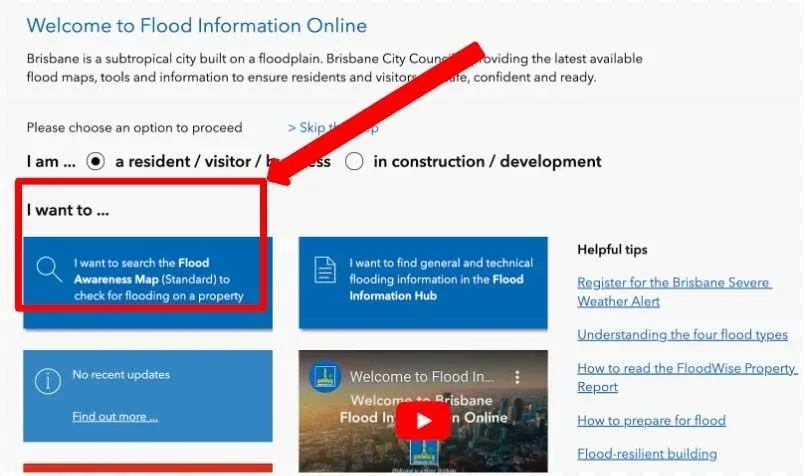
Download a fresh report for the property you are considering. Council’s maps and adopted planning information can change; the screenshots below are a worked example.
Flood reports and maps outside Brisbane
Buying in Redlands, the Gold Coast or another nearby council area? Brisbane’s FloodWise report will not cover that address. Use the local council’s service instead.
Some councils offer a free report, others provide maps, and some charge for a property search. Choose your council below to find the right starting point.
Choose your council
Elsewhere in Queensland? Use the Queensland Government’s council flood-information directory to find the local service. FloodCheck Queensland is useful for historical studies, but it does not replace a property-specific council check.
Check what the map leaves out. A creek map may exclude water running over the land after heavy rain. Near the coast, also look for storm-tide information. Check access roads as well as the house: a dry floor will not help you get home if the street is cut off.
Reviewing your FloodWise report
Understanding flood levels
Council uses flood modelling to estimate the levels water could reach at the property.
Key information in your report
Look for these details in the report:
- Flooding risk, including flood planning areas for river and overland flow
- Coastal flooding hazards
- Historic flood levels, where available, including 2011 and 2022
- Other potential water and flooding sources
- Ground levels, any indicative existing floor level and minimum habitable floor requirements
How to read the report: a Brisbane example
We’ll use this saved report for 31 Cordova Street, Milton to walk through each section. Download a fresh report for any property you’re considering.
A missing graph does not mean the property is flood-free. Check the development flags and the Flood Awareness Map too, particularly for overland flow.
1. Are the property details correct?

2. Flood level information
Compare the flood levels with the land and any existing floor level. The minimum habitable floor level is a planning requirement, not necessarily the height of the current house.
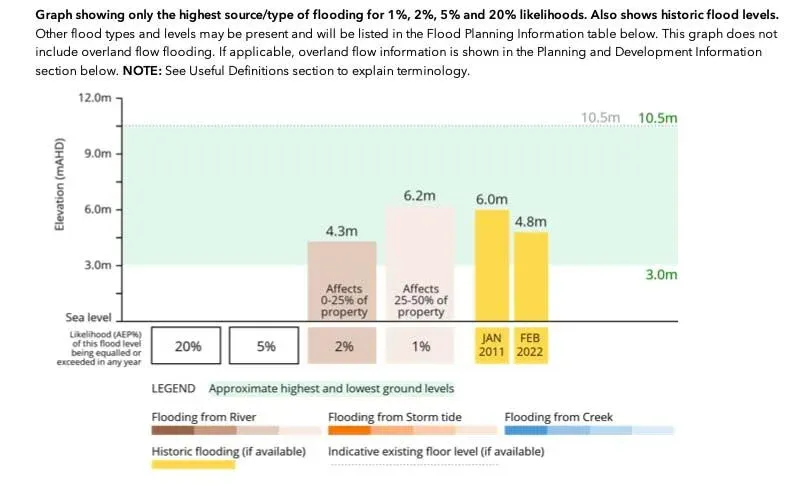
Annual Exceedance Probability (AEP) means the chance of a flood reaching a particular size or larger in any year. A 1% AEP means a 1 in 100 chance each year.
Floods of that size can happen in consecutive years.
The heights use a common reference level called Australian Height Datum (AHD). They are not the depth of water inside the house.
3. Technical summary
This section gives your builder, architect or engineer more detail about the property’s flood levels and planning requirements.
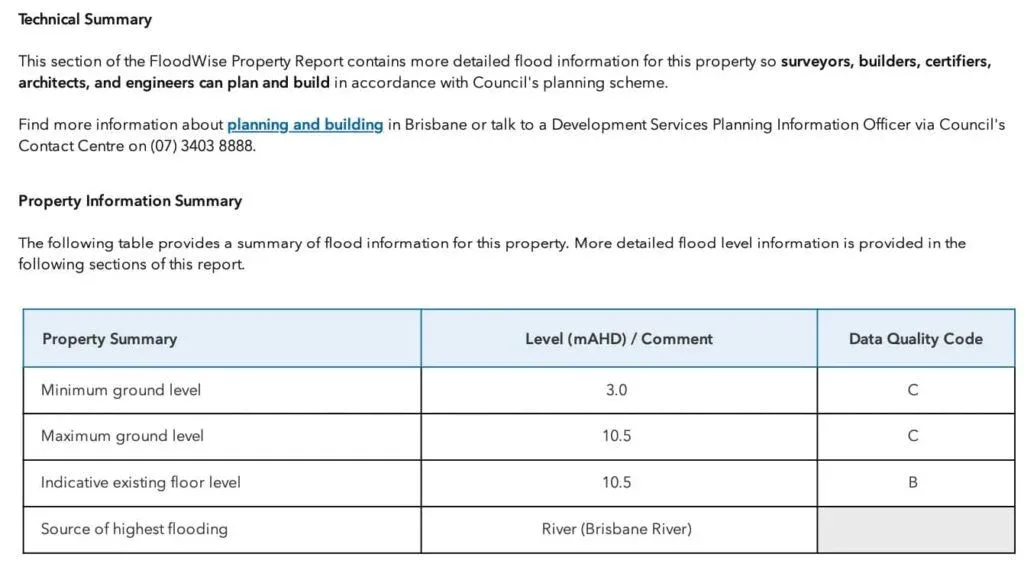
Keep the report beside the Flood Awareness Map when checking historic flooding and overland flow.
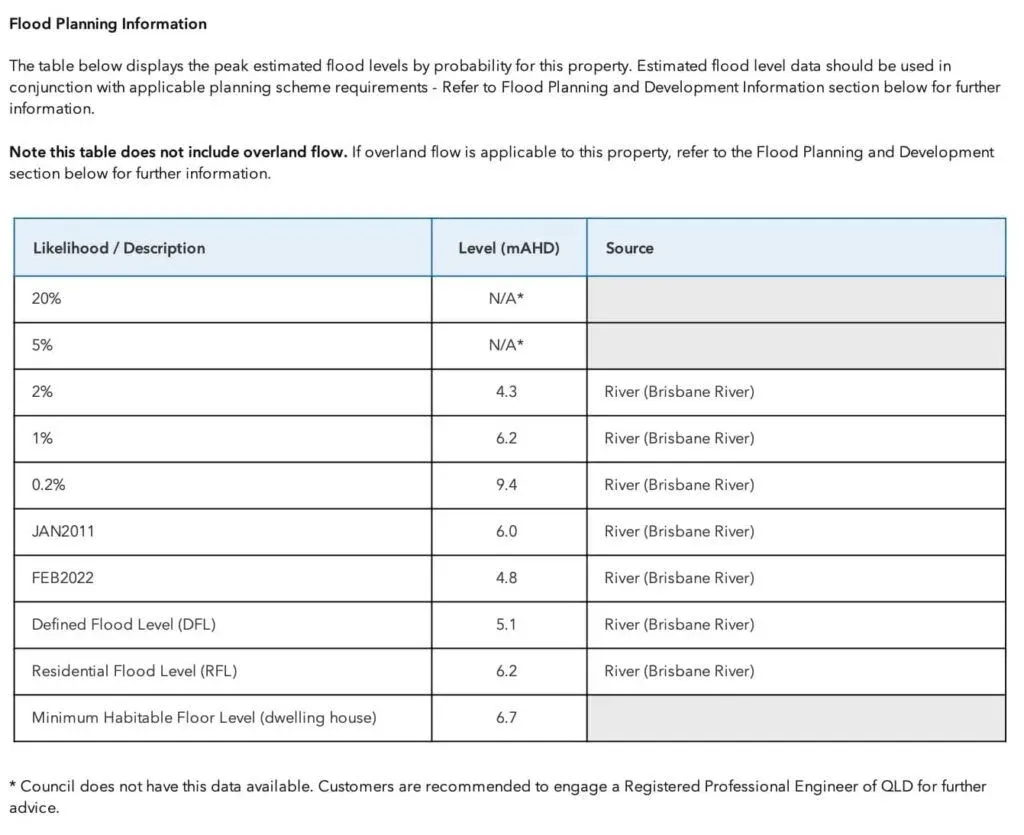
4. Estimated peak flooding levels
These figures show the estimated flood levels for different annual chances. Your builder or engineer uses them when checking the requirements for a new home.
5. Flood overlay code
This section identifies flood planning areas that apply to the land. The example report shows FPA2a, FPA2b, FPA4 and FPA5. These are planning categories, not a record of every flood that has occurred.
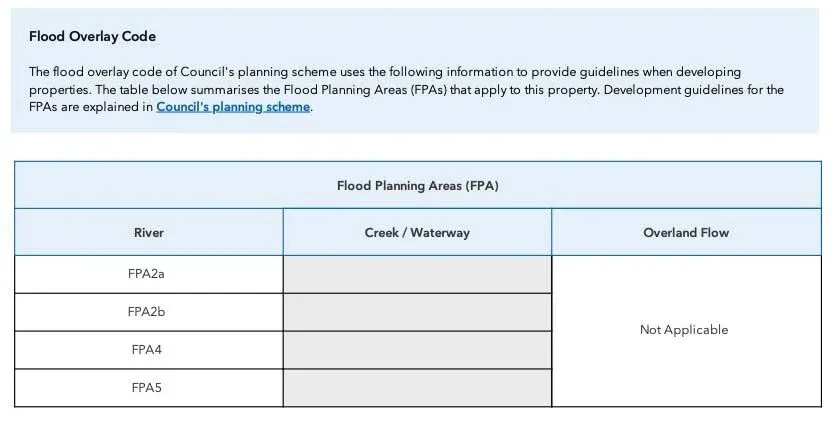
These overlays can affect what you can build or renovate. Ask your certifier or flood engineer what they mean for your plans.
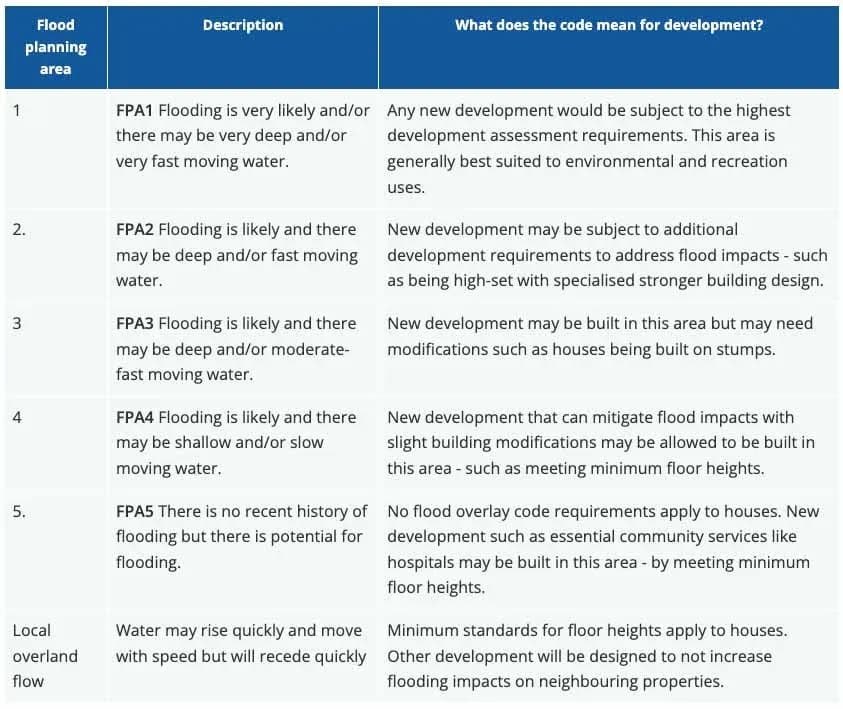
Read Council’s current report guidance. Our saved 2016 technical guide is historical background, not the current planning requirements.
Using the Flood Awareness Map in Brisbane
The Flood Awareness Map gives a visual overview of flood likelihood and past events. Use it alongside the report, rather than relying on the suburb name or an old sales listing.
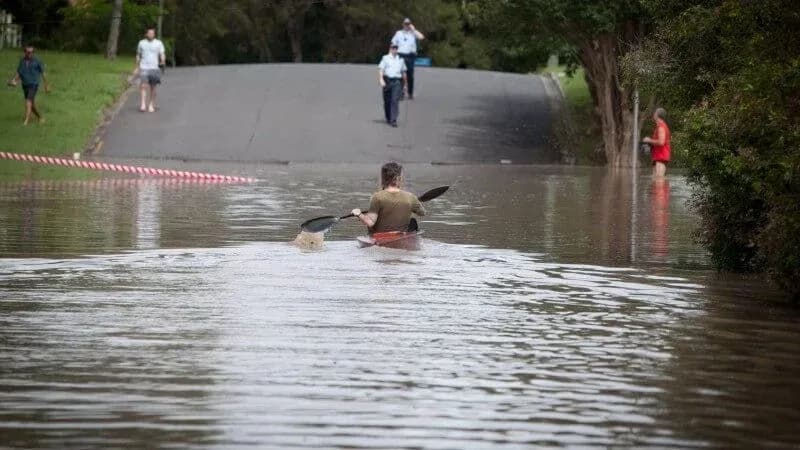
It shows 4 flood likelihood categories, from high (a 5% chance each year) to very low (a 0.05% chance each year).
Overland flow uses 3 categories: high (5%), medium (2%) and low (1%).
- High likelihood: 5% chance each year (about 1 in 20)
- Medium likelihood: 1% chance each year (1 in 100)
- Low likelihood: 0.2% chance each year (1 in 500)
- Very low likelihood: 0.05% chance each year (1 in 2,000)
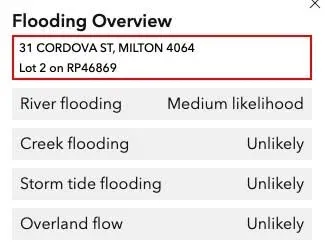
This map also shows the flood sources and historic floods.
Your insurer may ask whether the property has been affected by river flooding, creek flooding, storm tide or overland flow.
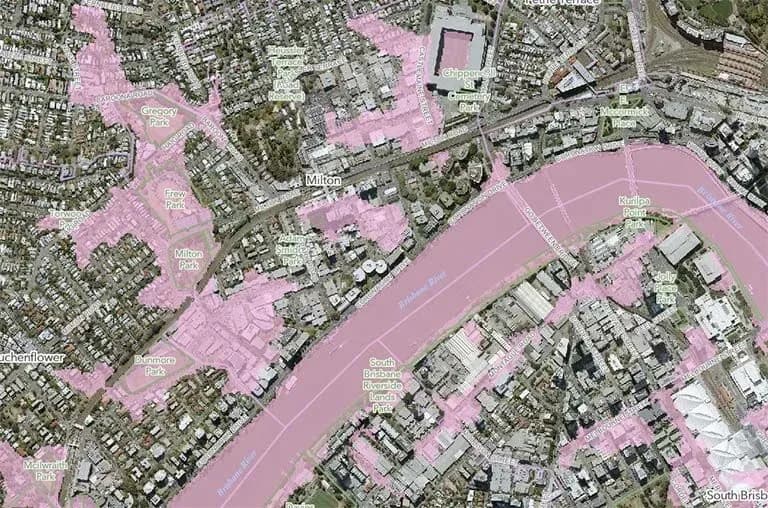
The historic flood layers show the extent of the January 1974, January 2011 and February 2022 floods.
Comparing flood tools in Queensland
Use the tool that matches what you need to check:
| Tool | When to use it |
|---|---|
| Flood Awareness Map | Search a Brisbane address to see flood likelihood, flood sources and past events. |
| FloodWise Property Report | Download the report for a Brisbane property to check estimated and historic flood levels, floor-height requirements and planning overlays. |
| FloodCheck Queensland | Find historical flood studies, maps and imagery across Queensland. For an individual property’s risk, check with the local council. |
Which flood tool should you use?
Flood Awareness Map
- When to use it
- Search a Brisbane address to see flood likelihood, flood sources and past events.
FloodWise Property Report
- When to use it
- Download the report for a Brisbane property to check estimated and historic flood levels, floor-height requirements and planning overlays.
FloodCheck Queensland
- When to use it
- Find historical flood studies, maps and imagery across Queensland. For an individual property’s risk, check with the local council.
Buying property in a flood zone
You may still be able to get a home loan for a flood-affected property. Your lender needs to accept the property as well as your finances, even if you already have pre-approval.
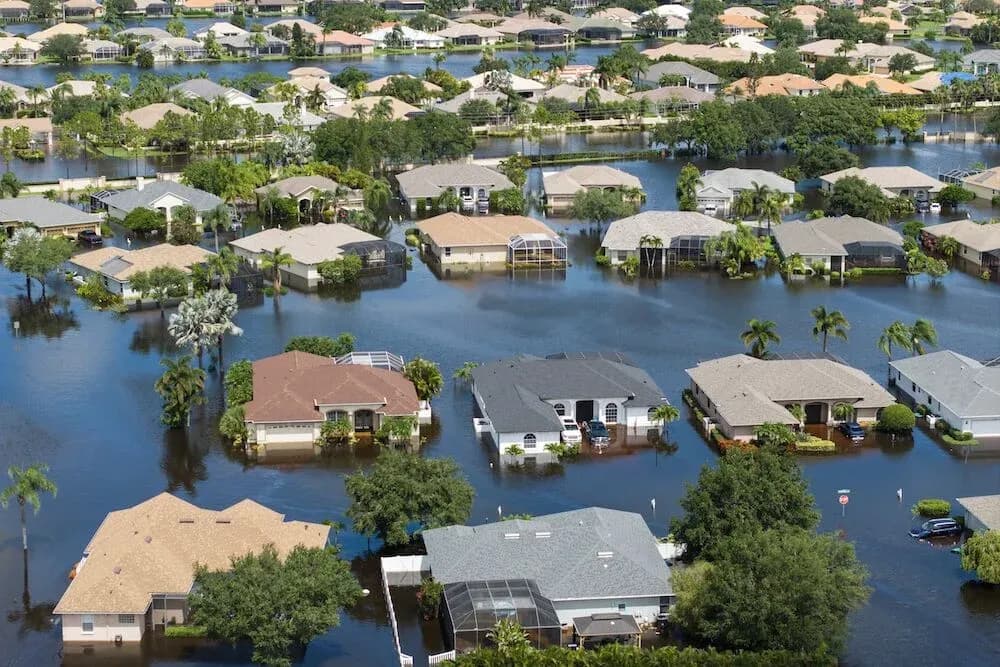
Flood likelihood matters, but so do the floor levels, valuation and insurance. A Council map category alone cannot tell you how much a bank will lend.
How much can I borrow on a flood-affected property?
Lenders can treat the same property differently. We check their requirements before you apply.
| Lender | What it means for a buyer |
|---|---|
| Suncorp Bank (now part of ANZ) | May consider flood-affected property with a loan of up to 70% of its value where the annual flood chance is 2% or less (1 in 50 or less frequent). The overall risk still needs to be acceptable. A larger deposit may be needed. |
| Westpac and St George | Require full flood cover for flood-prone property and satisfactory valuation or survey reports. Check that the insurance covers the required replacement and reinstatement costs. |
| Macquarie | For a property with a 1% or higher annual flood chance, needs individual review if the known flood height is above the floor or the valuer cannot confirm the floor is above it. |
| NAB | Requires a new physical valuation if the property has been affected by a natural disaster. A previous valuation may no longer be enough. |
How lenders can differ on flood-affected properties
- What it means for a buyer
- May consider flood-affected property with a loan of up to 70% of its value where the annual flood chance is 2% or less (1 in 50 or less frequent). The overall risk still needs to be acceptable. A larger deposit may be needed.
- What it means for a buyer
- Require full flood cover for flood-prone property and satisfactory valuation or survey reports. Check that the insurance covers the required replacement and reinstatement costs.
- What it means for a buyer
- For a property with a 1% or higher annual flood chance, needs individual review if the known flood height is above the floor or the valuer cannot confirm the floor is above it.
- What it means for a buyer
- Requires a new physical valuation if the property has been affected by a natural disaster. A previous valuation may no longer be enough.
Read the lender reviews: Westpac and St George.
Some lenders exclude certain flood-affected properties altogether, so a bigger deposit will not always solve it. We can check suitable options, the loan-to-value ratio (LVR) and any extra evidence needed.
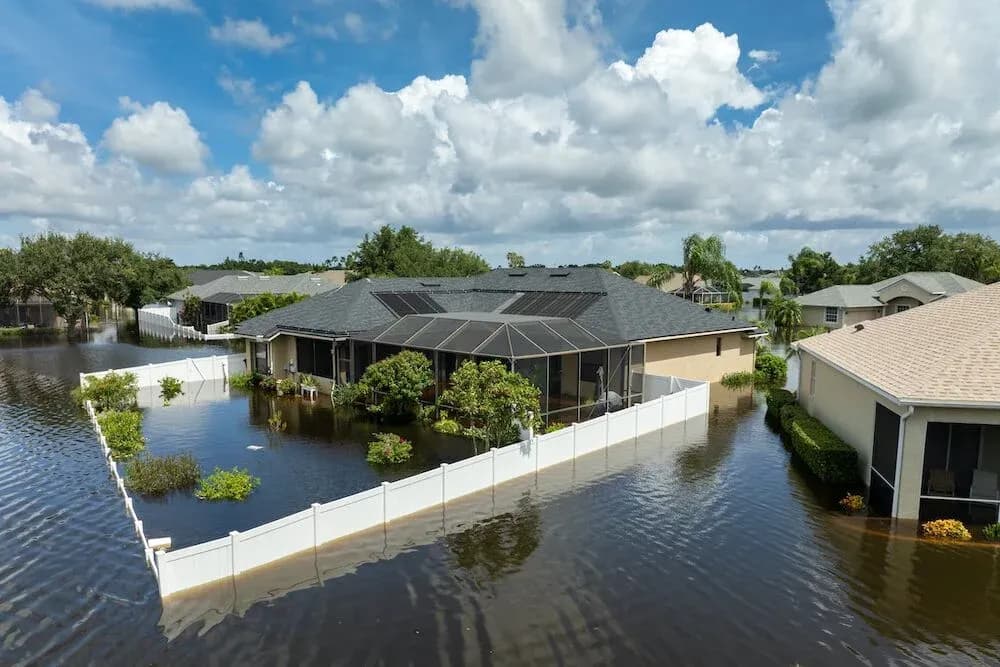
Are there extra requirements from the banks for flooded properties in Brisbane?
Depending on the severity of flooding on the property, the banks can ask for more information than normal. This may include:
- A current flood report and any relevant council or building approvals.
- Evidence of building insurance, including the flood cover the lender requires.
- A valuation or survey confirming relevant flood and floor levels.
- A satisfactory property assessment and enough deposit for that lender.
We have helped clients get home loans for properties with a 2% annual flood likelihood, also called 1 in 50. The property and the lender’s requirements still need to line up. If the risk affects what you are willing to pay, our guide to negotiating a house price explains how to approach the conversation.
Check your lender options before you commit
Brisbane flood zones
Council recorded 177 Brisbane suburbs affected in 2022. That does not mean every property in those suburbs flooded. Council’s archived flood review records the extent of the event.
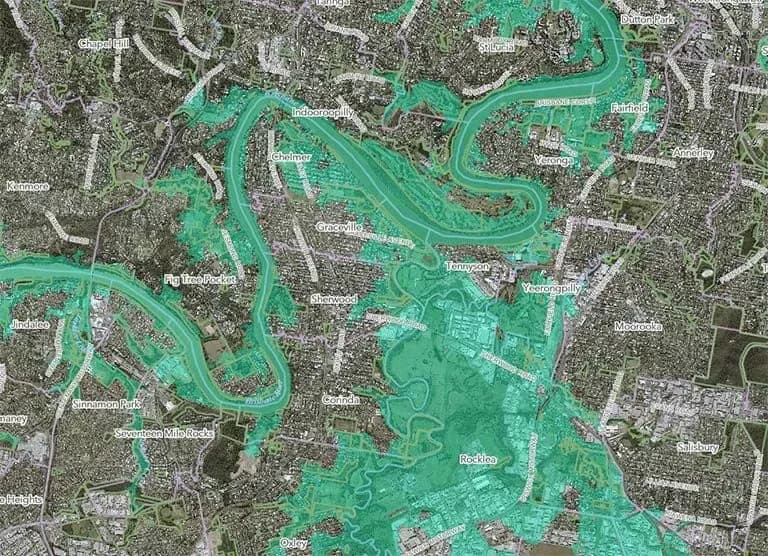
Many affected areas are low-lying or near rivers and creeks. Use the suburb list as a starting point, then check the exact address.
For a wider look at each area, explore our Brisbane suburb guides and interactive map or compare the best suburbs in Brisbane by budget and lifestyle. These guides help you shortlist an area; the flood report checks the individual property.
Flood affected suburbs in Brisbane
Examples of Brisbane suburbs with flood-affected properties
- F to L
- Fairfield
- M to S
- Middle Park
- S to Y
- Sinnamon Park
Albion
- F to L
- Fig Tree Pocket
- M to S
- Milton
- S to Y
- South Brisbane
- F to L
- Fortitude Valley
- M to S
- Moggill
- S to Y
- St Lucia
- F to L
- Graceville
- M to S
- Moorooka
- S to Y
- Sumner
- F to L
- Greenslopes
- M to S
- Morningside
- S to Y
- Taringa
- F to L
- Hamilton
- M to S
- Mount Ommaney
- S to Y
- Teneriffe
- F to L
- Highgate Hill
- M to S
- Norman Park
- S to Y
- West End
- F to L
- Indooroopilly
- M to S
- Oxley
- S to Y
- Westlake
- F to L
- Jamboree Heights
- M to S
- Paddington
- S to Y
- Willawong
- F to L
- Jindalee
- M to S
- Pinjarra Hills
- S to Y
- Wilston
- F to L
- Kangaroo Point
- M to S
- Pinkenba
- S to Y
- Windsor
- F to L
- Karana Downs
- M to S
- Pullenvale
- S to Y
- Woolloongabba
- F to L
- Kelvin Grove
- M to S
- Riverhills
- S to Y
- Yeerongpilly
- F to L
- Kenmore Hills
- M to S
- Salisbury
- S to Y
- F to L
- Kholo
- M to S
- Seventeen Mile Rocks
- S to Y
- F to L
- Lytton
- M to S
- Sherwood
- S to Y
Flood terms to understand
Brisbane has 4 main types of flooding: river, creek, local overland flow and storm tide.
River flooding
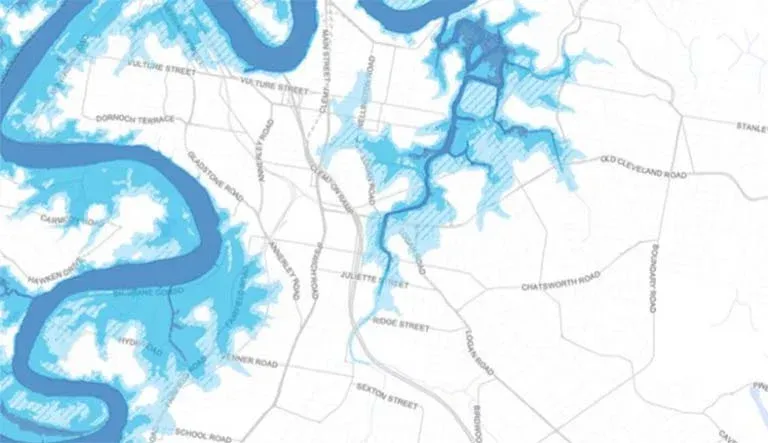
River flooding happens when prolonged rain across the Brisbane River catchments causes water to rise and flow over the banks. Downstream flooding can happen several days after the rain has stopped.
Creek flooding
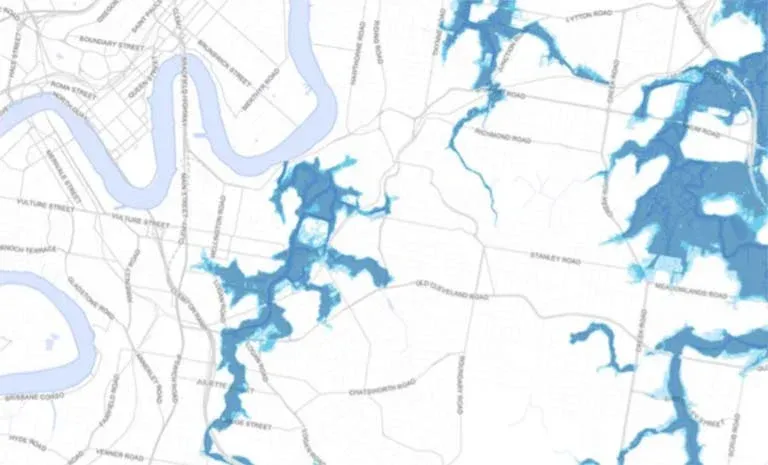
Heavy rain in a creek catchment can make the creek rise quickly, causing flash flooding around nearby creeks and waterways.
Local overland flow
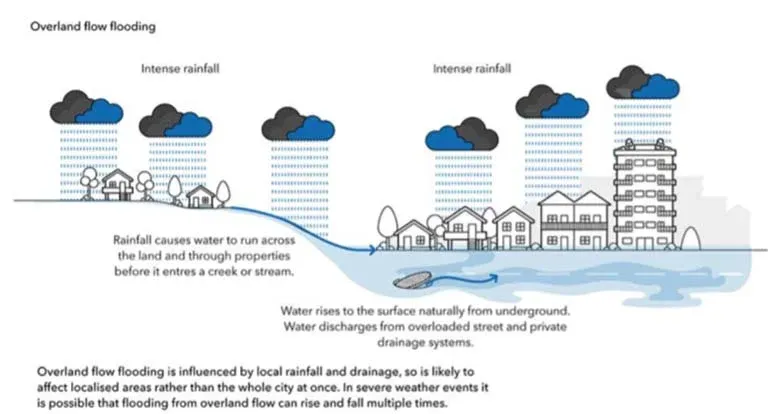
It is localised flooding and the most common type of flooding in Brisbane. It happens when water runs across the ground and paths after heavy rain and can happen quickly. Fences and walls can change where the water flows, making its path harder to predict.
Storm tide flooding
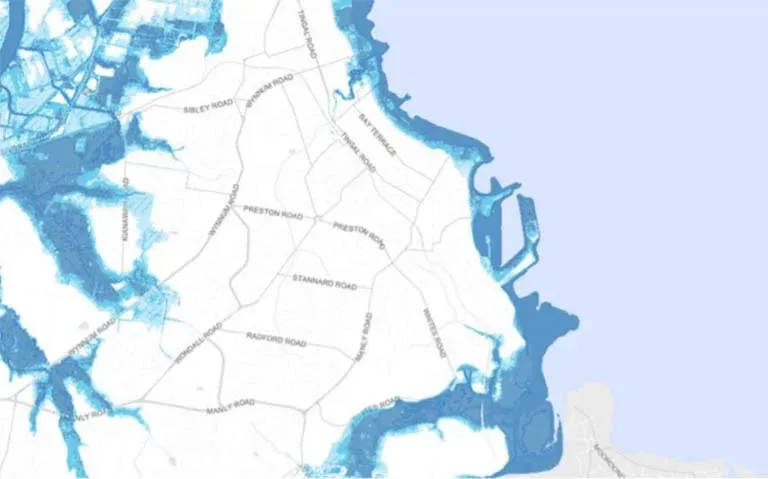
This type of flooding happens when winds from a storm push the ocean towards the land, causing much higher-than-normal sea levels. The major risk from a storm tide or storm surge is increased during high tides and generally affects lower-lying areas close to shores and other waterways.
Flood insurance requirements

Get an insurance quote for the exact address before you commit to buying. Confirm the flood cover, exclusions and excess, then check that the policy meets your lender’s requirements. Building insurance protects the property; contents insurance covers your belongings.
What does flood insurance cover?
Australia has a standard insurance definition of flood. Stormwater, runoff and storm surge need separate checking, so do not assume that cover for one means cover for all. Read the policy and ask the insurer about the flood sources shown for the address. The Insurance Council explains the differences.
How much does flood insurance cost in Brisbane?
There is no useful suburb-wide price. Get current quotes for the property using the same cover amount and excess so you can compare them properly. Include the annual premium in your budget alongside the loan repayments.
What to check before choosing cover
- Whether flood cover is included and which water-related events are excluded.
- The cost of rebuilding, rather than just the purchase price or loan balance.
- The excess you would need to pay after a claim.
- Any waiting period, and when the lender needs proof of cover.
You can compare different excesses, but make sure you could afford the amount you choose. If the property has been raised or had other resilience work, tell the insurer and ask whether it changes the quote.
What if you disagree with Brisbane’s flood report?
If you think the report contains an error, you can ask Council to review it. Explain the issue and provide relevant evidence, such as certified survey levels, as-built plans or a flood assessment from a Registered Professional Engineer of Queensland (RPEQ).
Send the request to FloodPropertyReport@brisbane.qld.gov.au, or follow the postal instructions on Council’s report page. Ask Council what evidence it needs for your situation before commissioning extra work.
Dealing with flood damage
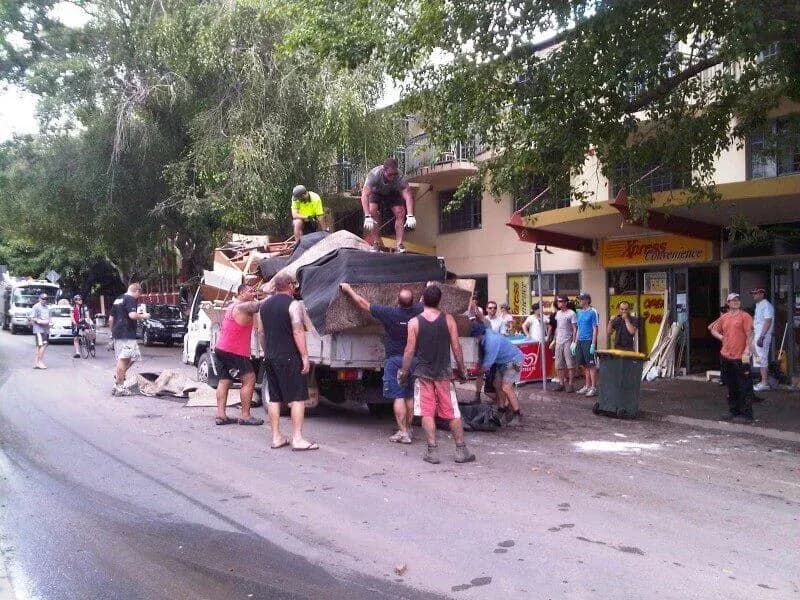
Client story
Our clients' homes after the 2011 floods
During the 2011 Brisbane floods, some of our clients’ homes in New Farm were flooded. Unfortunately for them, water entered the house in various ways, but the worst part was not the water itself, but the muck and mud that remained once the flood receded.
In our clients’ case, a horrible smell remained after the water receded. Much of the flooring, internal plasterboard and carpet had to be removed.
The flooding also destroyed some of their electrical and plumbing services, so they needed a brand new hot water system and the property rewired before moving back in.
They had insurance, but it still took a lot of work to make the home liveable again.
What to check before buying flood-affected property
Before signing a contract, work through these checks:
- Insurance: Can you get the building and flood cover your lender requires, plus the contents cover you want? How much will it cost each year?
- Previous flooding: How badly was the property damaged, and what type of flooding caused it?
- Repairs and improvements: What work has been done to reduce flood damage, and can the owner provide records?
- Your home loan: Will your bank accept this property? Ask your mortgage broker whether the lender needs an upfront valuation.
- Future flood risk: What do climate projections suggest about future flooding at the property?
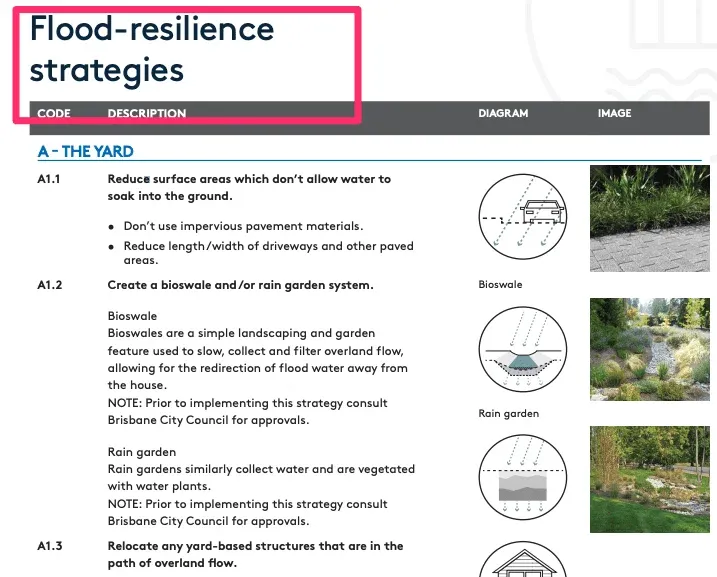
Ask the owner what flood-resilience work has been completed and request the records. Council’s current flood-resilient building guidance explains the Flood Resilient Suburbs Program and its earlier homes pilot.
Building standards in flood-prone areas
A rebuild or major renovation may need different floor heights, structural design or materials. Check the site’s planning overlays with your certifier or engineer, as well as the National Construction Code requirements.
Council’s building guidance is a useful starting point. Get advice on the site before budgeting for a knockdown-rebuild.
Where to find current flood warnings
The maps in this guide are for property research, not live emergency warnings. During severe weather, follow official alerts and directions.

Using FloodCheck Queensland
FloodCheck Queensland helps you find historical flood studies, maps and imagery across the state. It is useful background research, but it is not a property-level flood-risk assessment or an emergency warning service.
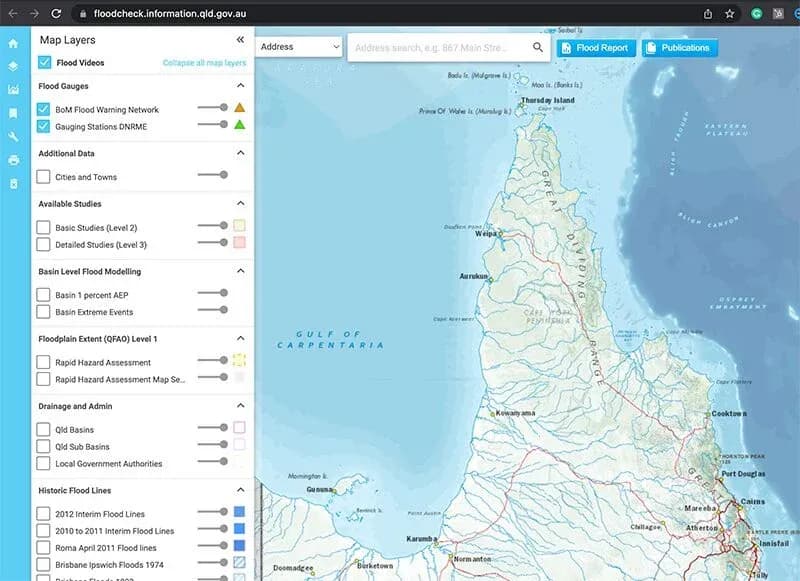
For an individual property outside Brisbane, check the local council’s current flood information. The Queensland Government explains which flood-mapping tools to use.
Brisbane flood statistics: 2011 and 2022
Council’s 2022 Flood Review, Table 1, compares the suburbs and properties affected:
| Brisbane impacts | 2011 | 2022 |
|---|---|---|
| Suburbs affected | 94 | 177 |
| Properties affected | 14,100 | 23,400 |

Questions about flood reports and home loans
Speak to our team
Found a property with a flood flag? Send us the address and report. We can check lender options before you commit.
Our Brisbane mortgage brokers can explain the finance checks. For flood engineering or building advice, speak with the appropriate property professional.
More resources for homebuyers
- 12 steps to research a house in Brisbane
- What is lenders mortgage insurance
- What is loan to value ratio?
- How to work out your usable equity
- Pay off your 30-year home loan 6 years faster
For the rest of your checks, use our property research guide alongside the flood report.

Experience and sources
How this guide was checked
We checked the Council tools, insurance guidance and lender requirements on 9 October 2026. The New Farm story comes from our experience helping clients after the 2011 floods.
The council directory links to the official report and mapping services checked on 9 October 2026. We have separated free reports, mapping tools and paid property searches because they do not all provide the same information.
General information only. This guide does not consider your objectives, financial situation or needs.

Sources
- Brisbane City Council: FloodWise Property Report
- Brisbane City Council: Flood Awareness Map
- Brisbane City Council: 2022 Flood Review (National Library archive)
- Insurance Council: flood insurance explained
- Queensland Government: FloodCheck
- Brisbane City Council: flood-resilient building guidance
- Lender requirements checked: Suncorp, Macquarie, Westpac, St George and NAB.
- Queensland Government: local council flood-data directory
- Brisbane City Council: overland-flow impact categories
Lender requirements can change. We confirm the current policy and property assessment before recommending an option. Home loans are subject to credit approval.