


A loan decline after pre-approval doesn't always end the purchase. Start with any contract deadline and the lender's reason for saying no.
Our brokers and credit analysts can check the finance options while your solicitor checks the contract. Before applying again, check what would change the result and whether the lender has enough time to assess it.
Signed a contract? Check the deadline first
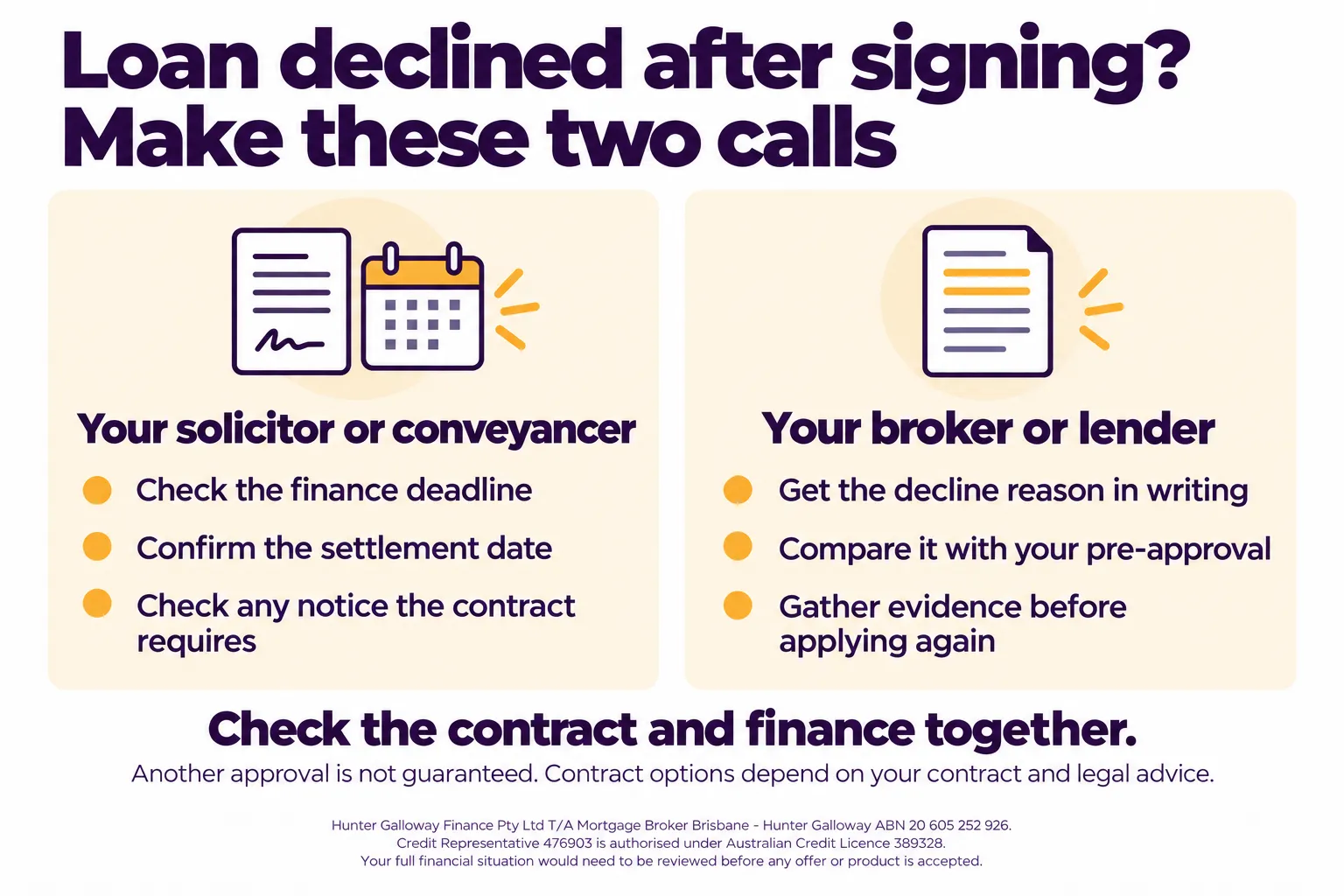
- Call your solicitor or conveyancer. Confirm the finance deadline, settlement date and any notice needed under your contract.
- Ask the lender for the reason in writing. Put the decline beside the pre-approval letter and check what changed.
- Gather the evidence before applying again. The right next step depends on whether the issue is the property, valuation, income, debts, deposit or an incomplete first assessment.
Your broker can work on finance while your solicitor handles the contract. If another lender is an option, compare the repayments and cash left after settlement too.
If you've signed, read what happens to your contract and deposit before you give any notice.
Client story
Rhys got a $23k pay rise. His lender froze the pre-approval.
Rhys was a FIFO mining supervisor. While his pre-approval was active, he moved to a similar role with a new employer and his pay increased from $145k to $168k.
The first lender wanted several months of history in the new job. Rhys's pay was higher, but both the employer and mine site had changed.
We supplied his new contract, first payslip, final payslip from the old employer and continuous FIFO work history. Another lender accepted that evidence without the extra wait. His $720k loan received unconditional approval.
Before applying elsewhere, find out what evidence the first lender couldn't accept. That helps us choose the next lender.
What did the lender check differently?
| At pre-approval | At final approval | What to check |
|---|---|---|
| System result or limited document check | Credit assessor reviews the full application | Were salary packaging, a novated lease, parental leave, scheme eligibility or another existing detail missed? |
| No property or a broad property assumption | Specific address and valuation | Did the property, building or accepted value change the loan? |
| Earlier income evidence | Current payslip, tax or business evidence | Did your hours, employment type or the income the lender accepted change? |
| Declared debts and expenses | Updated statements and credit file | Was a commitment missed or added? |
| Deposit at approval | Cash needed at settlement | Was money spent or were costs omitted? |
| Approval date and policy | Current lender rules | Did it expire or require reassessment? |
Pre-approval vs final approval checks
System result or limited document check
- At final approval
- Credit assessor reviews the full application
- What to check
- Were salary packaging, a novated lease, parental leave, scheme eligibility or another existing detail missed?
No property or a broad property assumption
- At final approval
- Specific address and valuation
- What to check
- Did the property, building or accepted value change the loan?
Earlier income evidence
- At final approval
- Current payslip, tax or business evidence
- What to check
- Did your hours, employment type or the income the lender accepted change?
Declared debts and expenses
- At final approval
- Updated statements and credit file
- What to check
- Was a commitment missed or added?
Deposit at approval
- At final approval
- Cash needed at settlement
- What to check
- Was money spent or were costs omitted?
Approval date and policy
- At final approval
- Current lender rules
- What to check
- Did it expire or require reassessment?
What if nothing changed after pre-approval?
The lender may be checking the detail for the first time. It might find salary packaging, a novated lease, parental leave income or a scheme condition that wasn't fully assessed earlier.
For a property issue, ask whether the lender rejected the address, reduced the maximum loan or accepted a lower value. Gather the contract, plans, property details and comparable settled sales before you challenge a bank valuation. The apartment mortgage guide covers extra checks for units.
If the lender rejected the building rather than the unit, read why a bank can reject an apartment building.
If the lender gives only a broad internal credit or commercial reason, do not guess that fraud or bad credit caused it. Ask for its explanation and complaints process, and check your credit reports. For a decline that did not follow pre-approval, see the home loan decline guide.
What should you do after a decline?

Ask the lender which rule or piece of evidence caused the decline, then check your payslips, statements, tax returns and credit report for errors or missing commitments. Until the next application, keep paying bills on time and avoid new credit.
How can a broker help with the next application?
Compare the relevant lender rules
We compare lenders' rules for the issue behind the decline, such as a valuation shortfall, credit entry or income type. Then we check the documents and timing before suggesting another application.
Gather the right evidence
- Document your income accurately, including how overtime, bonuses or salary packaging are paid.
- Check the deposit and buying costs, including evidence of any family gift.
- Check whether reducing a debt would help, and what cash that would leave for the purchase. Declare every commitment.
Decide when to apply again
Some problems can be fixed with a document or explanation. Others need more income history or an improved credit record. We'll check when another application makes sense and avoid unnecessary credit enquiries.
Find the reason you're dealing with: income and work, debts, credit and spending, deposit and savings, property and insurance, or assessment and approval conditions.
Income and work
Have you changed jobs?
A new job can change the lender's assessment, even with a pay rise. It will look at your employment type, time in the role and earlier work history.

Why would a new job change the result?
The lender may need to check:
- Employment type matters: Full-time versus casual can affect approval chances.
- Time in role: Minimum employment history varies by lender and employment type. Some can consider a new role using your contract, payslips and earlier industry experience.
- Industry experience counts: Banks often look at your broader work history, not just the latest job.
Client story
Why Laura's lender withdrew pre-approval
Laura had pre-approval after 2 years working full time at Electronic Boutique. She then moved to a casual role at JB Hi-Fi, earning more through extra shifts.
Her bank withdrew pre-approval because she hadn't been in her new casual role for 12 months.
We found another lender that accepted her full industry experience and gave unconditional approval.
What should you do after changing jobs?
Before relying on your approval after a job change:
- Tell your lender early: Being upfront helps avoid surprises at the final assessment.
- Document your experience: Provide pay slips and employment history to show stability.
- Ask your broker which lenders can consider your new role and previous work history.
- Check contract deadlines: Ask your solicitor or conveyancer how the job change and delayed finance affect your finance clause.
We can check which lenders will consider your new role and what evidence they'll need.
Have you been contracting for less than 12 months?

Less than 12 months in a contract role can limit your options. The lender will check the contract's length, your income and whether the work is likely to continue.
Are you paid through payroll or an ABN?
First, check how you're paid:
- Pay as you go (PAYG) contractors: your employer withholds tax from your pay. Paid leave depends on whether your employment is permanent, fixed term or casual.
- Self-employed contractors: you invoice through an Australian Business Number (ABN) and cover your own tax, super and business expenses.
A short contract history can be a problem for some lenders. Others may consider continuity in the same industry, contract renewals and the evidence of ongoing work.
What concerns a lender about contract work?
A lender may need more evidence if you have:
- Short remaining contract terms
- Gaps between contracts
- Irregular income patterns
- Limited history in contracting
Client story
Thomas had 2 months left on his contract
Kate and Thomas applied for a home loan together. Thomas worked with the same employer for 3 years. 4 months ago, he moved into a contractor role for higher pay.
His initial contract ran for 6 months and had only 2 months left. He invoiced monthly and applied as a self-employed contractor.
His existing bank declined the loan after pre-approval because of the remaining contract term and how his income was paid.
We used Thomas's new income, which was 35% higher, and supplied the records another major lender needed. That lender gave unconditional approval. The assessed income was higher than under his old salary.
| What to check | PAYG contractor | Self-employed contractor |
|---|---|---|
| Pay | Payroll, payslips and tax withheld | Invoices through a business |
| Work source | Direct employer or labour-hire agency | One or more clients |
| Contract | End date, renewals, hours and employment type | Service agreements, work remaining and client history |
| Paid leave | Depends on employment type; generally none for casuals | Generally no employee leave |
| Income evidence | Contract, payslips, income statement and salary credits | Returns, financials, invoices, BAS and statements |
| History | Varies; work continuity may help | Trading and contract history vary; no universal 12 months |
PAYG contract work and self-employed contracting
Pay
- PAYG contractor
- Payroll, payslips and tax withheld
- Self-employed contractor
- Invoices through a business
Work source
- PAYG contractor
- Direct employer or labour-hire agency
- Self-employed contractor
- One or more clients
Contract
- PAYG contractor
- End date, renewals, hours and employment type
- Self-employed contractor
- Service agreements, work remaining and client history
Paid leave
- PAYG contractor
- Depends on employment type; generally none for casuals
- Self-employed contractor
- Generally no employee leave
Income evidence
- PAYG contractor
- Contract, payslips, income statement and salary credits
- Self-employed contractor
- Returns, financials, invoices, BAS and statements
History
- PAYG contractor
- Varies; work continuity may help
- Self-employed contractor
- Trading and contract history vary; no universal 12 months
These are lending categories. An ABN, invoice or job title alone doesn't decide your legal employment status. Ask what documents the lender needs for your arrangement.
What evidence helps a contractor?
- Provide your full contract and extension history
- Show consistent work in the same industry
- Demonstrate stable income across multiple months
- Ask which lenders can consider your contract history and income records.
Check the lender's contract-income rules before applying, particularly if you've recently changed how you're paid.
Read more: How to get a home loan on contractor income
Can the lender use your business income?

Some lenders want more business history or different financial records than others. Check what the bank couldn't accept before applying again.
Why might it decline a business owner?
Common issues include:
A fall or sharp change in business profit may need explaining.
An Australian Taxation Office (ATO) payment plan may affect the money available for repayments.
Missing or outdated tax returns and financial records may leave the lender unable to verify your income.
Which income calculation applies?
Ask which financial years the lender used and whether it averaged them, used the latest year or relied on the lower income figure. Compare that with your current business results before another application.

Client story
Sally and Erica's growing photography business
Sally and Erica ran a successful wedding photography business for over 18 months. Their profits grew by 142% year-on-year. They applied for an investment loan to expand.
Their bank wanted at least 2 years of trading and wouldn't use the latest year's higher profit.
We found a major lender that could use their latest financials and secured unconditional approval.
What records will you need?
- Keep your tax returns and financial records up to date
- Disclose any ATO payment plan and provide its terms, balance and repayment record. Ask your accountant about tax obligations; do not miss tax payments to improve a loan application.
- Maintain consistent business income records
- Work with a broker experienced in self-employed lending
Having those records ready helps us compare lenders before submitting another application.
Does the lender accept your work arrangement?

Your job title doesn't tell the lender everything it needs to know. How you're paid and whether the income will continue matter too.
Why the lender may need further income checks
After you choose a property, the lender finishes the checks for formal approval. It may also make checks before settlement.
Depending on the evidence, the lender may:
Ask for additional payslips, contracts or income history.
Use a lower income figure, which can reduce the loan amount.
Check whether the work and pay are likely to continue.
Tell your broker about changes to your hours, contract, overtime or employer.
Has unpaid leave reduced your recent payslip?

Unpaid leave can change the income shown on your latest payslip. Casual and contract workers may need to explain the gap during the final assessment.
Which leave affects the income figure?
Permanent employees generally have paid leave. Casual employees and self-employed contractors generally don't. For PAYG contractors, leave depends on the employment arrangement.
- The lender may request your most recent payslip before unconditional approval.
- If that payslip shows low or nil income, the lender may ask for more evidence or use a lower income figure.
- A reduced income can lower your borrowing capacity.
- That may lead the lender to decline the loan at final assessment.
What if a casual teacher applies during school holidays?
A relief teacher earning strong income throughout the year applies during the Christmas break. Because no shifts were worked, the latest payslip shows no income.
A calculation based only on that payslip could miss the teacher's usual earnings. A longer income history can help explain the gap, depending on what the lender accepts.
If your income has paused temporarily, ask what evidence the lender will accept to show your usual earnings.
Is the lender counting your extra pay?
Overtime, shift loading and bonuses can make up a large part of your pay. If the lender uses less of that income at final assessment, your loan amount can fall.
How much overtime or bonus income counts?
Lenders may count different amounts of overtime, shift loading and bonuses. The result depends on the type of pay, your role and the history you can show. Voluntary extra super contributions can need a separate check.
That can leave the lender's income figure well below what you earn.
How can this affect a nurse?
Nurses often rely on overtime and shift loading as a core part of their pay.
Changing shifts can make your pay vary from month to month. The lender needs enough history to decide how much of that pay it can use.
We check how much of each type of extra pay the lender will accept, and the records needed to support it.
What income evidence helps?
We usually start with:
- Your 2 most recent payslips
- Your latest income statement or PAYG payment summary
- In some cases, a letter from your employer confirming regular overtime for 1 to 2 years
Ask the lender to show the base pay, overtime, allowances and bonuses it counted. Then compare that accepted income with the records you can provide. Different kinds of extra pay may need different evidence.
Can the lender use your second income?

Lenders differ in whether they'll use rideshare or second-job income, how much they'll count and the history they need. If it wasn't fully checked at pre-approval, your final borrowing amount may change.
Why does the income history matter?
The lender needs evidence that the extra income is likely to continue. A second employed job and rideshare work through a business need different records.
How much history will it need?
Some lenders want at least 12 months of history. A PAYG second job can have different rules from self-employed gig work. Ask which policy applies to you.
For a second employed job, ask which payslips and employment history the lender needs.
If you earn through a business, it may need tax returns, ATO notices, business activity statements or business account records. Check the periods required before collecting the documents.
Has your income dropped?

Your bank used the income you earned when it issued pre-approval. Fewer shifts, a lost bonus or reduced hours can lower that figure at the next assessment.
What if your latest payslip is lower?
The lender may ask for recent payslips before final approval. Lower earnings can reduce the amount it will lend.
How can lenders assess casual income?
A lender might estimate annual income from weekly pay or from earnings since the start of the financial year. Ask which method it used and whether a longer pay history would change the result.
Client story
Matthew's quieter month as a barista
Matthew worked as a casual barista. During December, his hours dipped because of public holidays and fewer shifts. The quieter-month payslip he gave the bank showed lower income than usual.
Using $500 a week for 46 working weeks gives $23k a year.
Using $500 a week for 52 weeks gives $26k a year.
Using Matthew's pay since the start of the financial year gave an annual estimate of $30k.
The method changed the income figure. His longer pay history helped explain the quieter month; the lender still had to decide which income it could use.
What records show your usual income?
To explain a temporary drop, have these records ready:
- Your 2 most recent payslips
- Your latest income statement or PAYG payment summary
- Your most recent tax return (if available)
- A clear explanation for the temporary drop
Show the longer income history and explain the change. Then check which lender can use that evidence.
Read more: Loans for people with unique employment
Do you work for family?
Working for family may mean extra checks on your job and pay.
Tell the lender who in your family owns or runs the business. Ask which extra documents it needs to verify your job and pay.

It may want to confirm:
- That your income is genuine and ongoing
- That your role isn't created just to help secure a loan
- That you're paid at market rates and under normal conditions
This can mean providing additional documents such as:
- An employment contract outlining your role and pay
- Payslips and bank statements showing consistent income
- Evidence the business is financially viable (like BAS or financial statements)
- A letter from the employer confirming your position and hours
We'll check which lender will consider your arrangement and gather the records it needs.
Can the lender use your rental income?

Lenders commonly use only part of the rent to allow for vacancies and property costs. The percentage depends on the lender, the property and the evidence. Short-term letting, boarder income and a standard residential lease can be assessed differently.
How much Airbnb income might count?
Short stays through Airbnb or Stayz, student accommodation and serviced apartments can be assessed differently from a standard lease. Ask how much of the rent the lender will count, and which lease, agent or platform statements, tax returns and expense records it needs.
If rental income caused the decline, check which part the lender couldn't use. We can compare that with another lender's requirements.
Debts, credit and spending
Have you added a credit card or other debt?

Your pre-approval is based on the income and debts the lender assessed at the time.
A new credit card, higher card limit or car loan can change that calculation.
Banks assess credit cards using the full limit. An unused card with a $10k limit can still reduce what you can borrow.
If the new commitment reduces the loan amount, check whether you can still cover the price and buying costs before relying on your pre-approval.
What will the lender recheck?
The lender may recheck your credit record and debts before settlement.
If the new debt leaves too little income for repayments, the bank may:
- Reduce the amount they're willing to lend
- Ask for more funds upfront
- Or decline the loan altogether
What should you discuss before taking more credit?
- Check with your broker before applying for new credit.
- Ask what reducing an unused card limit or closing a buy now, pay later account would change.
- Compare debt repayment against the cash you'll need for the purchase before paying extra.
Read more: How do I increase my borrowing capacity?
Have you made several credit applications?

Several recent credit applications can raise questions with a lender, even if you've paid your bills on time.
There isn't a universal rule that 2 or 3 applications mean a decline. The lender looks at their type, timing and reason alongside the rest of your application.
Credit enquiries can come from more than loan and card applications.
A phone plan, utility account, buy now pay later account or interest-free purchase may involve a credit check. Ask the provider whether it records an enquiry before applying.
Why might the lender question the enquiries?
Several enquiries can make a lender ask whether you're seeking more credit because money is tight.
When they see too many recent checks, they may:
Ask for more detail about the applications and any resulting debts.
Use the enquiries as part of their own risk assessment.
Decline if the application doesn't meet its requirements.
Can you explain the entries?
Explain why you applied. Moving house, changing utilities or upgrading a phone may help account for entries on your report.
Some lenders give more weight to the full application than to an automated score.
Get your credit report and check for errors. Explain the purpose of recent applications and which accounts are still open. We can compare lenders using that full picture before another application.
Is there a phone bill default?

An unpaid phone bill can cause problems if it becomes a default on your credit report.
A reportable consumer-credit default generally needs to be at least $150 and 60 days overdue, with required notices given. A single late bill is not automatically a listed default, but the lender may still ask about unpaid debts or account conduct.
Client story
A phone bill sent to an old address
We helped a first home buyer who had a small phone bill sent to an old address. They'd moved, never received the notice, and had no idea the account was overdue. The telco placed a default on their credit file, and the buyer only discovered it when their bank refused to proceed with formal approval.
We found a lender that accepted the explanation. The buyer received unconditional approval and moved into the home.
How lenders look at phone bills
When a telco debt appears on your credit report, check the facts before choosing a lender:
| What to check | Why it matters |
|---|---|
| Amount and notices | Generally $150+, 60 days overdue and required notices |
| Paid or unpaid | Payment updates the status; a correct default can remain |
| Accuracy | Dispute errors; explain correct entries with evidence |
| Lender rules | Full credit history matters; payment alone is no guarantee |
What to check about a phone-bill default
Amount and notices
- Why it matters
- Generally $150+, 60 days overdue and required notices
Paid or unpaid
- Why it matters
- Payment updates the status; a correct default can remain
Accuracy
- Why it matters
- Dispute errors; explain correct entries with evidence
Lender rules
- Why it matters
- Full credit history matters; payment alone is no guarantee
Check whether the entry is correct, then find out what evidence the lender needs to consider it.
What can you do about a credit issue?
A credit issue can limit your options. The explanation, payment record and lender's policy all matter.
- Get your credit reports and check the entries.
- Consider credit file alerts through Equifax.
- Dispute incorrect defaults.
- Check lenders that consider more than an automated score.
- Review the evidence before another application.
Call 1300 088 065 with the lender's reason for declining and your credit report. We can check what needs to change before another application.
Read more: What happens if I have a bad credit history?
Was a rent payment late?
A lender may check your rental payment history as part of the application.
A lender may ask for a tenancy ledger, particularly when rent helps support a small-deposit application. The period required varies by lender; 12 months is not a universal rule.
Explain a missed or late payment. The lender will consider the reason and the rest of your rental record. One late payment doesn't automatically mean a decline.
Client story
Sally and Tom had the rent in another account
Sally and Tom had paid rent on their Brisbane unit on time for 3 years. While on holiday in January, they left the money in savings instead of the account used for rent.
Their rent tried to come out as usual, but there wasn't enough money in that account. The payment failed, their rent showed as late, and an overdrawn fee was charged.
The bank was about to withdraw their pre-approval because it saw the failed payment as poor rental conduct.
We showed the lender the money was available in their savings account and explained the timing error. It reversed the decision, and Sally and Tom secured their loan.
Why might a lender question late rent?
From a bank's point of view, late rent can suggest:
- Poor money management
- Cash flow issues
- Higher risk of missed mortgage repayments
How can you explain a late payment?
If there's an explanation for a late payment, back it up with records.
- Explain any timing issue or transfer delay that actually occurred.
- If the funds were in another account, provide evidence.
- Provide evidence of any admin error or direct debit failure.
- Provide the complete rental record, including any other late payments.
Ask the lender what evidence would address its concern before making another application.
Do the statements show higher spending?

Banks commonly ask for 3 months of everyday account statements; some ask for 4. They use them to check your spending alongside what you've declared.
Large or regular discretionary spending can leave less money for repayments. A lender may also ask about gambling transactions or spending patterns it can't explain.
How does spending affect the loan amount?
A lender may use recent transactions to estimate yearly living costs. An unusually expensive month can make that estimate too high unless you explain it.
Client story
Tara's holiday spending changed the calculation
Tara had just returned from a Sydney holiday and applied for pre-approval through her bank, Suncorp. They reviewed 4 months of statements and calculated she was spending $2,000 per month on entertainment, plus $1,532 on general living costs.
The bank's calculation left $468 a month for a mortgage, which didn't meet its repayment test.
As a result, her loan was declined, purely due to an unusually expensive month.
We separated the holiday costs, including flights, airport transfers and accommodation, from Tara's usual spending. A more suitable lender approved her application.
How can you explain unusual costs?
Explain unusual costs and provide the statements that show your normal spending.
Point out recent holidays, once-off purchases or travel costs, and make sure your declared expenses match your statements.
A lender still needs to check that your usual spending leaves enough for repayments.
Did you fail the bank's credit score?
Many lenders use a credit score as part of their assessment. Factors they may consider include:
- Number of credit enquiries in the past 3 to 6 months
- Types of finance you've applied for in the past 12 months
- Overdue or defaulted debts in the past 5 years
- Bankruptcy information, which generally remains on a consumer credit report for the later of 5 years from bankruptcy or 2 years after it ends.
- Reportable defaults from utilities and phone providers
- Interest-free or Buy Now, Pay Later loans like AfterPay
- Court writs or judgments
| Information | Reporting period |
|---|---|
| Credit enquiry | 5 years |
| Default | 5 years |
| Court judgment | 5 years |
| Repayment history | 2 years |
| Financial hardship information | 1 year |
| Bankruptcy | Later of 5 years from starting or 2 years from ending |
| Serious credit infringement | 7 years |
How long information stays on a consumer credit report
Credit enquiry
- Reporting period
- 5 years
Default
- Reporting period
- 5 years
Court judgment
- Reporting period
- 5 years
Repayment history
- Reporting period
- 2 years
Financial hardship information
- Reporting period
- 1 year
Bankruptcy
- Reporting period
- Later of 5 years from starting or 2 years from ending
Serious credit infringement
- Reporting period
- 7 years
Paying a correctly listed default changes its status but doesn't automatically remove it. The lender may also keep its own account records.
Client story
Tyrone's recent credit applications
In 4 months, Tyrone had applied for a personal loan, 2 credit cards and an interest-free purchase. He'd also paid an electricity bill late while travelling for work. His bank declined the loan after pre-approval because of his credit score.
We found a lender that didn't use credit scoring for home loan applicants. After we explained the travel and other credit activity, it approved his loan.
Client story
Nick's old debt was still in the bank's records
Nick had a credit score over 900, stable work, no debt and a 20% deposit. His bank declined the application over an unpaid debt from 13 years earlier in its own records.
That internal history is separate from a default on a consumer credit report.
Check what caused the credit-score decision before trying another lender.
Did you leave out an account or debt?

Ask how many months of statements the lender needs, and include all your accounts and debts. An account left out of the application can raise questions when repayments appear in your statements.
An old store card can be easy to forget, especially if you haven't used it for years. An undisclosed account may still cause the lender to decline the application.
How to avoid missing details
- Check your credit report: Ask for a copy and review enquiries and open accounts. Also check your own records for older accounts.
- Review day-to-day statements: Your broker can go through your accounts with you to check for credit cards, Afterpay accounts or other debts left out of the application.
Did the lender misunderstand your spending?
A lender can misunderstand a transaction. Shopping at Baby Bunting, for example, might prompt a question about dependants even if you were buying for someone else.
Client story
Why Jane's IVF payments raised a question
Jane was buying her first home with a substantial deposit. Her bank saw payments to an IVF clinic and assumed she had a dependent child. It declined the application over the missing dependant and its effect on borrowing power.
We explained that Jane was freezing her eggs and didn't have a dependant. The bank reversed its decision.
Deposit and savings
Have you used part of your deposit?

Before making an offer, recalculate the cash available for the price and buying costs.
If your deposit has fallen, your purchase budget may need to change. You may need more funds, a smaller loan or extra LMI.
Compare these options before using more of your savings:
- Ask whether a smaller-deposit loan or family guarantor option is suitable. Some eligible buyers may borrow up to 95% of the property value, and a guarantor may sometimes support a higher amount. You still need to cover buying costs, meet the lender's requirements and understand the guarantor's obligations.
- Consider a gifted deposit from parents or family to cover the shortfall.
- For an eligible new home in Queensland valued below $750,000 including land, check whether you qualify for the $30,000 Queensland First Home Owner Grant. Confirm its payment timing before counting it towards funds due under your contract.
- If you have not signed a contract, consider a lower purchase price. If you have signed, ask your solicitor before seeking any change to the agreed price.
We can compare the options using the deposit you have now.
Read more: How much is the First Homeowners Grant?
Can you show the savings history required?
With a smaller deposit, the lender may ask for genuine savings: money you've saved and held over time.
Where genuine savings are required, a lender may ask for 5% of the purchase price held for at least 3 months. The amount, holding period and acceptable alternatives vary by lender, insurer and application.

What counts as genuine savings?
Some lenders accept other evidence when you have less than a 10% deposit. Depending on their rules, this can include:
- Equity held in other properties
- Rental history over at least 6 months
- Term deposits
- Shares held
Ask which savings rule applies to your deposit and property. A loan decline can sometimes come down to evidence the lender couldn't accept.
When might genuine savings be required?
Ask whether genuine savings are required for your loan, what counts towards them and how long the lender needs to see the money held. Rental history may help meet the evidence test, but it doesn't provide the deposit money.
If the lender accepts rental history, it may ask your agent to confirm:
- Full names of tenants
- Property address you rented
- Start date of tenancy
- Rent paid per week, fortnight, or month
- Your payment history, including any late or missed payments
Property and insurance
Did the valuation come in low? A lower accepted value can reduce the loan and increase the cash you need. Read how to challenge a bank valuation.
Does the loan need mortgage insurer approval?

With less than a 20% deposit, you may need lenders mortgage insurance (LMI). Waivers, government guarantees and other exceptions can remove that cost.
If the loan needs an insurer's approval, you must meet its rules as well as the bank's. An insurer condition can still stop the loan after pre-approval.
What does the insurer check?
Mortgage-insurer criteria can differ from the lender's own rules. The assessment may include:
- Size of your deposit
- Property type and location
- Employment stability
- Credit profile and history
- The size of your loan compared with the property value (the loan-to-value ratio, or LVR)
So, even when the bank is comfortable, the insurer may still say no.
Client story
Shelley's bank said yes, but its insurer said no
Shelley called us in early October after her home loan application was declined. 6 weeks earlier, her bank had issued pre-approval. She quickly found a property and signed the contract.
Shelley passed the bank's valuation and assessment checks. With an 8% deposit, she also needed its mortgage insurer's approval.
Although she met the bank's criteria, the insurer declined the application.
We found another lender whose mortgage insurer accepted her application.
What should you check about LMI?
Check whether the loan needs lenders mortgage insurance and which insurer conditions remain. If you may qualify for a waiver or government guarantee, compare that option before relying on the earlier approval.
Does the apartment building fit the lender?
A large apartment complex may need extra checks. Lenders look at unit numbers, storeys, postcode and how many loans they already have in the building. A Brisbane CBD address alone doesn't mean a decline.
The lender may restrict loans based on:
- Suburb or postcode
- Buildings over four storeys
- Small apartments (especially under 40sqm)
- How many loans it already has in the building
What apartment limits should you check?

These examples show the types of limits to check. The result depends on the apartment and your application.
| Check | What to ask |
|---|---|
| Internal floor area | Which minimum applies, and are balconies or car spaces excluded? |
| Building and location | Does the lender restrict this development or postcode? |
| Deposit needed | What share of this property value will it lend? |
| Use and title | Will it accept the occupancy, title and any serviced-apartment arrangement? |
What to check for an apartment
Internal floor area
- What to ask
- Which minimum applies, and are balconies or car spaces excluded?
Building and location
- What to ask
- Does the lender restrict this development or postcode?
Deposit needed
- What to ask
- What share of this property value will it lend?
Use and title
- What to ask
- Will it accept the occupancy, title and any serviced-apartment arrangement?
What should you check before an offer?
Send the specific address, internal floor area, title and contract to your mortgage broker. Check whether the lender will accept the building and what deposit it needs before making an offer.
Some lenders may consider a loan up to 95% of the apartment's value. Check the exact building and application before relying on that amount.
Is the property exposed to flooding?
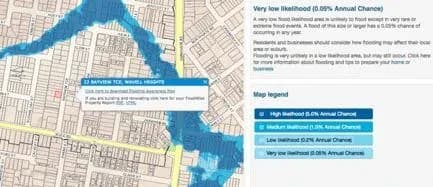
Flood exposure varies within a suburb and from property to property.
Flood risk can affect the valuation, insurance and lender's decision. A 1% Annual Exceedance Probability (AEP), also called Q100, means a 1% chance of that size flood in any year. It doesn't mean a flood happens only once every 100 years.
How do you check the address?
- Check the exact address and floor levels using the council's Flood Awareness Map and a FloodWise Property Report.
- Check the cost and availability of flood insurance before making an offer.
Can you still buy in a flood zone?
Some lenders may consider the property with:
- Comprehensive flood cover insurance
- A satisfactory property valuation or survey report
The lender still needs to accept the property's flood risk, valuation and insurance.
Read more: checking flood risk before you buy.
Does the property need major repairs?
A home needing major repairs may fall outside the lender's property rules, even with pre-approval.

Missing kitchens, damaged bathrooms or structural problems can stop a loan. This can be harder with a deposit below 20%.
What banks look for
Whether the lender accepts a home needing repairs depends on what is wrong and how serious it is. Check:
- How bad is the house? Is it structurally sound?
- Are the issues cosmetic or major?
- What will the repairs cost, and how will they be funded? There is no universal $50,000 acceptance threshold.
- Can you provide quotes or a building contract for the renovations?
- Will you be able to live in the house while renovating?
Before making an offer, send the lender the property details and repair quotes. Check whether it can fund the purchase and the work needed.
Read more: Renovation loans: the complete guide
Assessment and approval conditions
Has the assessment rate changed?

Your income can stay the same and your borrowing limit still fall. A change in the lender's assessment rate is one possible reason.
The lender tests repayments at a higher rate than you'd pay. The extra rate used for that test is called the assessment buffer.
What rate does the lender test?
For a standard new home loan, APRA-regulated banks generally test repayments at least 3 percentage points above the actual rate. A lender may also set a minimum assessment rate. Limited exceptions exist, but you need to qualify for them.
The assessment rate is used to check what you could afford. It isn't the interest rate you pay.
Ask which assessment rate the lender used and whether it will reassess the application before formal approval. The rate used can change while you are looking for a property.
How does a higher rate reduce borrowing power?
At a higher assessment rate, the lender tests larger repayments against the same income. That can reduce your borrowing limit. Ask for a fresh calculation using your income, debts, expenses and proposed loan term.
Could the amount change before final approval?
If the assessment rate rises before final approval, the lender may decide your income no longer supports the loan amount.
Tell your solicitor if this puts the purchase at risk. Any option to renegotiate or leave the contract depends on its terms.
What should you check?
If you're worried about a rate change affecting your final approval, take these steps:
- Ask whether the lender will recalculate repayments at final approval.
- Check whether any assessment settings stay in place, and under what conditions.
- Tell your broker if the lender changes rates.
- Leave room below the maximum you could borrow.
Recheck the amount you can borrow if the lender's assessment rate changes.
Have the lender's rules changed?
A lender can change its rules while your pre-approval is active. Ask whether the new rule applies to your application before committing to a property.
If an existing CommBank pre-approval changes, check the application date and what has changed since it was issued. Applications already in progress, including Home Seeker pre-approvals, can keep their earlier HELP treatment if they meet the rules for acceptable changes. A change in policy does not automatically mean your pre-approval is lost.
For new applications under the 5% Deposit Scheme from 25 September 2026, the lower assessment buffer for HELP debt expected to clear in more than 1 year and within 5 years is unavailable. The buffer is the extra interest rate used to test repayments. Eligible borrowers can still use the separate option for debt expected to clear within 12 months.
Send us the pre-approval and the changes you are planning so we can check the amount again. Our HECS and home loans guide explains how the two options differ.
What should you ask about the change?
Ask your broker what the change means for your application:
Does the new rule apply to my existing application?
Could the changes I'm planning trigger a fresh assessment?
What documents do you need, and can the lender meet my finance deadline?
Get the updated borrowing figure before changing your offer or finance plans.
What did the pre-approval actually check?
The lender may not have checked everything when it first issued pre-approval.
Conditional approval, indicative approval, approval in principle and Home Seeker can involve different checks. Read the conditions on your letter.
Our guide to what home loan pre-approval actually covers shows which checks are usually finished and which still depend on the property.
Some lenders begin with a basic credit check and verify the documents later.
Once you've found a property, the lender can complete the remaining checks, including:
- Payslips and income information
- Bank statements and savings
- Existing debts and other financial commitments
Ask which checks are complete and what could still change the loan amount.
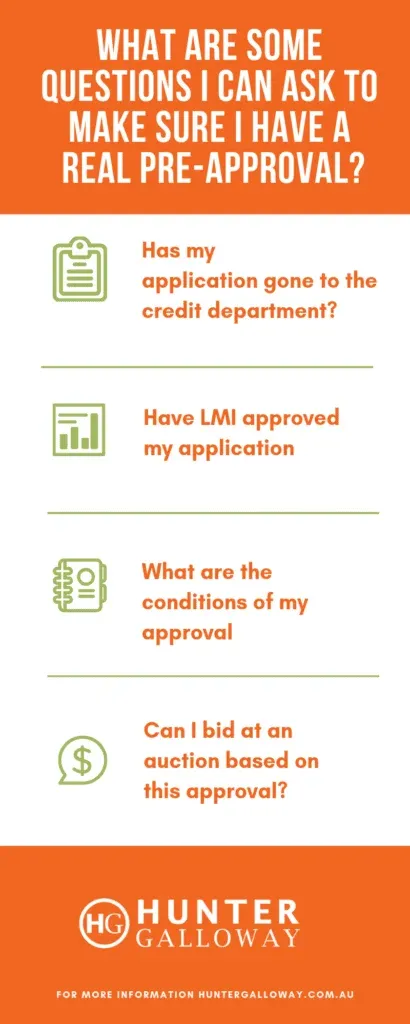
If LMI is required, check what the lender and insurer still need to approve. The property must also be accepted. Before bidding at auction, get contract advice from your solicitor and check the remaining finance conditions with your broker.
Has the pre-approval expired?
Many pre-approvals last around 3 months and some up to 6 months. Use the expiry date on your own letter.
If you find a property after your approval expires, ask what is needed to renew it before relying on the old amount. The lender may request updated payslips, bank statements, identity documents or a new assessment.
Different banks handle expired pre-approvals differently:
- Some may simply confirm that your financial position hasn't changed over the past 90 to 180 days.
- Others may require all new supporting documents, including payslips, bank statements, and identification.
Updated figures can change the result. We can check the requirements before you rely on the old approval.
Does the loan term extend into retirement?
Age alone doesn't decide whether you can get a home loan. If the term runs into retirement, the lender may ask how you'll make repayments or clear the balance.
There is no universal cut-off at 45. The lender checks your income, assets, loan term and repayment plan.

If repayments will continue into retirement, the lender may ask for evidence of how you'll afford them or clear the remaining debt. Depending on your position, it may consider:
- Downsizing to a smaller home once you reach retirement age
- Selling investment properties or shares to free up funds
- Using recurring income from your superannuation to make repayments
- Accessing funds from your superannuation to pay down the loan
Ask which part of your retirement repayment plan the lender couldn't accept. We can compare the evidence it needs before you apply elsewhere.
Check the contract while finance is reviewed
What happens to your contract and deposit?

Call your solicitor or conveyancer as soon as the loan is declined. They can check the contract deadline and whether you can seek an extension or end the contract.
What could be at risk?
- You may lose the deposit if you can't meet the contract or give the required notice.
- Failing to settle can lead to default notices, termination or legal action.
- The seller may claim losses beyond your deposit, including a lower resale price.
Could cooling-off or a finance clause help?
- Many Queensland private residential purchases have a 5 business day cooling-off period. Auctions and some other contracts are excluded. The period can also be shortened or waived.
- For an eligible Queensland contract, the seller may deduct up to 0.25% of the price if you properly terminate during cooling-off. Other states have different rules.
- A finance condition may give you a right to terminate, depending on its wording, your compliance and the notice you give.
Can you end the contract?
- A finance clause sets its own conditions and notice process. A lender's decline doesn't automatically pause the contract.
- If there's no right to exit, your deposit may be at risk and the seller may be able to claim further damages.
Who needs notice, and by when?
- Tell your solicitor and broker immediately.
- Ask your solicitor who must receive formal notice and by when. Telling the agent or lender alone may not meet the contract.
- Keep the written decline and provide any other evidence your finance condition requires.
Who should you call?
Ask your solicitor or conveyancer to:
- Check whether your contract protections still apply.
- Give any required notices within the deadline.
- Advise on your deposit and options under the contract.
At the same time, ask your broker to:
- Check whether another lender can consider the application within the time available.
- Compare any specialist or non-bank options that may fit.
- Review the income evidence, deposit and debts against the next lender's rules.
What happens once the loan is approved?

Once finance is approved, follow the home loan process guide for loan documents, settlement checks and collecting the keys.
Loan declined after pre-approval FAQs

More help with buying a home
Check your next finance step
Find out why the loan decision changed
Send me the pre-approval letter, the written reason for the decline, your contract deadline and the documents the lender checked. I can help identify what caused the decision and what needs to happen before another application.
or call 1300 088 065
Hunter Galloway Finance Pty Ltd is Credit Representative 476903, authorised under Australian Credit Licence 389328 held by Connective Credit Services Pty Ltd. General information only. This is not legal advice, a valuation, a credit assessment or a promise of approval. Client examples are based on real situations. Names and identifying details have been changed.
Experience and sources
How this guide was checked
Reviewed 22 September 2026 by Jayden Vecchio.
Lenders assess each application and property individually. Confirm how any change affects your existing pre-approval before committing to a purchase.

Nathan Vecchio is a director & mortgage broker at Hunter Galloway. Hunter Galloway Finance Pty Ltd is Credit Representative 476903, authorised under Australian Credit Licence 389328.
Sources
- CommBank Home Seeker loans: conditional approval and reassessment
- ASIC Moneysmart: buying a house and loan approval
- OAIC: information on your credit report
- OAIC: what stays on a credit report
- Queensland Government: cooling-off periods
- Brisbane City Council: FloodWise property reports
- Fair Work Ombudsman: independent contractors and employees
- Fair Work Ombudsman: casual employees
- CommBank public reporting: HELP debt assessment options (page 75)
General information only, not legal advice, a valuation, a credit assessment or a promise of approval. Lender policies can change.
Client examples are based on real situations. Names and identifying details have been changed.