


Can you borrow against your home equity?
A home equity loan lets you borrow against the value you've built up in your property. You might use it for renovations, another property or debt consolidation. It adds to what you owe, and the lender still needs to check you can repay it.
I'd start with what you want the money for and the repayment you can manage. The equity calculation tells us what's possible on the property side. Your income and budget tell us whether it works for you.
How much equity can you use?
Total equity is your property's value minus the debt secured against it. A home worth $800,000 with a $400,000 mortgage has $400,000 in total equity. Paying down the loan can increase it. Property values can rise or fall.
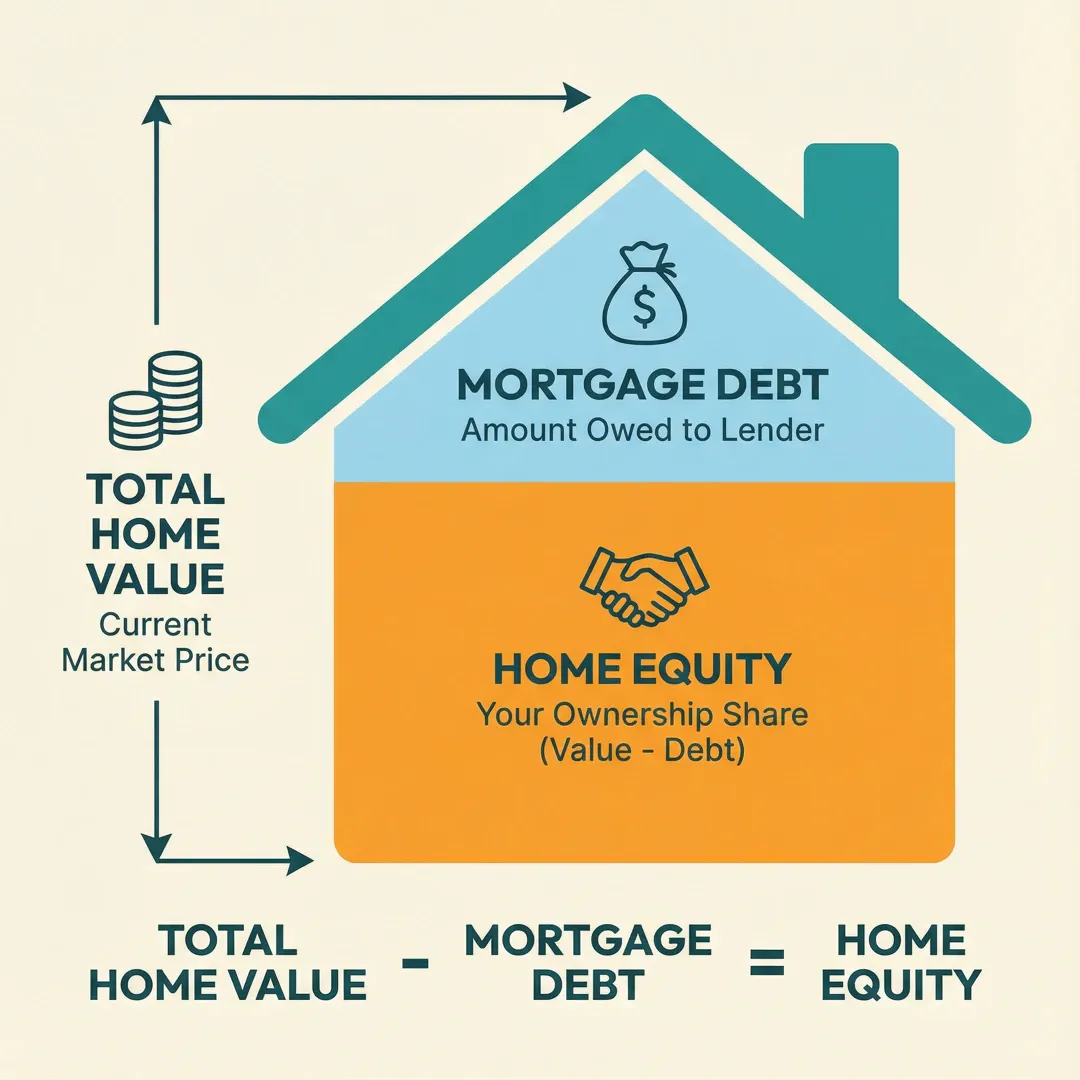
Lenders often use 80% of the property's accepted value, less your current mortgage, as a starting point for usable equity. Borrowing above 80% may be possible, but lender limits, purpose restrictions and lenders mortgage insurance can apply.
The $800,000 home example
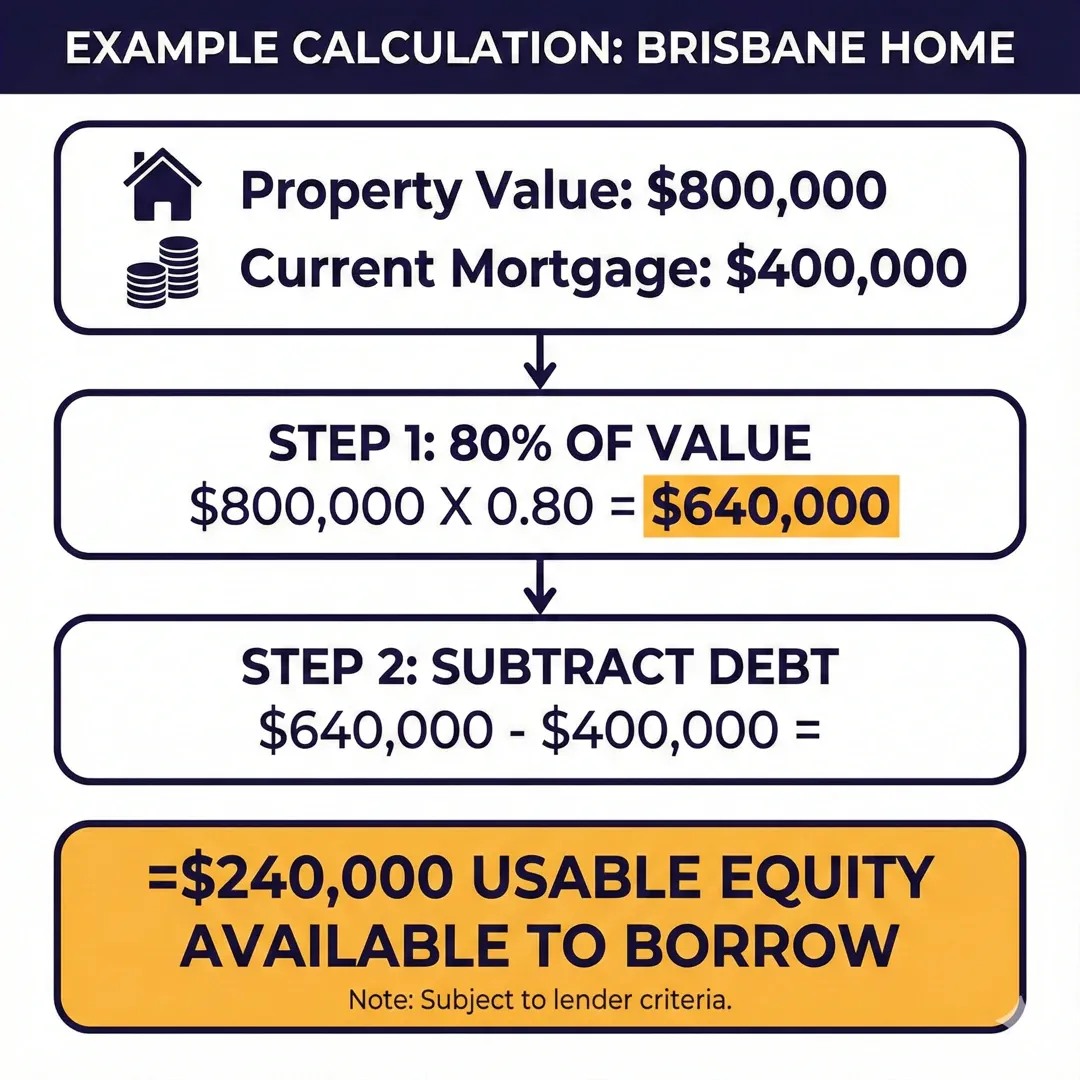
You don't need to borrow the maximum. If you borrow $100,000 in this example, your total mortgage debt becomes $500,000. Your total equity falls to $300,000, assuming the value stays at $800,000 and fees are paid separately.
Try the home equity calculator with your own figures. If the estimate is too low, our building home equity guide explains the options before taking on more debt.
What do you want the money for?
We can assess these uses for your equity. The lender still checks the purpose, property and repayments.
Start with quotes and a contingency. A top-up may suit smaller works; a larger build may need a construction loan with staged payments. Spending $100,000 doesn't guarantee a $100,000 increase in value.
Approved equity borrowing may fund a deposit and buying costs. You need to afford the extra loan as well as the new property's mortgage. Confirm access before committing to a contract.
Compare the total cost and payoff date, not just the monthly repayment. Putting cards or personal loans into your mortgage secures those debts against your home.
Moving to your next home? The timing of the sale matters as much as the equity figure. Our buying and selling guide covers planning the move. If you're keeping both properties, check whether the lender wants them tied together as security; our cross-collateralisation guide explains the trade-offs.
Top up, refinance or use a line of credit?
Increase your current loan or add a separate split
Your current lender may let you increase the mortgage or set up a separate loan account for the extra borrowing. A separate split can make the purpose, repayments and payoff date easier to track.
Interest generally applies to the amount drawn. A lump sum paid out to you has been drawn, even if you haven't spent it. An eligible linked offset account may reduce interest, subject to the product's terms. Ask when funds will be released and whether they're paid to you, a builder or an existing creditor.
Refinance and borrow extra
Refinancing replaces your existing mortgage and can include approved additional borrowing. Compare the cost across the whole loan, including discharge, application, valuation and any fixed-rate break fees. Keep the remaining term in view; restarting at 30 years can increase total interest.
Our refinancing guide covers the comparison. A different lender may use a different valuation, but a higher result or approval isn't guaranteed.
Use a line of credit
Some lenders offer a revolving limit secured against your property. You draw funds as needed and pay interest on the outstanding balance. Compare its rate, fees and repayment rules with an ordinary loan split. Without a plan to reduce the balance, flexible access can leave the debt hanging around.
What will the extra borrowing cost?
For a hypothetical $100,000 extra loan at 6% a year, principal and interest repayments are about $716 a month over 20 years, or $600 over 30 years. Total interest is roughly $72,000 versus $116,000. These are rounded illustrations, not current lender quotes; they assume monthly repayments, no fees and an unchanged rate.
The longer term lowers the monthly bill by about $117 but adds roughly $44,000 in interest. Use our borrowing capacity calculator for an initial estimate, then ask us to compare repayments for the amount, rate and term you are considering.
If you're already struggling with repayments, speak to your lender's hardship team before assuming more borrowing will help. Moneysmart's debt consolidation guide covers alternatives and free financial counselling.
Is the interest tax deductible?
It depends on how the borrowed money is used. Borrowing for an income-producing investment may qualify; borrowing for your own kitchen, car or holiday generally doesn't. The property used as security doesn't decide the deduction.
Mixing private and investment spending in one loan can require interest to be apportioned. A separate split helps recordkeeping, but doesn't create a deduction. Have your accountant check the structure before you draw or move funds. This is general information, not tax advice. If you're thinking about borrowing to invest, our debt recycling guide explains how separate loan splits work. The ATO's rental interest guidance explains the distinction.
What we check before you apply
- The amount and repaymentBring your current loan balance, rate and remaining term, plus the amount you need. We review income, expenses, debts and the buffer you want left.
- The property and purposeWe check the lender's accepted valuation and what it needs to support the spending. That may include renovation quotes, purchase details or statements for debts being cleared.
- The loan structure and fundingWe compare suitable options, costs and conditions. Once approved, confirm the documents, settlement arrangements and when the funds will actually be available.
Have ID, recent income evidence, home loan and other debt statements, and details of household spending ready. Your employment and income type affects the documents required.
An online property estimate isn't the bank's valuation. If the result looks wrong, our bank valuation guide explains the evidence that may support a review. Don't commit to spending while approval or funding remains uncertain.
Home equity loan questions
About the figures
Sources and references
Lender and consumer guidance checked on 30 September 2026. Equity and repayment examples are hypothetical and exclude fees. Repayments use a standard monthly principal and interest calculation. Individual lending and tax outcomes depend on your circumstances.
Find out what the extra loan would cost
Tell us what you want to fund, your estimated property value and your current loan balance. We can help check the borrowing options and repayments before you commit.
or call 1300 088 065
Hunter Galloway Finance Pty Ltd T/A Mortgage Broker Brisbane - Hunter Galloway ABN 20 605 252 926. Credit Representative 476903 is authorised under Australian Credit Licence 389328. Your full financial situation would need to be reviewed before any offer or product is accepted.