

In Australia, putting together a great home buying team is the secret to snagging your dream home without overpaying. In today’s fast-moving market, you need more than just a bank loan; you need a “strike team” of legal, money, and property experts working together to speed up your move and handle the tricky 2026 lending rules for you.
This guide, written by an expert mortgage broker in Brisbane will show you the 5 people you definitely want on your side, exactly what to ask them to make sure they’re actually good, and a simple timeline of when to call each person so your move goes off without a hitch.

#1 - Get The Best Mortgage Broker

Our team of home loan experts is here to help you buy a home in Australia
The first step is to find a Mortgage Broker who can meet your needs. In the 2026 property market, the broker’s role has changed. With the RBA keeping a close eye on inflation and lenders being much stricter about how much they’ll let you borrow compared to what you earn (known as DTI caps), your broker’s main job is to maximise your borrowing power and get your pre-approval done fast.
In a competitive market, just having a pre-approval isn’t enough—it needs to be lightning-fast. You want a Mortgage Broker who is super organised and knows how to navigate the complex lending rules of 2026. This helps you make a strong, confident offer before other buyers even get a look-in.
If you want to save money, ask your broker if they’ve helped people like you get special discounts from banks recently and exactly how much they saved.
It’s also a great idea to check out a broker’s “real world” experience by asking these simple questions:
- How many years have you been a mortgage broker in Brisbane?
- What was your job before you became a broker?
- Do you own any property or have a home loan yourself?
- How many properties do you own here in Brisbane?
- What kind of customers do you usually help?
- How many home loans do you handle every week?
- What is the average loan size you work with?
Asking these will help you see if they have “skin in the game” and if they actually have the experience to handle your specific situation.
At Hunter Galloway, our Mortgage Brokers all own multiple properties themselves. We stay on top of the latest 2026 lending changes to make the whole home loan process easy and stress-free for you.
Read More: 23 Tips to Find the Best Mortgage Broker in Brisbane
#2 - The Strategic Accountant: Structuring for Your Future

In today’s property market, a basic tax return isn’t enough. If you want to build a solid future, you need a Strategic Accountant who treats your home purchase like a smart business move. They do more than just paperwork; they help manage your risks and make sure you keep as much cash in your pocket as possible.
Getting the Name Right: Personal Name vs. Trust
One of the costliest mistakes you can make is putting the wrong name on the contract. Your accountant will help you choose the best setup for your situation:
- Buying in Your Own Name: This is a popular choice for negative gearing. If the property costs more to run than it earns in rent, you can often use those “losses” to reduce your taxable income from your job, giving you a nice tax refund.
- Family Trusts: These are great for protecting your assets and sharing rental income with family members who might be in a lower tax bracket. In 2026, the ATO is looking much closer at how money is moved through trusts, so having a pro to guide you is a must to stay on the right side of the law.
Finding "Hidden" Cash Through Depreciation
Many buyers miss out on thousands of dollars because they don’t understand “depreciation.” Think of it as a way to claim the “wear and tear” of a building as a tax deduction. Your accountant will work with a specialist (a Quantity Surveyor) to list everything you can claim:
- The Building Itself: You can claim a bit of the cost of the actual structure every year (usually 2.5%).
- The “Extras”: You can also claim deductions for things inside the house that wear out over time, like air conditioners, carpets, and ovens.
Even if the house is 10 years old, these “hidden” deductions can be huge. They can turn a property that feels like a monthly bill into one that actually puts money back into your bank account after tax time.
#3 - The Buyer’s Agent: Your Secret Weapon for Off-Market Deals

If you’ve ever felt like the best houses are sold before they even appear on RealEstate.com.au or Domain, you’re probably right. Usually, it’s because a Buyer’s Agent got there first. With fewer homes for sale right now and “silent listings” becoming more common, having an expert to find and negotiate for you isn’t just a luxury anymore—it’s how you actually win in a tough market.
Buyer’s Agent vs. Selling Agent: Whose Side Are They On?
A lot of people think the agent at the open home is there to help them buy the house. In reality, there is a big difference:
- The Selling Agent (Real Estate Agent): They are hired by the owner. Their job is to get the highest price possible for the seller.
- The Buyer’s Agent: They are hired by you. Their only job is to find the best house and negotiate the lowest price possible and the best terms for your side.
Why You Need a Buyer’s Agent
A Buyer’s Agent does a lot more than just scroll through listings; they give you two massive advantages:
- Seeing Homes Before Anyone Else: Many great homes are sold “off-market” (without a public ad) because the owner wants privacy or wants to save on marketing. Buyer’s Agents have close ties with local real estate agents, giving you the first look at homes that never hit the internet.
- Taking the Emotion Out of It: Buying a home is stressful and emotional. A Buyer’s Agent stays calm and uses real data to make sure you don’t overpay just because you’re worried about missing out (the classic “FOMO” feeling).
Questions to Ask a Potential Buyer's Agent:
- Are you “fully independent”? (You want to make sure they aren’t getting paid by developers to sell you a specific house).
- How many “off-market” deals have you done lately? Ask for examples in the suburbs you actually want to live in.
- How do you charge? Is it a flat fee, or a percentage of what I pay for the house?
#4 - Building & Pest Inspectors
Unlike a bank valuer, who is a third-party contractor who works on behalf of the bank, a Building & Pest Inspector works for you. They are usually qualified builders, and their job is to give you a detailed assessment of the condition of a home before you are fully committed to buying it.
A building & pest inspector will look for defects in a home, water and structural damage, and any major problems like termite damage that need to be repaired.
They inspect a home’s foundation, internal and external walls, as well as the roof to see if there are any nasties waiting for you.
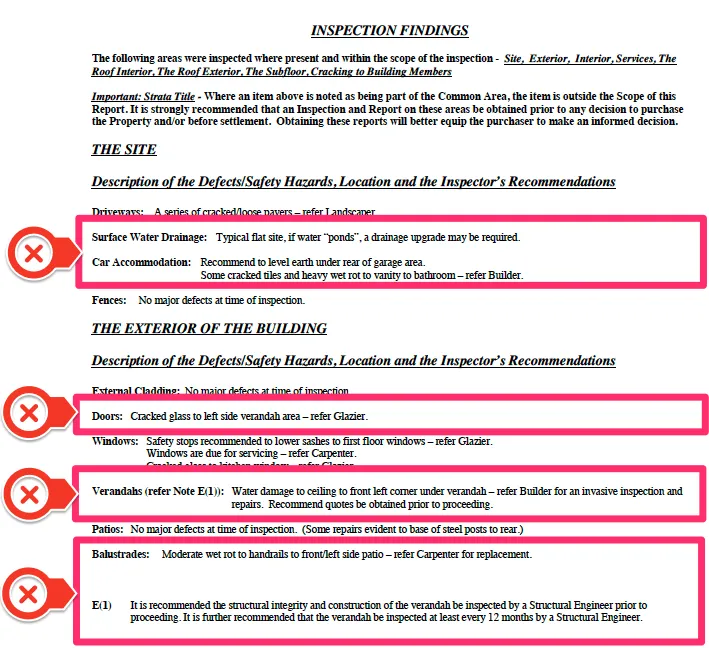
This is what a building and pest report looks like. The good news is you can use a BAD building and pest report to negotiate the price with a real estate agent.
A typical Building & Pest inspection can take 1-2 hours and cost $400 to $600. This is the one cost you should not cheap out on.
The decision you will make based on the Building & Pest report will depend on how competitive the market is. Minor repairs are (usually) costs that you, as the buyer, will need to look after.
However, if major repairs are required, it could be time to negotiate with the real estate agent or walk away from the contract of sale.
We recommend:
- All Inspect Building & Pest Inspectors
- Phone: (07) 3297 0345
- Email: info@allinspect.com.au
- https://www.allinspect.com.au/
Read More: Why do I need a Building & Pest report, and what does it cost?
Check to see if you are eligible for a home loan
#5 - Property Conveyancers
A property Conveyancer or Lawyer will help put together the loan contracts, arrange property searches and organise settlement with the bank and the property sellers.
The conveyancer or solicitor will take care of the details around legal documents, transfers, searches and other information that may need to be addressed. They will also be responsible for managing the transfer of money when final payments are being made and calculating outstanding rates and taxes that are payable to settle the property.

There is no legal requirement to engage a conveyancer or solicitor to assist in these areas. However, purchasing property is stressful, so it is a good idea to utilise their services to guide you through the complex legal aspects of buying.
It’s ideal to engage a conveyancer or a solicitor, particularly before signing any contracts, as they may be able to pick up any unfavourable terms or conditions in the contract.
Conveyancers help protect your rights by reviewing all the documents and disclosures and sorting out any issues that may arise before settlement.
They usually cost from $800 up to $2,000. But it is definitely worth paying this fee as they can help avoid penalty interest and falling into default on your contract!
Pro-tip: Budget for an extra $500 if buying an apartment with a complex strata report.
We recommend:
- KV Conveyancing
- Phone: 0419 220 226 or 0401190499
- Email: kylie@kvconveyancing.com.au
- www.kvconveyancing.com.au
Read More: What are the differences between a lawyer and a conveyancer?
#6 - Home & Contents Insurance Providers
Home and Contents insurance is an extremely important part of buying a home. It provides financial protection for you and the bank if your home is damaged (or, worst case, destroyed!) by fire, theft or natural disaster.
All banks formally require you to have Home & Contents Insurance on the home before settlement.
Home & Contents insurance costs depend on the house’s value, type of property, and the value of your contents.
It is worth getting a few different quotes and reviewing what is covered and what is not included.
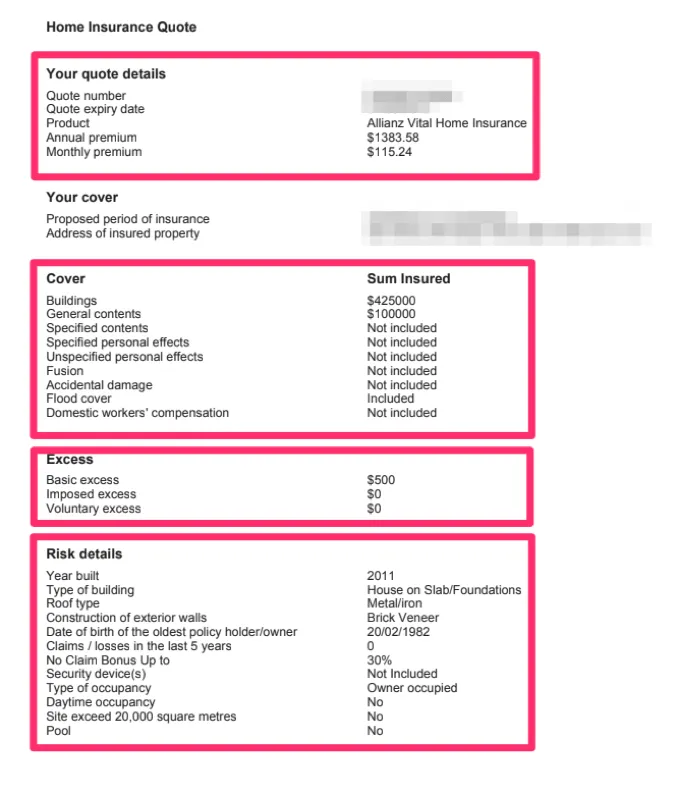
The good news is you can do your own online research by going to their websites, or you can speak with your mortgage broker to arrange the insurance.
At Hunter Galloway, we work with Allianz and can help arrange Home & Contents Insurance for you – Allianz gives our clients 90 days of free cover until settlement.
Read More: 16 Hidden Costs of Buying A Home.
Bonus: Your Construction Team Shortlist
Building a House involves even more people! In addition to the team mentioned above, you will also need to work with architects, real estate agents, builders, councils, etc.

A high number of banks and mortgage brokers are not familiar with the construction loan process at all. Consequently, there are many challenges in financing a house build, including providing the wrong loan amount or delays in paying the builder.
At Hunter Galloway, we specialise in Construction Loans. We have a dedicated Construction Team who will assist you in arranging payments to the builder.
*Note: We want to deliver an exceptional customer experience, so we can only assist a limited number of people at a time. Our construction team is currently at maximum capacity, so we are unable to accept construction loans at this time. *
Read More: How to build a home [Step-by-Step] process
When To Hire Your Home Buying Team
Building your team at the right time is the best way to avoid unnecessary stress and “deal-killer” surprises. Here is the order of engagement we recommend for the 2026 market:
- **Step 1: The Mortgage Broker (3–6 Months Out)
**Engage your broker first to establish your “Real World” budget. In 2026, lending criteria shift quickly; you need to know your borrowing capacity before you even look at a floorplan. - **Step 2: The Strategic Accountant (Before House Hunting)
**Once you know your budget, speak to your accountant. They will advise if you should be buying in your own name or a different structure (like a Trust) for tax and asset protection. - **Step 3: The Buyer’s Agent (The Search Phase)
**With your finance and structure sorted, your Buyer’s Agent starts the search. They will filter the market and find those elusive “off-market” opportunities that fit your specific brief. - **Step 4: The Property Conveyancer (Before Signing the Contract)
**As soon as you find “The One,” send the contract to your conveyancer. Never sign first. They will check for “unfavourable terms” or hidden easements that could cost you thousands later. - **Step 5: The Building & Pest Inspector (During the Cooling-Off/Conditional Period)
**Once your offer is accepted, your inspector goes in. Their report gives you the final “Go/No-Go” or the leverage you need to negotiate a price reduction for required repairs. - **Step 6: Home & Contents Insurance (Before Settlement)
**Your bank will require a Certificate of Currency before they fund the loan. We recommend arranging this as soon as the contract goes unconditional to ensure you are covered the moment the keys change hands.
Would you like to learn about your situation?
Home Buying Team FAQs
Who should be on my home buying team in Australia?
At a minimum: a mortgage broker, conveyancer, and building/pest inspector. For a competitive edge, add a buyer’s agent.
How much does a full home buying team cost?
Budget between $3,000 and $6,000 for a standard team (excluding buyer’s agent fees, which are usually %-based).
When should I first contact my home buying team?
Start with your mortgage broker 3–6 months before you plan to buy to ensure your finances are “lender-ready.”
Does a mortgage broker cost money?
Most Australian brokers, like Hunter Galloway, charge 0% to the borrower as they are paid by the lender.
What is the difference between a conveyancer and a solicitor?
A solicitor can provide broader legal advice, while a conveyancer specializes strictly in the transfer of property title.
Do I need a building and pest inspection for a new build?
Yes. Even new homes can have structural defects or water drainage issues that a bank valuer won’t check.
Can I use the same lawyer as the seller?
No. This is a conflict of interest. Your team must work exclusively for your benefit.
How do I coordinate my home buying team?
Your mortgage broker usually acts as the “project manager,” liaising with your conveyancer and the agent to ensure a smooth settlement.
Next Steps And Getting Your Home Loan
Our team at Hunter Galloway is here to help you buy a home in Australia. Unlike other mortgage brokers who are just one-person operations, we have an entire team of experts dedicated to helping make your home loan journey as simple as possible.
If you want to get started, please* give us a call at 1300 088 065 or* book a free assessment online to see how we can help.
Our team of home loan experts is here to help you buy a home in Australia
More Resources For Home Buyers: