


Client story
Neil and Sabrina: a second valuation changed the refinance options
Neil and Sabrina wanted to refinance their mortgage and roll several other debts into the home loan. Their first bank used a desktop valuation that left the proposed loan high enough to bring lenders mortgage insurance into the conversation.
Rather than spend days arguing with the same bank, I checked whether their complete refinance worked with another lender. It did. We ordered a physical valuation and supplied recent sales of comparable renovated homes.
- Lower
Bank 1 Desktop valuation
- Higher
Bank 2 Physical valuation
The higher value changed the LMI and rate options available to Neil and Sabrina.
A second bank will not always return a higher value. In this case, a fresh valuation through a suitable lender was more useful than disputing the first result.
Yes, you can challenge a bank valuation
A review can correct a property fact, provide stronger settled sales or show completed work that was missed. Another suitable lender may be an option. If neither changes the result, review the price, cash contribution, loan amount or contract.
What a lower valuation changes: a worked example
| Figure | Example |
|---|---|
| Purchase price | $500,000 |
| Bank valuation | $450,000 |
| Proposed loan | $400,000 |
| Deposit already paid | $50,000 |
| Cash still available before costs | $50,000 |
- $50k
Valuation below price
$500k price less $450k valuation.
- 88.9%
Loan-to-value ratio
$400k loan against a $450k value.
- $0
Cash still needed towards the price
The remaining $50k is covered by available cash. Buying costs are extra.
At the $500k price, the same $400k loan would be 80% of the value. Against the bank's $450k valuation, it's 88.9%. That higher loan-to-value ratio, or LVR, can bring in lenders mortgage insurance, rule out some lenders or mean the loan no longer fits.
Your $50k deposit and $50k of cash still cover the price, so in this example the valuation gap doesn't become a cash gap. You'd still need extra money for stamp duty, legal and lender fees, any LMI not added to the loan, and settlement adjustments.
How a different loan amount changes the result
| Proposed loan | LVR at a $450k valuation | What changes |
|---|---|---|
| $350k | 77.8% | Below 80%, but the full loan and property still need approval. |
| $400k | 88.9% | Check the lender's maximum LVR, LMI and cash required. |
| $450k | 100% | The loan equals the entire accepted value. Review the loan, extra funds or an eligible guarantee. |
The same $450k valuation, three different loan amounts
$350k
- LVR at a $450k valuation
- 77.8%
- What changes
- Below 80%, but the full loan and property still need approval.
$400k
- LVR at a $450k valuation
- 88.9%
- What changes
- Check the lender's maximum LVR, LMI and cash required.
$450k
- LVR at a $450k valuation
- 100%
- What changes
- The loan equals the entire accepted value. Review the loan, extra funds or an eligible guarantee.
Illustration only: the purchase price is $500k in all 3 rows. LVR is the loan divided by the lender's $450k value. The figures exclude purchase costs and any LMI added to the loan. A low valuation has different consequences depending on how much you need to borrow.
Why did the bank value it differently?
Ask your broker or lender which valuation method was used and whether you can get a copy or summary. The method helps identify what evidence might be missing.
Automated valuation model
A data model estimates the value without a person inspecting the property. It can miss renovations, unusual layouts or incorrect property records.
Desktop assessment
A valuer reviews available property records and market evidence without visiting the property. Better facts or a physical inspection may matter where the records are incomplete.
Kerbside assessment
The property is viewed from outside. Internal condition and improvements may not be fully visible.
Full on-site valuation
A valuer inspects the property and prepares a fuller report. A review still needs a factual correction or better market evidence. A second opinion alone is unlikely to be enough.
APRA's current residential mortgage lending guide recognises full on-site, desktop, kerbside, automated and contract-of-sale assessment methods in the right context. It also says the need for specialist valuation increases as property risk rises or the loan has less value coverage.
Is a price estimate the same as a bank valuation?
An agent's appraisal or online estimate helps you research the price. The lender needs a valuation it accepts for the loan. Paying for your own report does not guarantee the bank will use it, so ask before ordering one. CommBank explains the different valuation purposes.

What evidence can help you challenge it?
I would rather send one factual correction and 3 strong settled sales than 20 listings chosen for their high asking prices.
Correct the property facts first
Check the address and title, land size, internal living area, bedrooms, bathrooms, car spaces, property type, construction status, condition and completed improvements. State the exact error, attach the source that corrects it and explain why it affects the comparison.
A council record, registered plan, approved building plan, occupancy document or dated evidence of completed work is stronger than a general description from an agent.
Find sales that actually compare with your property
Start with recent settled sales nearby, using RP Data from Cotality (formerly CoreLogic) or the sold section of property websites. About 2 km and 6 months is a useful first search.
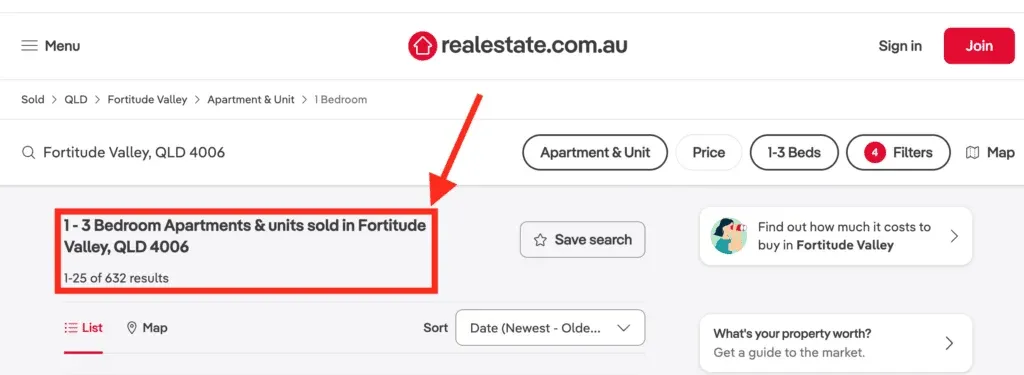
Those distances and dates are starting points, not hard rules. A sale around the corner can still be a poor comparison, while an older sale may be useful if very little has sold nearby.
Compare like with like
Match the property type, land or internal area, bedrooms, bathrooms, parking, layout and general condition. A townhouse is not a clean comparison for a house simply because it sold for more.
Be honest about what is better or worse
If the other property has a renovated kitchen, a better street position or more usable land, say so. If your property is better, explain the difference and support it with evidence.
Check what the market has done since the sale
A sale from 5 months ago may need context if prices have moved quickly. Record the contract and settlement dates because the online listing date can be misleading.
Keep the list to 3 strong sales
For each sale, explain why it is useful and name the biggest difference. That gives the valuer something they can assess instead of a list of higher prices.
Prove completed work, but do not equate cost with value
For renovations or a completed build, prepare approved plans where relevant, invoices, specifications, dated photographs and completion or occupancy evidence. Those documents can show that the property records have not been updated to include the work.
The amount spent is not automatically the amount added to market value. The Australian Property Institute's explanation of the valuation process makes clear that the final figure is a professional opinion based on verified facts, market transactions and judgement as at the valuation date.
What I would send with the review request
Loan and deadline
Proposed loan, current value used, resulting LVR, cash needed and deadline.
Valuation method
Automated, desktop, kerbside or full inspection.
One page of corrections
Each error, the correct fact and the source.
3 settled sales
Dates, prices, similarities and material differences.
Completed work
Only where it relates to the gap.
Short review request
Ask the lender or valuation manager to assess the corrected facts and evidence.
Keep the request focused on the error and supporting evidence. Asking prices and broad agent commentary are weaker than settled comparable sales.
Should you try another bank?
Consider another lender when its complete loan fits and a new valuation could address something the first method missed.
An upfront valuation may reveal a shortfall before a full application. It does not approve the loan.
Before ordering another valuation, I check 3 things:
Does the complete loan fit the other lender?
A higher valuation is useless if the income, loan purpose, property or credit history does not fit.
Will the new valuation add evidence?
Repeating the same desktop method with the same property records may repeat the same problem.
Is there enough time?
A finance or settlement deadline may matter more than the size of the disagreement.
If this is a refinance, compare the value against the current debt and proposed loan before assuming there is usable equity. The equity calculator can show the numbers, while the refinance guide covers costs and the complete refinance decision.
If several properties secure several loans, a low valuation on one property can affect the other loans too. Read the guide to cross-collateralised loans before assuming the equity in one home is separate and ready to use.
Client story
Thomas and Kate received three different valuations
In January 2022, Thomas and Kate offered $900k for a 3 bedroom home in North Brisbane. They had a $140k deposit. The first bank valued the home at $790k, leaving a $110k difference from the agreed price.
We supplied comparable sales and arranged valuations through 2 other lenders. The results for the same property were:
- $790k
First valuation
$110k below the contract price.
- $800k
Second valuation
$100k below the contract price.
- $900k
Third valuation
Matched the contract price.
Another valuation can be the same or lower. The lender still needs to approve the complete application.
Check fees, timing and credit enquiries first
Ask whether a suitable lender can order a valuation before a full application, what it costs and when the result is expected. Access to the property, location and report type can affect timing. Confirm whether an enquiry will be recorded on your credit file before submitting multiple applications. Moneysmart explains what credit reports record.
What if the lower valuation is fair?
If the property facts are right, the valuer has used defensible settled sales and the price sits above that evidence, another challenge may only consume time. The realistic options then become:
Revisit the price or a contract term
This depends on the contract, the seller and the deadline. A solicitor or conveyancer needs to explain your rights before you rely on a finance condition or decide not to settle.
Use more verified funds
Include the deposit already paid, purchase costs, immediate repairs and the buffer you want left after settlement. Do not count the same cash twice.
Reduce or change the proposed loan
That changes the LVR, but the lender still checks whether you can afford the repayments, the loan purpose, its own policy and the property.
Decide not to force the transaction
Where the contract permits, walking away can be cleaner than using every available dollar to buy above the supported evidence.
Use the review to decide whether the purchase or refinance still works. A well-supported lower value may be a reason to reconsider.
What if your finance deadline is close?
A pre-approval does not guarantee that the property will be accepted at the purchase price. If you bought at auction or signed without a finance condition, the valuation problem can become a contract problem very quickly.
Before bidding or signing, I calculate the loan against a lower value and keep the cash shortfall separate from stamp duty, legal costs and other purchase expenses. Once a contract is signed, confirm the finance and settlement dates with your solicitor or conveyancer. A broker can work on the valuation and loan. Only your legal adviser can explain the contract rights and consequences.
Client story
Sarah and Tom negotiated a $20k price reduction
Sarah and Tom were buying in Hobart when the bank valued the home $20k below the contract price. They did not have the extra cash. We helped them put a revised offer to the seller: a $20k lower price with settlement brought forward from 6 weeks to 4 weeks.
- $20k
Price reduction
The revised offer matched the valuation shortfall.
- 4 weeks
Settlement
Brought forward from the original 6 weeks.
The seller accepted and the sale proceeded. That outcome depended on the seller agreeing to the revised terms. Ask your solicitor or conveyancer about your contract options and have them handle any changes; a low valuation does not itself give you the right to reduce the price.
If the price cannot change
You may need to reduce the loan or cover the difference from savings, a documented gift or accessible equity in another property. Confirm the lender accepts the source of funds and that any extra borrowing is affordable. A family guarantee is a separate commitment for the guarantor, not a way around every loan restriction. See Moneysmart's guarantor guidance.
What changes with an off-the-plan or unfinished property?
An off-the-plan contract may be signed long before the lender assesses the completed property. By settlement, the market, final floor area, specification, lender policy and your financial position may all be different.
Current policies checked on 30 July 2026 show that several lenders distinguish between off-the-plan contracts signed more than 12 months before completion and newer contracts. That distinction can affect whether a current completed value or the lower of contract price and valuation is used, subject to the lender, product and completed property.
Check the current rule, arrange the required completion valuation and allow time for reassessment. An older contract or pre-approval does not guarantee extra equity at settlement.
Unregistered land creates another timing risk: title registration and infrastructure work can leave a long gap between signing and settlement. Check the finance and valuation again as settlement approaches. Our land home loan guide covers the separate land checks.
Frequently asked questions
Related guides
Home loans by property type
Start with the property checks that apply to your purchase.
Read guideApartment home loans
What lenders check about size, location, title and building risk.
Read guideHow to value a property
Use comparable sales and more than one source before you offer.
Read guideHome loan declined
Find the reason for the decline before applying again.
Read guide

Experience and sources
How this guide was checked
Reviewed 29 September 2026 by Nathan Vecchio.
Examples show individual outcomes or stated assumptions; they do not guarantee a valuation or approval.

Jayden joined Hunter Galloway in 2018 after working in commercial and development finance. He helps borrowers with construction, bridging and self-employed home loans.
Let me check what the lower valuation actually changed
Send me the contract price or expected value, lender valuation, proposed loan, deposit already paid, cash still available and any deadline. I will work out what the lower value changed before another application goes in.
Check my valuation shortfallor call 1300 088 065
This guide is general information, not a property valuation, legal advice, credit assessment or promise of approval. Hunter Galloway Finance Pty Ltd T/A Mortgage Broker Brisbane - Hunter Galloway ABN 20 605 252 926. Credit Representative 476903 is authorised under Australian Credit Licence 389328. Your full financial situation would need to be reviewed before any offer or product is accepted.
Client examples are based on real situations. Names and identifying details have been changed.