

If your credit history worries you, I’d start by checking what’s actually on your file before applying for another loan. We need to understand what happened, whether it’s resolved and what your finances look like now.
This guide walks you through getting that information together. For an overview of the lending options, start with our bad-credit home loans guide.
Before you apply
Get your credit reports, check disputed entries and gather evidence of your current income, debts and savings. Then have the full scenario checked against the lender’s policy. A credit score alone won’t give you an answer.
What counts as bad credit for a home loan?
“Bad credit” can mean a low score, missed payments, defaults or a more serious event such as bankruptcy. Those situations need different assessments. There isn’t one score that every lender uses as a pass or fail.
I’d look at the entries behind the score: what the debt was, when the problem happened, whether it was paid and how the account has been managed since. Our positive credit reporting guide explains how repayment history appears on your file.
Can you get a home loan with a default?
A default or missed payment does not automatically rule out a home loan. Some specialist lenders can consider credit histories that fall outside a bank's rules. I still need to check the full application and whether the repayments are affordable.
You may pay a higher interest rate or a one-off risk fee, depending on the product and how much you borrow against the property. Lenders mortgage insurance may apply instead on some loans. Ask for the actual fee and premium quotes before comparing offers; both protect the lender rather than covering your repayments.
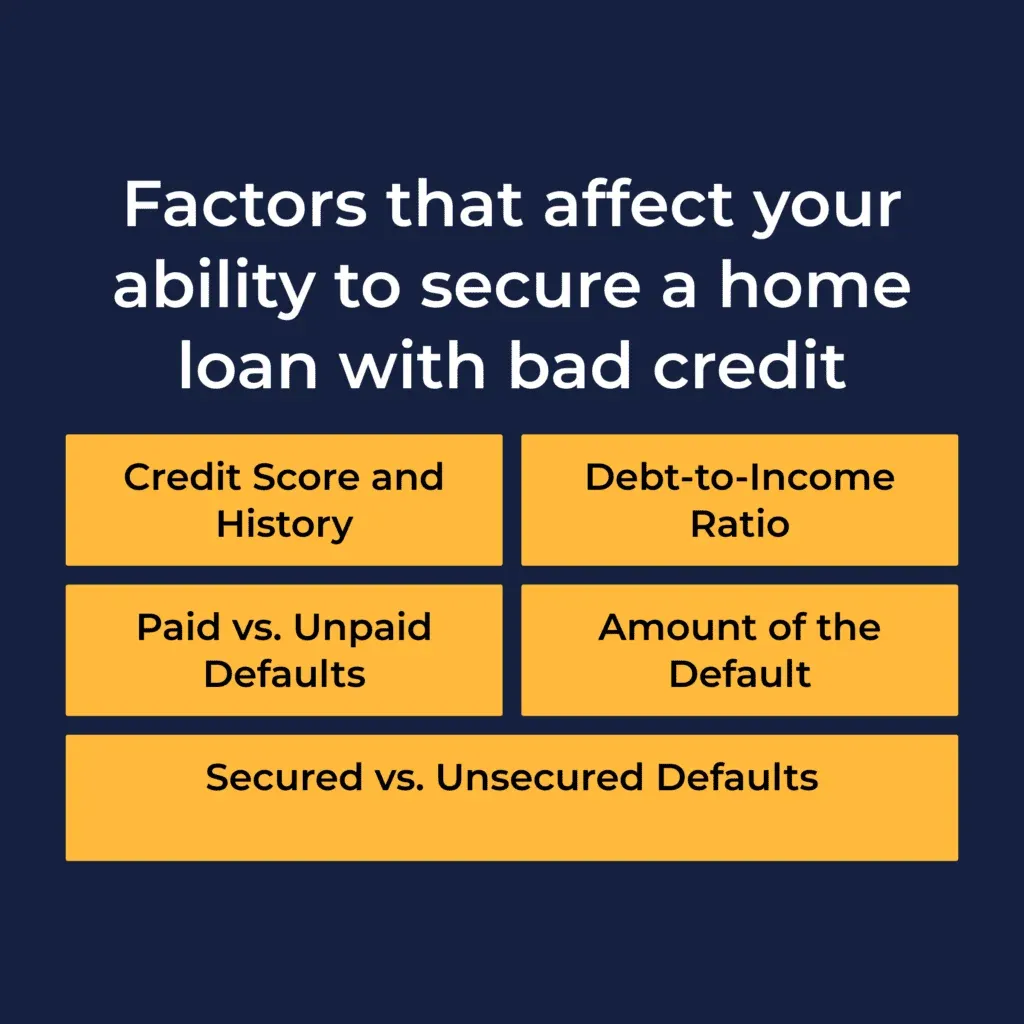
What lenders check in your credit history
Alongside your current income and deposit, I check these parts of your credit history:
- Credit score and history
- Payment status: paid vs. unpaid defaults
- Debt-to-income ratio and other credit issues
- Amount of the default
- Secured vs. unsecured loans
Recent repayments help show how you are managing the debt now. They do not remove earlier entries or override a lender's policy.
1. Credit score and repayment history
Your credit report records information about credit accounts, enquiries and repayments. Defaults, missed payments and bankruptcy can affect how a lender assesses you.
I check how recent and serious the entries are. A single missed payment several years ago can be treated differently from repeated missed payments in recent months.
Keep statements showing payments made on time since the problem. They help explain your current position even while an older entry remains on your report.
More on credit scores: What does positive credit reporting mean for home loans?
2. Paid and unpaid defaults
For each default, I check whether it is paid, unpaid or disputed. The lender also needs to understand the amount, date and reason for it.
An unpaid default can limit your options or lead to a higher rate, additional fees or a decline. It also needs to be included when we work out your existing commitments.
Paying a default updates its status and may give you more lender options. An accurate listing can still remain on your credit report for 5 years.
If the debt is correct, speak to the creditor about repayment or an affordable payment plan. If you dispute it, gather the evidence and request a correction. A payment plan is not the same as a paid default, so keep the agreement and current balance.
3. Debts and income
Your debt-to-income ratio (DTI) compares the credit limits of your debts with your gross annual income. It is different from the share of your monthly income used for repayments. A lender also assesses whether you can afford the repayments after living expenses and other commitments.
Bring details of credit card limits, personal loans, car loans and other debts. We can then work out which commitments affect your application. Our borrowing power guide explains the wider assessment.
Before making another application, check why a previous lender said no. Our declined home loan guide covers the questions to ask.
4. The amount of the default
I check the amount against the lender's limits. A larger default may rule out a product that could accept a smaller one.
The lender may require a larger deposit or apply other conditions. The amount is considered alongside the age, cause and payment status of the default.
An isolated small default may leave more options than several recent defaults. It still needs to be disclosed and checked against the lender's rules.
5. Secured and unsecured loans
A secured loan is backed by an asset, such as a home or car, which the lender may be able to repossess if repayments are not met. Unsecured loans, such as credit cards and some personal loans, are not tied to a particular asset.
Missed mortgage or other secured-loan repayments can restrict your next home loan options. I need the statements showing how far behind the account became and whether it is now up to date.
Before applying, we can check which lenders may consider that repayment history and what evidence they need.
How specialist lenders assess your application
We look at your current income, living expenses, debts, deposit and repayments since the credit problem. A specialist lender may consider circumstances outside a mainstream bank’s policy, but the loan still needs to be affordable.
If your income needs a closer look as well, use our income and employment guide. Self-employed borrowers can check the self-employed home loan guide for supporting documents.
Which specialist loan could fit?
A specialist lender may have several products for different credit histories. The important question is which product your full application fits, including the property, income evidence, deposit and purpose of the loan.
Pepper Money’s borrower guidance explains that the deposit, property, income, credit history and loan purpose can all affect the offer. A headline maximum does not establish what you can borrow.
| Check | Why it matters | What to have ready |
|---|---|---|
| Loan-to-value ratio (LVR) | The loan compared with the lender’s property valuation | Deposit evidence and property details |
| Maximum loan amount | A product’s dollar cap can restrict borrowing even when the LVR fits | The actual amount you need, including any debts to be paid out |
| Credit event and timing | Different events can be treated differently under the product policy | Dates, amounts, paid status and repayment history |
| Income evidence | Alternative documentation still requires evidence of income | Payslips or the self-employed records requested for the product |
Check the full product fit before applying
Loan-to-value ratio (LVR)
- Why it matters
- The loan compared with the lender’s property valuation
- What to have ready
- Deposit evidence and property details
Maximum loan amount
- Why it matters
- A product’s dollar cap can restrict borrowing even when the LVR fits
- What to have ready
- The actual amount you need, including any debts to be paid out
Credit event and timing
- Why it matters
- Different events can be treated differently under the product policy
- What to have ready
- Dates, amounts, paid status and repayment history
Income evidence
- Why it matters
- Alternative documentation still requires evidence of income
- What to have ready
- Payslips or the self-employed records requested for the product
I check both the LVR and the maximum loan amount. Passing one does not mean you pass the other. Our bad-credit home loan guide covers the broader lender comparison, and our Pepper Money review explains its trade-offs.
Several defaults from the same life event?
If several defaults came from one period of illness, separation or business difficulty, put the dates and supporting evidence together. We need to explain the connection and check how the lender treats it. Don’t assume several listings will automatically count as a single event.
For example, list each account, the missed-payment date, the amount and how it relates to the same underlying problem. Our explanation letter guide helps you organise that information.
What if you have missed mortgage repayments?
Tell us whether the home loan is currently up to date, how long the missed payments lasted and whether a hardship arrangement was agreed. Bring the statements and the lender’s letters. That is more useful than describing the file as simply “bad credit”.
If you’re still struggling with repayments, speak to the existing lender about hardship help. Taking out another loan needs a separate affordability assessment. Our refinancing with bad credit guide covers the equity and cost questions, and the hardship flags guide explains what to check on the report.
What about ATO tax debt?
Bring the current ATO balance, payment-plan terms and evidence of payments. We need to know whether the proposal leaves the plan in place or pays it out, and whether the new loan remains affordable.
Don’t assume every lender will accept the same purpose. Our ATO tax debt and home loans guide works through the options and the cost of spreading a tax debt over a longer home loan term. Your accountant should also check the tax treatment.
Bankruptcy and Part 9 debt agreements
First, establish the exact status: current bankruptcy, discharged bankruptcy, an active debt agreement or a completed agreement. Those are different situations, and the date something disappears from a credit report is a separate question.
Have the discharge or agreement documents ready, along with the source of your deposit and any continuing obligations. We need to check those details with the lender before an application. Use our discharged bankruptcy guide or Part 9 debt agreement guide for the documents and next steps.
What happened in these client applications
These are historical client examples, with names changed. The rates, lender decisions and costs describe those files at the time; they are not current quotes or a prediction for another application.
One missed repayment, two very different answers
Marcus, a first home buyer, had a single missed credit repayment on his file. His first-choice lender declined because he did not meet its minimum credit-score rule. We had checked his situation with another major bank that day and moved the application across. The rate was 5.99% rather than 5.89%, a difference of 0.10 percentage points.
Declan and Erin: declined at 95%, approved at 80%
Declan and Erin received an automatic scorecard decline at a major bank on a 95% LVR application. The assessor could not identify every factor the scorecard used. Further checks returned a decline at 90% LVR and an approval at 80%, for a $1,040,000 loan. Their income had not changed; the lower LVR changed the result. Before asking for another assessment, confirm whether it will create a new credit enquiry.
The hidden hardship flag
Sophie paused repayments for 3 months on a $6,000 personal loan without realising the arrangement would be recorded as financial hardship. The flags appeared beside up-to-date repayment markers on her Equifax report but were absent from her other bureau report. We withdrew the application and raised the reporting issue before proceeding. The specialist rates considered at the time ranged from 6.99% to 7.79%.
A hardship flag can affect a lender's assessment, but credit reporting bodies cannot use hardship information to calculate your credit score. Accurate hardship information is not an error just because repayments show as up to date.
Sarah: a low valuation changed the refinance cost
Sarah was looking to refinance an ATO tax debt into her home loan. A valuation below the estimate pushed the proposed LVR from about 70% to 87% and added $9,152 in LMI. The lenders willing to consider the tax-debt refinance at the time included Pepper Money. We also considered paying the tax debt with a personal loan before a later refinance. That alternative still needed an affordability and cost check; taking on another debt did not guarantee a cheaper refinance.
If Sophie’s experience sounds familiar, see our guide to hardship flags on your credit file. If you have defaults to resolve, start with paid versus unpaid defaults.
What to do before applying
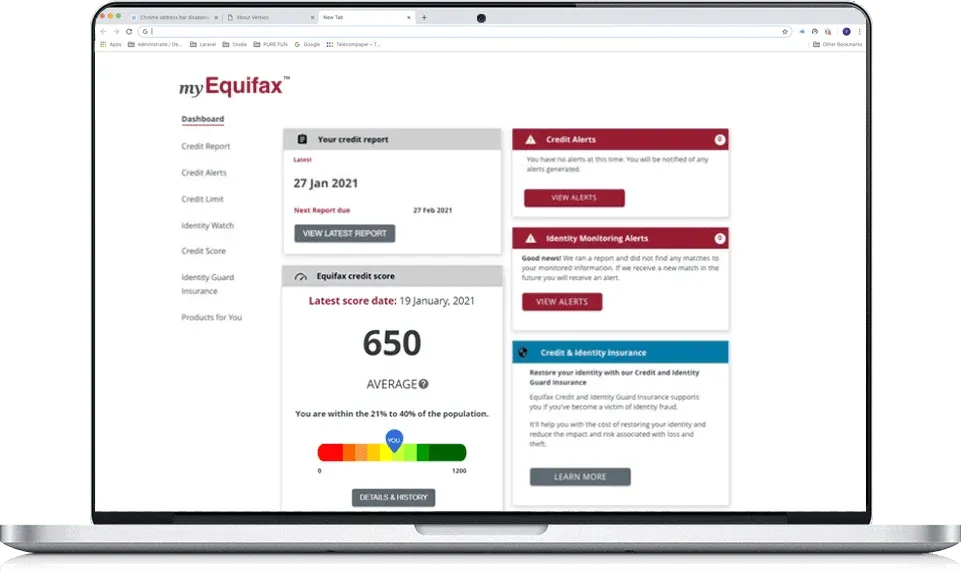
1. Read your reports, including the details
Check your personal details, accounts, repayment history and enquiries. If something is wrong, keep a copy and ask the credit provider or reporting body to correct it. Moneysmart explains how to get your credit report.
2. Work out what is paid, unpaid or disputed
Get payout letters, payment-plan statements and receipts together. Paying a debt does not automatically remove an accurate default. Our paid versus unpaid defaults guide explains the distinction.
If you’re struggling with repayments, contact the creditor about help. A free financial counsellor can help you work through debts before you commit more money to a property purchase.
3. Explain what happened and what changed
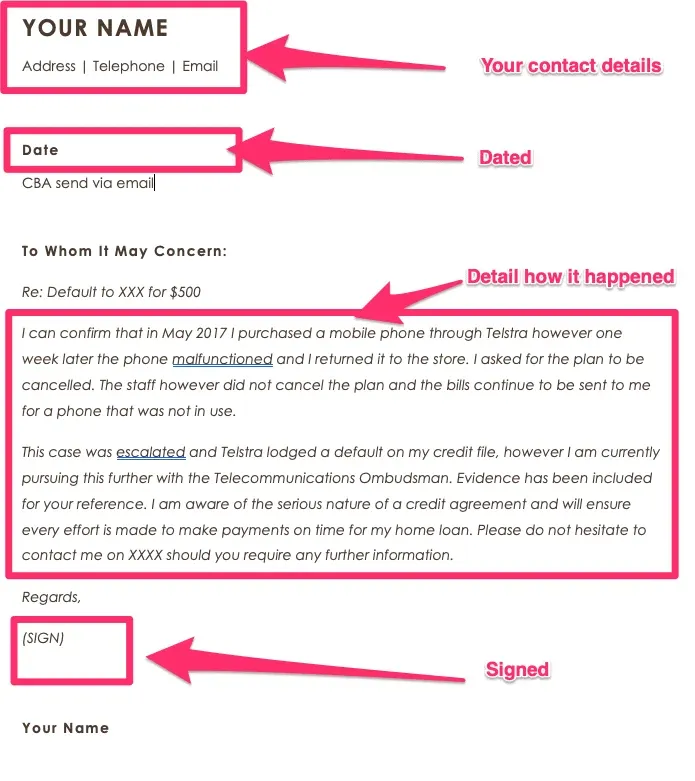
Keep the explanation factual: the account, amount, dates, reason for the problem, how it was resolved and what supports repayments now. Add the relevant evidence. Use our explanation letter example as a starting point.
4. Check your deposit and the property value
A larger deposit reduces the amount you need to borrow relative to the property value. Keep buying costs and a cash buffer in the budget too. The lender’s valuation may differ from the purchase price or your own estimate.
Our deposit calculator can help with the initial budget. It doesn’t assess credit eligibility. If you are looking at a smaller deposit, read the low-deposit home loan guide alongside the lender’s credit requirements.
5. Have the lender fit checked before applying
Give us the credit reports and documents first. We can review the scenario and discuss the gaps, costs and timing before a formal application. Ask whether any proposed step will create a credit enquiry.
Correcting errors on your credit file
If a default is incorrect, ask the credit provider or reporting body to correct it. Keep the evidence supporting your request.
- Gather evidence, such as payment receipts or correspondence with creditors, to support your claim.
- Submit a formal dispute to the credit provider, clearly explaining why the default is incorrect.
- The credit provider will investigate, and if they find the default is wrong, they will correct or remove it from your file.
You can ask the credit provider or a credit reporting body for a correction. If they cannot resolve it themselves, they must consult the other relevant organisations. The OAIC calls this the 'no wrong door approach'. Corrections are free.
The OAIC explains the correction process and what to do if you disagree with the response: Correct your credit report
Putting the application together
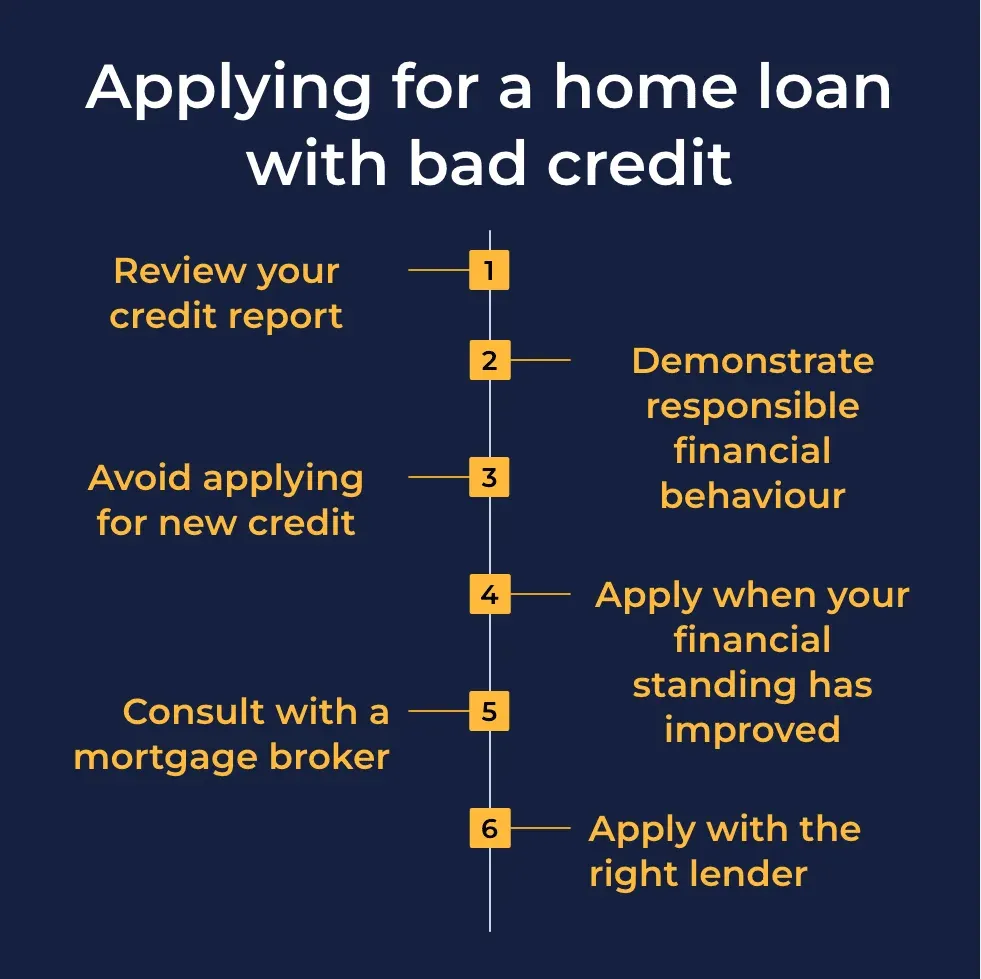
Put the application together in this order
- Gather the evidenceCredit reports, income documents, current loan statements, savings and the explanation of what happened.
- Check the scenarioWork through the lender policy, property, deposit, repayments and costs before a formal application.
- Lodge when the gaps are resolvedHave the requested evidence ready. If the policy does not fit, agree what needs to change before another application.
Check before signing a contract
I’d rather identify a missing document or policy issue now than have you find out after signing a contract. Start with the credit file, the amount you need and what has changed since the problem. We can then talk through the next step.
Bad credit home loans: frequently asked questions
Get your application checked
Our team can review your credit reports, income, deposit and the amount you want to borrow before you make another application. Call 1300 088 065 or book a free assessment. If you have already signed a contract, tell us the finance deadline when you get in touch.

More help with buying a home
Sources and further help
- APRA: residential mortgage lending definitions
- ASIC Moneysmart: credit scores and credit reports
- OAIC: correcting your credit report
- ASIC Moneysmart: free financial counselling
We check the lender policy that applies to your circumstances before recommending an application. The client examples describe historical outcomes.
AFSA: consequences of bankruptcy
Find the guide for your credit history
Bad credit home loans
Start with what is on your credit report and what you can afford now.
Read guideHome loans after bankruptcy
Check your discharge status, deposit and the cost of buying now or waiting.
Read guidePart 9 debt agreement home loans
Compare lender options during and after an agreement, including a possible payout.
Read guideHome loans with ATO tax debt
Compare keeping a payment plan, clearing the debt or refinancing.
Read guidePaid and unpaid defaults
How the amount, age and cause of a default affect lender options.
Read guideHardship flags on your credit file
Check the arrangement dates, recent repayments and the evidence a lender needs.
Read guide