














Finding the most competitive home loans in Brisbane in 2026 requires a sharp strategy to navigate the recent RBA cash rate hike to 4.10% and city-wide median house prices of $1.15M. Partnering with an expert mortgage broker in Brisbane is the most effective way to secure the best financing, from unlocking the $30,000 QLD First Home Owner Grant to uncovering the hidden bank fees that often catch Queenslanders off guard.
In this guide, we’ll show you exactly how to maximize your borrowing power, compare the latest 2026 lending schemes, and ultimately cut years off your mortgage to achieve true homeownership faster.
2026 Brisbane Home Loan Market: 4.10% RBA Rates & Market Strategy
On March 17, 2026, the RBA raised interest rates to 4.10%. This means banks will now lend you less money. To play it safe, most banks now check if you can still pay your loan if rates hit 9.10%.
The 4.10% Reality: Testing Your Budget
The average house in Brisbane now costs $1.15 million. With rates this high, you must check your math before you visit an open home. We suggest doing a “safety test” on your monthly bills.
- Lower Loans: Banks will likely lend you 5% to 10% less than they used to.
- Higher Bills: A $600,000 loan now costs about $100 more every month than it did last year.
- The 30% Rule: Try to keep your house payments under 30% of your total pay
Why the 2032 Olympics Still Drive Brisbane Prices
Even with higher rates, people still want to buy here. The 2032 Olympic Games are bringing new roads and trains to the city. This keeps house prices strong compared to Sydney or Melbourne.
Many buyers believe the value of their home will grow faster than the cost of the interest.
- Better Transport: Projects like the Cross River Rail are almost finished.
- Fewer Houses: There are 25% fewer homes for sale than usual.
- Build Equity: As your home value goes up, you can stop paying Lenders Mortgage Insurance (LMI) sooner.
How to Buy in the 2026 Market
Don’t wait for rates to fall to start looking. Often, house prices go up faster than you can save money. Your best move is to get a “verified pre-approval” so you know exactly what you can spend.
A local mortgage broker in Brisbane can help you handle these rate hikes. We look at over 30 different banks to find the best deal for you. This helps keep your home loans in Brisbane affordable, even when rates are high.
Refinancing Your Brisbane Home Loan: The "Loyalty Tax" Audit
This year is a record-breaking year for refinancing. Many Brisbane homeowners are discovering they are paying a “Loyalty Tax”—where long-term customers are charged higher rates than what the bank offers to new people walking through the door. This discrepancy can cost you thousands of dollars a year.
To see if you’re overpaying, try our 3-Step Quick Refinance Check:
- Audit Your Rate: Check your last statement. If your rate has crept up while new offers are falling, it’s time to move.
- Find Your LVR: If your Loan-to-Value Ratio has dropped below 80% because your house value went up, you unlock access to “tier-one” rates the banks don’t usually advertise.
- Call a Broker: We can run a “pricing request” to force your current bank to play fair, or help you switch to a competitor offering a better deal and potentially a cashback bonus.
How To Increase Your Borrowing Power For A Brisbane Home Loan
With the RBA cash rate at 4.10%, your borrowing power may have reduced. Your “borrowing power” is simply the total amount a lender is willing to let you borrow. If you’ve found a home you love but the bank’s initial quote falls short, don’t panic. There are several proven ways to boost that number.
Quick Wins to Boost Your Capacity
Lenders look at your “net disposable income”—the money left over after all your bills are paid. Even small changes can lead to a $50,000 to $100,000 increase in your loan limit.
- Slash Your Credit Card Limits: Banks assess your borrowing power based on your total credit limit, not what you actually owe. Closing a $10,000 credit card can instantly boost your borrowing power by roughly $50,000.
- Cancel “Ghost” Subscriptions: In 2026, banks use AI to audit your bank statements. They look for “subscription creep”—unused gym memberships, multiple streaming services, and high-frequency UberEats orders. Cleaning these up three months before you apply makes you look like a lower-risk borrower.
- The HECS Debt Strategy: HECS is a “silent killer” of borrowing power. Because repayments are tied to your income, a typical HECS debt can reduce your loan amount by 10x your annual repayment. If your balance is small, paying it off entirely can be the fastest way to bridge a funding gap.
Strategic Moves for Brisbane Buyers
- Choose a Longer Loan Term: Most Brisbane buyers start with a 30-year term. Extending this to 40 years (if offered by the lender) reduces your mandatory monthly repayments, which can technically increase the total amount you can borrow.
- Document Every Dollar of Income: If you work overtime, get regular bonuses, or have a “side hustle,” make sure you have two years of solid tax records. In the 2026 market, “verified income” is king.
- Apply with a Brisbane Specialist: Different banks have different “calculators.” One bank might offer you $600,000, while another might offer $700,000 for the exact same person. A mortgage broker in Brisbane would know which lenders are currently “hungrier” for business and offer more generous assessments.
The "Debt-to-Income" (DTI) Guardrail
As of February 1, 2026, new APRA rules mean most big banks limit the number of loans they give to people borrowing more than 6x their annual income.
- If you earn $100,000: Staying under a $600,000 loan keeps you in the “easy approval” zone.
- If you need more: You may need to look at “non-bank” lenders who aren’t restricted by these 2026 caps.
QLD First Home Owner Grant & 2026 Low-Deposit Schemes
Getting a home loan in Brisbane doesn’t always require a 20% deposit. Right now, the Queensland Government and Federal programs offer massive leg-ups. These schemes help you beat rising prices and high interest rates.
The $30,000 QLD Boost: First Home Owner Grant
The Queensland Government currently offers a $30,000 First Home Owner Grant (FHOG). This is free money to help you build or buy a brand-new home. However, you must act fast to secure this funding.
- The Deadline: You must sign your contract before June 30, 2026.
- Price Cap: The home value must be under $750,000.
- New Homes Only: This applies to local builds, off-the-plan shops, or major renovations.
- Residency: You must live in the home for at least one year.
2% & 5% Deposit Pathways: Buy Without LMI
Most banks charge Lenders Mortgage Insurance (LMI) if your deposit is small. This fee can cost you over $25,000 on a Brisbane median home. Thankfully, two major schemes allow you to skip this cost entirely.
- The First Home Guarantee (5% Deposit): The government “guarantees” your loan. This lets you buy with just a 5% deposit and pay $0 in LMI.
- Help to Buy Scheme (2% Deposit): This is a “shared equity” program. The government pays for up to 40% of a new home (or 30% for established). You only need a tiny 2% deposit to get started.
Sustainable Savings: Brisbane’s 2026 "Green" Home Loans
If you’re looking at new builds in growth corridors like Ripley or North Lakes, your home’s energy efficiency could actually save you money on your mortgage. Many 2026 Brisbane builds feature solar and high energy ratings, and lenders are taking notice.
- The 7-Star Discount: Many banks now offer “Green” discounts—often 0.10% to 0.20% off your interest rate—for homes with a 7-star NatHERS rating.
- Why it Matters: Over a 30-year loan, that tiny discount adds up to thousands. Plus, you’re looking at much lower electricity bills.
- Is Your Home Eligible? If you’re building new or doing a major eco-renovation, ask us which lenders are currently “hungriest” for green assets.
2026 Stamp Duty Rules: Saving Thousands in Fees
Stamp duty is a massive tax that often shocks Brisbane buyers. In 2026, the rules have changed to make buying more affordable. These concessions can save you enough for a new kitchen or furniture.
- New Builds ($0 Duty): There is currently no stamp duty on brand-new homes. This applies regardless of the purchase price.
- Established Homes ($700k Limit): You pay zero stamp duty on existing homes under $700,000.
- Partial Discounts: If your home costs between $700,000 and $800,000, you still get a discount.
How to Apply for QLD Grants
Don’t let these opportunities pass you by. A mortgage broker in Brisbane can handle the paperwork for you to help you get accepted for the grants and scheme. Give us a call on 1300 088 065 or book a free assessment online to see how we can help.
Brisbane Home Loans: Seller Disclosure
Buying a home in Brisbane changed forever on August 1, 2025. Queensland moved away from the old “buyer beware” rules. Now, the law protects you with a mandatory disclosure scheme. Sellers must give you the facts before you sign a contract.
Mandatory Disclosure: The Form 2 Requirement
Under the Property Law Act 2023, sellers must provide a Form 2 Disclosure Statement. This is a legal document that lists essential details about the property. You must receive this “disclosure pack” before you put pen to paper.
- It is mandatory: Sellers cannot skip this step for residential sales.
- Timing is Key: You must get the Form 2 before you sign the contract.
- Termination Rights: You may be able to cancel the deal if the form is missing or wrong.
- Expert Help: Your mortgage broker can help you understand how these facts affect your loan.
What is Disclosed: Key Facts You'll See Upfront
The Form 2 pulls back the curtain on “hidden” legal issues. It helps you avoid nasty surprises after you move in. The seller must include several prescribed certificates to prove their claims.
- Unregistered Easements: Details on informal pipes or access paths on the land.
- Zoning & Land Use: Exactly what you can and cannot build on the block.
- Transport Proposals: Any plans for new rail, roads, or resumptions nearby.
- Tree Orders: Active legal disputes over trees with your new neighbors.
- Rates & Water: The most recent costs for council services and water.
The "Structural" Loophole: Why You Still Need a Building & Pest
The Form 2 is helpful, but it is not a complete health check. There is a “structural” loophole that every Brisbane buyer must know. The law does not force sellers to disclose physical defects or history.
- Structural Soundness: Sellers don’t have to tell you if the roof leaks or walls are cracking.
- Flood History: Surprisingly, the form does not list if the home has flooded before.
- Pest Issues: Termite damage or active infestations are not part of the mandatory form.
The Solution: A professional Building and Pest inspection remains non-negotiable for all home loans in Brisbane.
Protecting Your Investment
Never rely solely on the seller’s paperwork. Use the Form 2 as a starting point, but do your own homework. Always check the BCC FloodWise report for any Brisbane property. We also suggest adding a “Subject to Building and Pest” clause to every offer you make.
Navigating Brisbane Property Contracts, Auctions & Risk
In Queensland, the rules for buying a home are unique and very strict. Missing a deadline by just a few minutes can cost you your dream home. You must understand these local laws before you sign a contract.
"Time is of the Essence": The 4 PM Rule
In Brisbane, almost every property contract says “time is of the essence.” This means all deadlines are final and legally binding. If you miss a deadline, the other person can end the deal immediately.
- Strict Deadlines: This applies to your deposit, finance, and building inspections.
- Settlement Day: You must settle by the time set in the contract (usually 4:00 PM).
- Serious Risks: If you are late, the seller can cancel the contract and keep your deposit.
- The 5-Day Buffer: Under recent law changes, you can ask for one 5-business-day extension. However, you must have a valid reason, like a bank delay.
Auction Intelligence: Buying "Unconditional"
Auctions are very popular in high-demand Brisbane suburbs. However, they carry the highest level of risk for a buyer. When the hammer falls, the contract is final and “unconditional.”
- No Cooling-Off: Unlike private sales, auctions have zero cooling-off period.
- Do Your Homework: You must finish your building and pest checks before the auction.
- Finance is Final: You cannot pull out if your bank says “no” to the loan later.
- The 2-Day Rule: If you buy a house within two days of a failed auction, you still get no cooling-off rights.
The 5:00 PM Insurance Rule: Protecting Your Risk
Most people think they don’t need insurance until they get the keys. In Brisbane, this is a dangerous mistake. Under standard REIQ contracts, the risk passes to the buyer very early.
- The Deadline: You become responsible for insurance at 5:00 PM the next business day after signing.
- Why it Matters: If a storm damages the roof before you move in, it is your problem.
- Bank Requirement: Most lenders will not fund home loans in Brisbane without proof of insurance.
- Immediate Action: Arrange your building insurance the moment the seller signs your offer.
Expert Tip: Get Your Contract Checked
Never sign a Brisbane property contract without professional eyes on it. A mortgage broker in Brisbane can work with your solicitor to ensure your finance dates are realistic. We help you stay ahead of these strict deadlines so you never risk your deposit.
Property Risks Of Buying In Brisbane: Floods & Character Zones
Buying in Brisbane is different from any other Australian city. Our unique landscape and history create specific risks for your home loan. You must check for flood history and heritage rules before you commit. These factors can change your insurance costs or even stop your loan approval.
2026 FloodWise Reports: Reading the 1% AEP
Brisbane sits on a floodplain, so water risk is a top priority for banks. Due to devastating floods in the past, enders are stricter than ever about “high-risk” zones. You should always know how to read a FloodWise Property Report
- The 1% AEP Rule: This stands for “Annual Exceedance Probability.” It means there is a 1 in 100 chance of flooding in any given year.
- Lender Rejections: Many banks now reject loans for homes in the 1% AEP zone.
- Loan-to-Value (LVR) Limits: If a bank does approve the loan, they may ask for a 20% to 30% deposit. They do this to protect themselves against future value drops.
- Insurance Hikes: 2026 insurance premiums in flood-prone areas have doubled. Always get an insurance quote before you sign the contract.
Character Residential Zones: The Renovation Trap
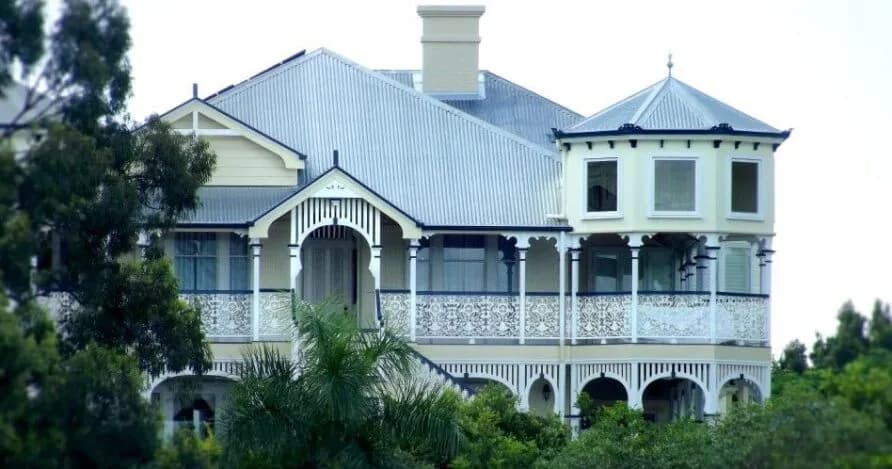
Do you dream of renovating a classic “Queenslander” in Paddington or Ashgrove? You likely face Character Residential zoning rules. These areas have strict “Demolition Control” to keep the city’s historic look.
- Pre-1947 Protection: You generally cannot demolish a home built in or before 1946.
- Renovation Loans: Banks may limit your “construction loan” if your plans are too modern. They want the home to match the Traditional Building Character of the street.
- Strict Approvals: You will need a specific Development Approval (DA) from the council. This process can take months and add thousands to your costs.
- Valuation Risks: A bank valuer may “under-value” the project if the heritage rules limit its resale appeal.
The "Suncorp Stadium" & High-Density Risk Zones
Beyond floods and heritage, Brisbane has another specific hurdle: postcode restrictions. Banks often maintain “blacklists” or “high-density caution lists” for certain areas—particularly high-rise pockets in South Brisbane, Fortitude Valley, or the Milton precinct near Suncorp Stadium.
- Concentration Risk: If a bank already has too many loans in one specific apartment building or street, they may simply say “no” to your application.
- Higher Deposit Requirements: In these zones, banks often slash their LVR limits. Instead of a 5% or 10% deposit, you might be forced to tip in up to 30% to get the deal across the line.
- Square Meterage Rules: Be careful with “micro-apartments.” Many lenders will not fund properties with an internal living space of less than 40m² or 50m² (excluding balconies).
Read more: Best suburbs in Brisbane 2026
Home Loan: Features for Brisbane Buyers
Choosing the right loan features is just as important as the interest rate itself. In 2026, the RBA cash rate sits at 4.10%, making every dollar of interest count. To save money, you need a loan that works with your lifestyle.
Variable vs. Fixed: The 2026 Verdict
Many Brisbane buyers are asking if they should lock in their rate. With the recent March hike, the choice between fixed and variable is a “line ball” decision. You must weigh up certainty against flexibility.
- Variable Rates: These offer the most features, like redraw and full offset accounts. If the RBA cuts rates later in 2026, your repayments will drop automatically.
- Fixed Rates: These give you a “set and forget” budget for 1 to 5 years. However, most fixed loans limit extra repayments and rarely offer a 100% offset.
- The Split Loan Strategy: Many of our clients choose to fix half their loan for stability. They keep the other half variable to use an offset account.
The Offset Power-Play: Using Multiple Offsets
An offset account is a regular bank account linked to your mortgage. Every dollar in this account cancels out interest on your loan. In 2026, “multiple offset accounts” are the ultimate budgeting tool for Brisbane families.
- How It Works: If you owe $600,000 but have $50,000 in offset, you only pay interest on $550,000.
- The Multi-Offset Advantage: Most top lenders now let you open up to 10 separate offset accounts.
- Bucketing Your Money: You can have one offset for your “emergency fund,” one for “holidays,” and one for “daily spending.”
- Daily Interest Savings: Banks calculate interest daily. Keeping your salary in an offset for even a few days saves you money.
Redraw vs. Offset: Which is Better?
A redraw facility also lets you put extra cash into your loan to save interest. However, there are key differences you need to know.
- Access: Offset money is in a separate account you can use with a debit card. Redraw money is “inside” the loan and may require a bank transfer to access.
- Tax Benefits: If you plan to turn your home into a rental later, an offset is usually better for tax.
- Fees: Basic loans often have free redraw but no offset. Premium “Package” loans usually include an offset for an annual fee of around $395.
Which Banks Are Best for Brisbane Home Buyers in 2026?
There is no single “best” bank for every Brisbane buyer. The right lender for you depends on your job, your deposit, and the type of property you want to buy. While the “Big Four” banks still dominate the market, smaller lenders and “non-banks” are often more flexible.
The Top Performers for Brisbane Borrowers
Based on 2026 market data and recent awards from Canstar and Mozo, several lenders stand out for specific types of Brisbane buyers:
- CommBank (CBA): Best for First Home Buyers & Digital Speed. CBA was recently named Bank of the Year for First Home Buyers. They offer some of the fastest “conditional approvals” in the industry—sometimes in as little as 10 minutes. This is a massive advantage in Brisbane’s fast-moving auction market.
- Great Southern Bank: Best for Customer Service & Local Roots. Formerly Credit Union Australia (CUA), this Brisbane-headquartered bank remains a favorite for locals. They consistently win awards for Most Recommended First Home Buyer Loan and offer highly competitive offset accounts.
- Suncorp & Bankwest: Best for Self-Employed Buyers. If you have an ABN, these lenders are often more “common sense” with their math. They are currently leaders in 2026 for “Alt-Doc” loans, which help business owners prove their income using BAS statements instead of two years of tax returns.
- Unloan & Macquarie: Best for Low-Rate Variable Loans. If you have a 20% deposit and want a “no-frills” low rate, digital-first lenders like Unloan (backed by CBA) are hard to beat. Macquarie remains a top pick for Brisbane investors due to their industry-leading technology and fast turnarounds.
Major Banks vs. Non-Bank Lenders
In 2026, a growing number of Brisbane buyers are moving away from traditional banks. Non-bank lenders (like Pepper Money or Firstmac) don’t rely on customer deposits for funding. This allows them to be more flexible when a big bank says “no.”
- Flexible Servicing: Non-banks often use a lower “stress test” than the standard 9.10% used by major banks.
- Complex Scenarios: If you have a unique property (like a tiny apartment in the CBD) or a complex income, a non-bank is often the best path to approval.
- Fast Turnaround: While big banks can get bogged down in paperwork, non-bank lenders can often move from “application to offer” in just 48 hours.
How to Choose the Right Lender
Don’t just chase the lowest headline rate. A cheap loan is useless if the bank won’t actually lend you the money you need. A mortgage broker in Brisbane compares over 30 different banks and non-banks side-by-side. We look at the “fine print” to find the lender that fits your specific home loans in Brisbane goals.
Uncovering Hidden Home Loan Fees in Brisbane
Banks love to advertise low interest rates, but the true cost of a loan is often buried in the fine print. Home loan “fee creep” can add hundreds (or even thousands) of dollars to the average Brisbane mortgage. Use this outline to audit your loan and ensure you aren’t paying a “loyalty tax” to your lender.
The Upfront "Get-Started" Fees
Before you even make your first repayment, these charges hit your bank account.
- Loan Establishment Fee ($0–$800): Also called an application fee. Many “Big Four” banks like CBA or Westpac charge roughly $600, though online lenders often waive this to stay competitive.
- Property Valuation Fee ($100–$600): You pay for the bank’s independent valuer to verify your home’s worth.
- Mortgage Registration Fee (~$240): A mandatory QLD Government charge to register the bank’s interest on your property title.
- Legal & Documentation Fees ($200–$450): Some lenders pass on the cost of their lawyers drafting your mortgage contract.
Ongoing "Life of the Loan" Costs
These “small” monthly amounts compound over 30 years into significant debt.
- Annual Package Fee ($300–$400): Common on “Professional Packages” that bundle a credit card and offset account.
- Monthly Service Fees ($5–$15): A “maintenance” fee for basic accounts.
- Offset Account Fees ($10/month): Some lenders charge specifically to link an offset facility to your variable loan.
- Rate Lock Fee (0.15% of loan or ~$500): If you’re fixing your rate, this “insurance” prevents the rate from rising between your application and settlement. In 2026, on a $1.15M Brisbane median home, a 0.15% fee equals a staggering $1,725.
The "Exit" Sting: Fees When You Leave
Even when you pay off your loan or refinance, the bank has one last grab.
- Mortgage Discharge Fee ($150–$500): The administrative cost of releasing your title.
- Fixed-Rate Break Costs: If you exit a fixed term early, these can cost thousands depending on how much market rates have dropped since you signed.
How A Mortgage Broker In Brisbane Secures Your Approval
Securing a home loan Brisbane is about more than just having a deposit. Banks have tightened their rules due to high interest rates. A local expert knows how to present your application so the bank says “yes.” Here is how working with an expert mortgage broker can help get your home loan approved.
LMI Waivers: The "Secret Lists" for Professionals
Did you know your job could save you over $30,000? Many lenders offer LMI waivers to specific high-stability professionals. This allows you to buy with a 5% to 10% deposit while paying $0 in insurance fees.
- Medical Pros: Doctors, dentists, and even some nurses can borrow up to 95% LVR with no LMI.
- Legal Experts: Solicitors and barristers often qualify if they earn over $150,000.
- Finance & Accounting: Accountants (CPA/CA) and actuaries can often skip LMI with a 10% deposit.
- Education & Energy: In 2026, some banks have added teachers and mining engineers to these “special” lists.
Verified Pre-Approvals: Why Humans Beat Systems
Most online “pre-approvals” are just computer guesses. These “system-generated” clicks can fail when you actually find a home. In Brisbane’s fast market, you need a verified pre-approval:
- Human Assessed: A real bank credit officer reviews your payslips and tax returns upfront.
- Auction Ready: This gives you the confidence to bid “unconditional” at a Saturday auction.
- 90-Day Certainty: Your approval usually lasts for three months. This gives you time to find the perfect property.
- Beating Cash Buyers: Sellers prefer offers from buyers with a fully assessed, “human” approval.
The 2026 Living Expense Audit: "Scrubbing" Your Statements
Some banks now use AI to scan your last three months of bank statements. They look for “red flags” that prove you might struggle with a 9.10% stress test. We help you “scrub” your statements before the bank sees them.
- Subscription Creep: We identify unused apps or gym memberships that eat your borrowing power.
- The UberEats Factor: Frequent food delivery can look like a lack of financial discipline.
- The HECS Strategy: In 2026, a small student debt can drop your loan limit by $50,000. We help you decide if paying it off is the best move.
- Pattern Recognition: We ensure your “self-reported” spending matches the reality of your bank transactions.
Expert tip: Don’t go into a bank interview alone. Give us a call on 1300 088 065 or book a free assessment online to see how we can help.
Step By Step Guide To Home Loans Brisbane
Navigating the Brisbane property market is a unique process, largely governed by Queensland’s specific REIQ contract laws. Here is a step-by-step breakdown of how to buy a house in Brisbane
Step 1: The Initial Assessment
Before browsing listings in Paddington or Chermside, it’s essential to establish your “baseline.” This involves a deep dive into your net disposable income, existing liabilities, and savings. In the current market, lenders are looking for stability, so having a clear picture of your borrowing capacity early prevents the heartbreak of falling for a home that sits outside your reachable price bracket.
Step 2: Pre-Approval (Your Bidding Power)
A “human-verified” pre-approval is your strongest tool in a competitive market. Unlike an online automated estimate, this involves a credit officer physically reviewing your payslips and tax returns. In Brisbane, where auctions are common, having this 90-day guarantee allows you to bid with confidence, knowing exactly where your limit lies.
Step 3: The Property Search & Due Diligence
Once you’ve found a property, the Brisbane-specific checks begin. You must order a BCC FloodWise report to understand any water risks and arrange a professional building and pest inspection. Under standard Queensland contracts, you typically have a 5-business-day cooling-off period to pull out if you change your mind (though a 0.25% penalty usually applies).
Step 4: Building & Pest and Finance Clauses
In Queensland, most contracts are “subject to” a finance clause and a building and pest clause.
- Timelines: These are usually set for 14 to 21 days from the contract date.
- Action: You must work quickly to satisfy these conditions. If the bank or the inspector flags an issue, your solicitor uses this period to negotiate or terminate the contract before it becomes “unconditional.”
Step 5: Unconditional Approval
This is the major milestone. Once the bank has completed its independent valuation and is satisfied with your financial position, they issue a formal Unconditional Approval. At this point, the contract is legally binding. You are now committed to the purchase, and the “countdown to settlement” begins.
Step 6: The Insurance & Legal Handover
In Queensland, the risk of damage to the property passes to the buyer at 5:00 PM the next business day after the contract is signed—not at settlement. You must arrange building insurance immediately. During this phase, your solicitor handles the title searches and prepares the electronic “PEXA” workspace where the final exchange of funds and ownership occurs.
Step 7: Settlement Day (The 4:00 PM Deadline)
Settlement typically occurs 30 to 45 days after the contract is signed. In Brisbane, “time is of the essence,” meaning deadlines are strict. Most settlements aim to be finalized by 4:00 PM.
- The Grace Period: Under recent REIQ contract updates, if a bank delay occurs, you may be able to request a one-off 5-business-day extension to avoid losing your deposit.
- Completion: Once the digital transfer is confirmed, the agent is notified to release the keys to you.
Home Loans Brisbane FAQs
What is the current RBA cash rate for Brisbane home loans?
As of March 2026, the RBA cash rate is 4.10%, which has led most Brisbane lenders to set variable rates between 5.50% and 6.20%.
Can I get a home loan in Brisbane with a 5% deposit?
Yes. Using the 2026 First Home Guarantee, eligible Brisbane buyers can purchase with a 5% deposit and pay $0 in Lenders Mortgage Insurance (LMI).
Is it better to fix my home loan rate in 2026?
With rates at 4.10%, many Brisbane buyers are “splitting” their loans—fixing 50% for budget certainty and keeping 50% variable to use an offset account.
Do I need a 20% deposit for a house in Brisbane?
No. While 20% avoids LMI, many “Big Four” and non-bank lenders in 2026 offer 10% or 5% deposit options for professionals like doctors or accountants.
How much can I borrow for a Brisbane home loan in 2026?
Most lenders now use a 3% serviceability buffer, meaning they test if you can afford repayments at roughly 7.10% to 9.10% interest.
Does Brisbane have a stamp duty concession for first-home buyers?
Yes. In 2026, there is $0 stamp duty on existing homes under $700,000 and brand-new homes of any value in Queensland.
How long does a home loan pre-approval last in Brisbane?
Most “human-verified” pre-approvals in the 2026 market last for 90 days, giving you three months to bid at auction.
What is a "Green Home Loan" in Queensland?
It is a discounted mortgage for energy-efficient homes. In 2026, these are popular for new builds in Brisbane growth corridors like Ripley or North Lakes.
What is the "Form 2" Seller Disclosure in Brisbane?
It’s a mandatory document sellers must provide before you sign a contract, detailing encumbrances and zoning.
Does Brisbane have a cooling-off period?
Yes, 5 business days for private treaty, but zero for properties bought at or within 2 days of an auction.
When does a buyer become responsible for insurance in QLD?
At 5:00 PM the first business day after the contract is signed by both parties.
Can I buy a home in Brisbane with a 5% deposit?
Yes, through the First Home Guarantee, which removes the need for Lenders Mortgage Insurance (LMI).
What happens if I miss my Brisbane settlement date?
Since “time is of the essence” in QLD, the seller can terminate the contract and keep your deposit.
Are Brisbane sellers required to disclose past flooding?
Surprisingly, no. You must perform your own due diligence using the Brisbane City Council FloodWise report.
Is a building and pest inspection mandatory in Brisbane?
It’s not legally required, but highly recommended as a “subject to” clause in your contract.
How much is the First Home Owner Grant in QLD for 2026?
The First Home Owner Grant is a $30,000 for new homes in Queensland under $750,000, available until June 30, 2026.
Next Steps To Getting The Right Home Loan For You
We hope you enjoyed my guide to Home Loans in Brisbane. Our team at Hunter Galloway is here to help you buy a home in Australia. Unlike other mortgage brokers who are just one-person operations, we have an entire team of experts dedicated to helping make your home loan journey as simple as possible.
If you want to get started, please give us a call on 1300 088 065 or book a free assessment online to see how we can help.