

Thinking of breaking into the NSW property market in 2026? While the $10,000 First Home Owners Grant (FHOG) is a powerful boost for new builds, many buyers miss out because they confuse it with Stamp Duty exemptions or fail the strict 12-month residency rules.
This guide, written by an expert mortgage broker, breaks down the latest 2026 thresholds, the ‘investment property’ loophole, and exactly how to secure your government support without the stress.
Overview Of The NSW First Home Buyers Grant Scheme

| Feature | Details & 2026 Limits |
| Cash Grant (FHOG) | $10,000 for new builds, off-the-plan, or major renos. |
| Stamp Duty (FHBAS) | $0 tax up to $800k; discounts up to $1M. |
| Residency Rule | Must live in the home for 12 continuous months. |
| Grant Price Caps | Max $600k (finished home) or $750k (land + build). |
| Minimum Deposit | As little as 5% via the Home Guarantee Scheme. |
| Income Limits | None for the NSW Grant; limits apply for federal schemes. |
| Investment Loophole | You may still qualify if you owned an investment you never lived in. |
Am I Eligible For The First Home Owners Grant In NSW?
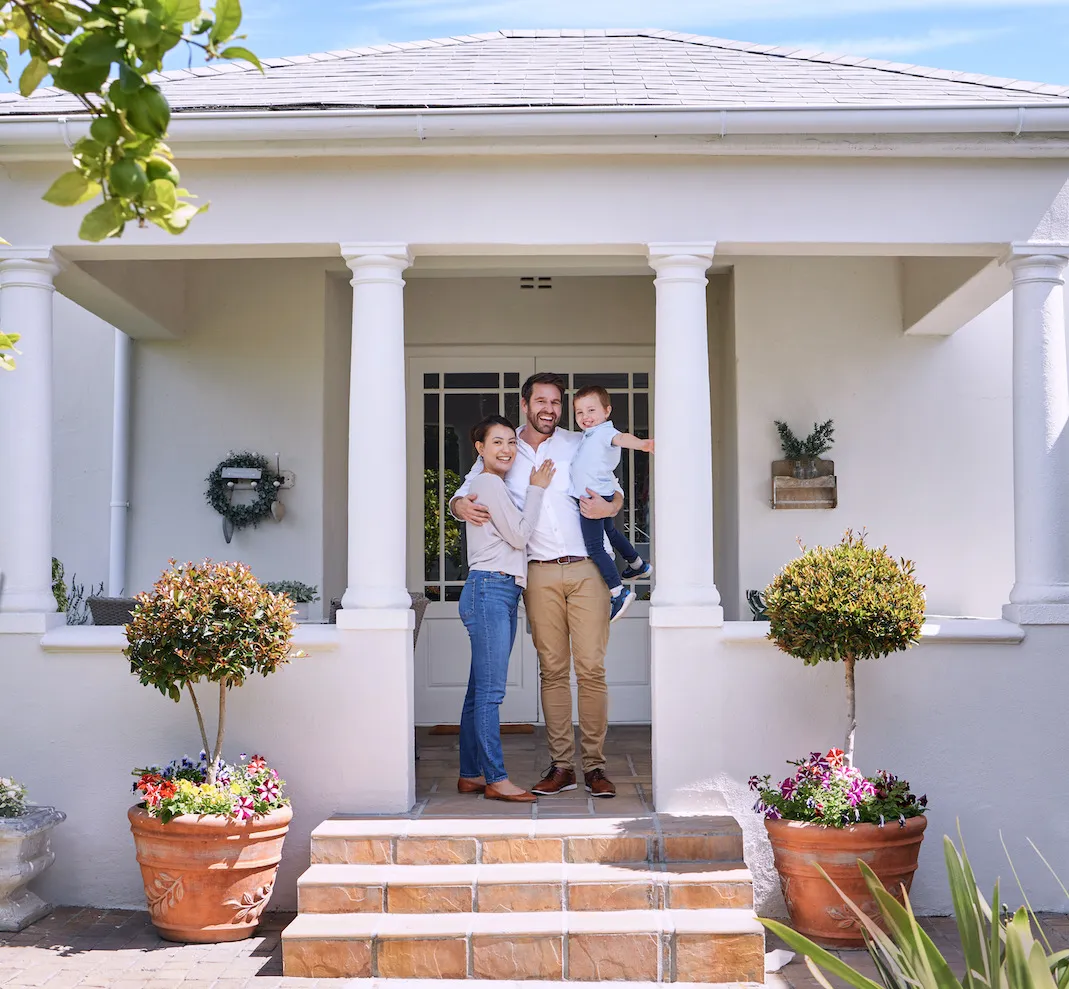
As experienced mortgage brokers, we always double-check these key eligibility rules with first-time buyers. Here are the official qualifying criteria from Revenue NSW to be eligible:
Strict First Home Buyer Rules
The FHOG is strictly limited to genuine first-time buyers who are defined as follows:
- You or your partner have not previously owned residential property in Australia before July 2000
- You have never received a First Home Owner Grant in Australia previously
- Acting as private owner-occupiers, not buying as a company or trust
What if I owned a home after July 2000?
Previous property ownership after 1 July 2000 excludes you only if you lived in that property for a continuous period of 6 months or more. If you owned a property (such as an investment or an inheritance) but never lived in it, or lived in it for less than 6 continuous months, you may still be eligible for the grant on your next purchase.
Property Requirements
- New properties only – includes houses, townhouses, apartments, etc, under construction and not lived in previously.
- If substantially renovated, the home cannot have been occupied since work was completed.
- Total property value caps: $600,000 for homes (newly built or substantially renovated), $750,000 for vacant land plus construction costs
The total purchase price is key for finished properties, while the combined land plus estimated build expense applies if constructing a home from scratch.
Residency Rules After Purchasing
- You must move into the home within 12 months of settlement, or within 12 months of completing construction if you are building.
- For contracts signed on or after 1 July 2023, you must live there as your principal place of residence for at least 12 continuous months.
For contracts signed before 1 July 2023, the minimum occupancy period is 6 continuous months. If your circumstances change and you cannot meet the residency requirement, contact Revenue NSW immediately. Moving out for work does not automatically exempt you.
Source: Revenue NSW: First Home Owner (New Homes) Grant, checked 29 September 2026.
What about Australian Defence Force personnel?
Australian Defence Force members may qualify for an exemption from the residency requirement if all buyers are on the NSW electoral roll. Check your eligibility with Revenue NSW before relying on the exemption.
Given the eligibility guidelines are quite strict, we suggest that first home buyers in NSW check if they qualify before going too far down the home loan process.
The best way is to talk to an expert for advice aligned to your exact circumstances.
The "Investment First" Strategy: Can You Still Get the Grant?

Many buyers think they lose their first home benefits if they own an investment property. This is a common myth. In fact, you might still qualify for the $10,000 First Home Owners Grant (FHOG) in NSW.
The key depends on how you used that property. If you bought an investment but never lived there, your “first home” status remains intact.
How the "Never Lived In It" Rule Works
Revenue NSW looks at your residency history, not just your name on a title. You are likely still eligible for the grant if:
- You bought the investment property after 1 July 2000.
- You have never resided in that property for any period.
- You have not lived in any other residential property you owned.
This “Investment First” strategy is a smart way to enter the market. It lets you build equity while keeping your future grant eligibility.
Essential Proof of Non-Occupancy
You must prove to the government that the property was strictly an investment. Revenue NSW is very thorough with their audits. You will need to provide a solid paper trail.
Prepare these documents to support your application:
- Residential Tenancy Agreements: These show someone else was living in the home.
- Tax Returns: Your records should show rental income declared to the ATO.
- Utility Bills: Evidence that accounts were in a tenant’s name.
- Land Tax Assessments: Proof that the property was registered as an investment.
Avoid Costly Eligibility Mistakes
Don’t guess your eligibility. If you lived in your previous investment property for a continuous period of 6 months or more, you lose the grant. This rule applies to any residential property previously owned by you or your partner anywhere in Australia.
We see many buyers miss out because of poor record-keeping. Always keep your lease contracts and tax records safe. These documents are your ticket to that $10,000 boost.
Expert Tip: Revenue NSW uses data-matching with the ATO and utility providers. Always ensure your residency claims match your official tax records.
Buying From Family: Can You Still Get The First Home Buyers Grant NSW?

Can you buy a home from your parents or siblings and still get the $10,000 grant? The short answer is yes. However, Revenue NSW looks closely at these “related party” transactions. They want to ensure the deal is fair and not just a way to claim tax benefits.
The "Arm’s Length" Rule
For a family sale to qualify, it must be an “arm’s length” transaction. This means the deal should look like a normal sale between strangers.
You cannot simply transfer the title for a tiny amount. Revenue NSW expects the price to match the current market value. If the price is too low, they may view it as a gift. This can lead to your application being rejected.
Why a Full Valuation Matters
When buying from family, you often need an independent valuation. A professional valuer must assess the home’s worth.
This valuation proves the purchase price is fair. It also helps with your home loan. Most lenders require this to ensure the “favourable purchase” meets their strict criteria.
Evidence You Will Need
To get your grant approved, you must provide a clear paper trail. Revenue NSW needs proof that the sale is genuine.
Make sure you have these documents ready:
- Proof of Payment: Bank statements showing the full deposit and final balance being paid.
- Formal Transfer of Land: A legal document showing the title moving into your name.
- Contract for Sale: A standard contract signed by both you and the family member.
- Valuation Report: A report from a certified valuer (not just a real estate agent’s estimate).
Managing "Family Pledges" and Gifts
Many family sales involve a “gifted deposit” or a “family pledge.” This is perfectly legal, but you must document it correctly.
A “Statutory Declaration” is often required. This document confirms the money is a gift, not a loan you must repay. Proper paperwork ensures your NSW First Home Buyers Grant application stays on track.
Expert Tip: Talk to your mortgage broker early. Family sales involve complex tax and legal rules. Getting expert advice now prevents a massive headache at settlement.
What Types Of Properties Qualify For The NSW First Home Owners Grant?

In our experience, you must double-check that your property meets Government criteria. We suggest doing this before you sign any contracts. Key property requirements under the current scheme rules include:
Brand New Homes
This covers properties never lived in before. It includes homes under construction or newly finished. Common examples for first-time buyers include:
- House-and-land packages
- Apartments purchased off the plan
As long as construction finishes within 24 months, you can access the full $10,000 grant.
Substantial Renovations
To qualify under this category, specific guidelines generally apply:
- Most of the original home must be rebuilt or replaced.
- The current sale must be the first since work finished.
- The property must be unoccupied since completion.
These rules stop investors from claiming the grant after minor cosmetic fixes. Always check your renovation evidence with a solicitor or conveyancer.
Knockdown Rebuild Projects
Demolishing an old house to build a new one also qualifies. The home becomes a completely new property in the eyes of Revenue NSW. Consequently, the same residency and value caps apply to these projects.
Property Value Thresholds: Grant vs. Stamp Duty
Understanding the price caps is vital for your budget. In 2026, the limits for the cash grant differ from the stamp duty savings. While the grant helps with costs, the stamp duty exemption often saves you much more money.
The $10,000 Cash Grant (FHOG)
To receive the cash grant, your property must stay under these strict value caps:
- Purchased New Homes: Up to $600,000.
- House and Land Packages: Up to $750,000 (combined land and build cost).
Stamp Duty Exemptions (FHBAS)
The First Home Buyers Assistance Scheme (FHBAS) has much higher limits. This scheme applies to both new and existing homes. Because the thresholds are higher, you might save on tax even if you miss the cash grant.
| Property Type | Full Exemption ($0 Duty) | Concessional Rate (Discount) |
| New or Existing Homes | Up to $800,000 | $800,000 to $1,000,000 |
| Vacant Land | Up to $350,000 | $350,000 to $450,000 |
Expert Tip: If your new home costs $650,000, you miss the $10,000 grant. However, you still pay $0 in stamp duty. This saves you over $24,000 in upfront costs.
Carefully review these price caps before signing your contract. Even being $1 over the limit can lead to a rejection. Reach out to our team to confirm which benefits apply to your specific purchase price.
Check to see if you are eligible for a home loan
Case Study: Sarah’s $11,000 "Near Miss"

Meet Sarah. She is a 29-year-old Registered Nurse who recently moved to the Hunter region to work at the new Maitland Hospital. She is single and has been living with her parents in Newcastle to save every cent for a deposit.
Sarah has her heart set on a brand-new home in Lochinvar. It’s a fast-growing suburb that offers more space than the city while staying connected to her job.
The Scenario:
Sarah finds a 500sqm block in a new estate for $350,000. She chooses a popular four-bedroom house design from a major NSW builder. Initially, the build quote is $390,000. However, after adding a “Hamptons-style” facade upgrade and extra site costs for some minor land levelling, the final construction contract lands at $410,000.
The Financial Breakdown:
- Total Purchase Value: $760,000 ($350k land + $410k build).
- NSW First Home Owners Grant: REJECTED. Because her combined value hit $760,000, she is exactly $10,000 over the grant cap. She loses the $10,000 cash boost because she crossed that $750,000 threshold.
- Stamp Duty Assistance (FHBAS): SUCCESS. Even though she missed the cash grant, Sarah still qualifies for the Stamp Duty Exemption. Since her land was valued at exactly $350,000 (the 2026 threshold for vacant land), she pays $0 in stamp duty.
- Total Savings: Sarah saved $11,500 in tax, but “lost” $10,000 in cash because she didn’t realise how strict the Grant caps were compared to the Stamp Duty rules.
Sarah’s Pivot:
After chatting with our team, Sarah realised that by removing the expensive facade upgrade and sticking to the standard design, her build would have been $399,000. This would have brought her total to $749,000.
That tiny change would have kept her $11,500 tax saving AND secured her the $10,000 cash grant. That’s $10,000 extra she could have used for her driveway or landscaping!
The Lesson:
In suburbs like Lochinvar or Maitland, being “just a little bit over” costs you a lot. Always calculate your combined total against the $750,000 FHOG cap before you sign that final build contract.
How Does The Application Process For The NSW First Home Buyers Grant Work?

Already found your perfect first home and are now worried about paperwork?
Here is an overview of submitting your First Home Owners Grant application with Revenue NSW.
Option 1 - Apply Through Your Broker
Major banks and financial providers can assist directly with forms and documents. Approved agents listed here lodge applications on your behalf.
Key steps usually involve:
- Discussing eligibility for the First Home Owners Grant with your mortgage broker or lender
- Getting pre-approval so they can manage the $10K grant at settlement
- Signing the application form with your lender
- The bank submits the completed application + ID documents to NSW Revenue
Liaising through an established financial provider can really simplify getting approval. But it does mean directing the grant payment towards your home loan balance owed.
Option 2 - Apply Yourself Directly to NSW Revenue
You can also access funds directly by applying online with NSW Revenue once the property becomes legally yours.
Step-by-step, this self-managed approach involves:
- Settling on your property purchase and becoming a registered owner
- Collating identity and purchase documents
- Creating a MyRevenueNSW account
- Completing the First Home Owners Grant application
- Uploading your supporting documents like contracts of sale and identification
- Receiving grant approval and payment details from Revenue NSW
We suggest lodging forms and paperwork within 12 months of your property settlement date. Applications after this timeframe may attract extra scrutiny and requests for more documentation.
Whether you apply directly or through an agent, providing complete, accurate information is crucial for fast assessment and payment.
What Paperwork and Documents Are Required?
Revenue NSW uses a strict “Four Category” Identity System. You must provide one document from each group. Missing just one category will cause a delay or rejection.
Category 1: Evidence of Birth or Citizenship
- Australian Birth Certificate, or
- Current Australian Passport.
Category 2: Evidence of Photo Identity
- Current Australian Driver’s License, or
- Proof of Age card.
Category 3: Evidence of Identity in the Community
- Medicare Card, or
- Tertiary Education ID card.
Category 4: Evidence of Current Residential Address
- Utility bills (Gas, Electricity, or Water), or
- Council rates notice.
💡 Pro Tip: Were you born overseas? You must provide a copy of your foreign passport. This applies even if you are now an Australian citizen. This is a common bottleneck that slows down many applications.
Evidence of Property Purchase
Beyond your ID, you need to prove the transaction is real. Keep these documents ready:
- A signed Contract for Sale.
- Title deeds showing your name.
- Bank records showing your deposit payment.
- For new builds, provide the final “as-built” property valuation.
Providing accurate information ensures a fast assessment. Most complete applications receive approval within two weeks.
6 Key Tips For Fast Approval On Your First Home Buyers Grant Application
Through assisting thousands of first-timers, here are some of our expert tips when applying for the First Home Owners Grant in New South Wales:
1. Double Check Eligibility First
Have all intended property owners confirm they meet the criteria before getting too far along with paperwork or deposits.
2. Gather a Complete Paper Trail
Collate purchase contracts, title deeds, pre-approvals, tax invoices and statements showing grants are genuinely needed.
3. Certify Supporting Documents Upfront
Getting copies certified by a JP or professional avoids delays in confirming identities down the track.
4. Lodge Forms Within 12 Months of Settlement
Submitting your application soon after the purchase date helps avoid extra requests for more records later.
5. Keep All Related Documents Handy
Having previous correspondence, reference codes, and other paperwork close by helps if the agency has queries about your application.
6. Seek Help From Your Lender or Broker
We regularly handle applications, so talk to us for guidance or to manage submissions on your behalf.
Remember, approval for first home owner grants often takes less than 2 weeks once complete forms are lodged. So stay in touch with processing teams if your application exceeds standard timeframes.
What Happens If Your Grant Application Is Denied?
Don’t panic. Many rejections happen because of simple, fixable mistakes. Understanding why rejections occur helps you avoid them or fight them if needed.
Common Reasons for Rejection
Revenue NSW is very strict with their criteria. Even a tiny error can lead to a “no.” In our experience, these are the most common pitfalls:
- Value Cap Breaches: If your total property value is $600,001, you are over the limit. Being over by just $1 will result in an automatic rejection.
- Missing Identity Documents: You must provide one document from each of the four categories (e.g., Passport, License, Medicare, and a Utility Bill).
- The Overseas Trap: If you were born overseas, you must provide your foreign passport copy. This applies even if you are now an Australian citizen.
- Prior Ownership: Revenue NSW uses data-matching. They will find out if you or your partner previously owned property in Australia.
The 60-Day Window: How to Object
If your application is denied and you believe the decision is wrong, you have rights. You can lodge an “Objection to Assessment” with the Chief Commissioner of State Revenue.
You must act fast. You have exactly 60 days from the date of the decision to lodge your objection in writing. If you miss this window, it is very difficult to get a review.
How to Lodge a Strong Objection
An objection is a formal legal process. It is not enough to say the decision is “unfair.” You must prove that the decision was factually or legally incorrect.
To build a winning case:
- Use the Right Form: Use form OSR 027A (for the grant) or OSR 027B (for stamp duty).
- State Your Grounds: Clearly explain why you meet the rules. Use simple, direct language.
- Attach New Evidence: If you were rejected for a missing document, include it now.
- Pay the Tax First: To avoid interest charges while you wait, it is often best to pay any owed duty upfront. You will be refunded if you win.
What to Expect Next
Once you lodge your objection, an independent review branch will look at your case. They do not work for the team that first rejected you. This ensures a fair and fresh set of eyes on your application.
Expert Tip: Revenue NSW usually takes around 15 business days to process an application. If yours is taking longer, check your email. They may have sent a “request for further information” that you missed!
Would you like to learn about your situation?
Are There Special Conditions After Receiving Your First Home Buyers Grant in NSW?

Buying your first home in NSW comes with specific rules you must follow. These rules ensure the $10,000 grant goes to genuine homeowners, not investors. You must understand the “usage rules” to avoid heavy penalties or having to pay the money back.
The 12-Month Residency Rule
For contracts signed on or after 1 July 2023, you must live in the home as your principal place of residence for at least 12 continuous months. The 6 continuous month requirement applies to contracts signed before that date.
You must move into the property within 12 months of settlement. For new builds, this means 12 months from the date construction is finished. Once you move in, you cannot rent the home out until you have stayed for a full year.
A Practical Example for 2026 Buyers
Let’s look at how this timeline works for a purchase made today:
- Settlement Date: January 1, 2026.
- Deadline to Move In: January 1, 2027.
- Eligibility Satisfied: January 1, 2028 (after 12 continuous months of living there).
If you move out even one month early, you may lose your eligibility. Revenue NSW uses data-matching to verify that you are actually living in the property.
What If Your Plans Change?
Sometimes life throws a curveball. You might lose your job or have to move for family reasons. If you cannot meet the residency rules, you must notify Revenue NSW immediately.
Depending on your situation, they may allow you to delay your move-in date. In other cases, you might have to repay the grant funds. Being honest and proactive is the best way to avoid further penalties.
Fines for Non-Compliance
Ignoring these rules is a serious matter. Actively avoiding the residency requirements can lead to hefty fines of up to $11,000. Revenue NSW takes these obligations seriously, even long after you receive the payment.
Expert Tip: Keep copies of your utility bills and bank statements from your first year. These act as proof of residency if the government ever audits your application.
Are There Other First Home Buyer Benefits in NSW?
The $10,000 First Home Owners Grant NSW is just the beginning. You can combine it with other massive savings in 2026. These extra benefits can save you tens of thousands of dollars upfront.
Stamp Duty Exemptions (FHBAS)
The biggest saving for most buyers is the First Home Buyers Assistance Scheme. This scheme wipes out or reduces your stamp duty costs. In 2026, the savings are larger than ever before.
For properties up to $800,000, you pay zero stamp duty. This is a full exemption. If your home is between $800,000 and $1,000,000, you pay a lower, concessional rate.
Grant vs. Stamp Duty: The 2026 Numbers
It is vital to understand the difference between the Grant and the Assistance Scheme. The Grant gives you cash for new builds. The Assistance Scheme saves you tax on both new and existing homes.
| Benefit Type | Max Property Value | Max Saving in 2026 |
|---|---|---|
| First Home Owners Grant | $600,000 (New Home) | $10,000 (Cash) |
| First Home Buyers Assistance Scheme (Stamp Duty Exemption) | $800,000 (New/Existing) | Full Exemption (No Transfer Duty) |
First Home Guarantee (5% Deposit)
Saving a 20% deposit is tough in the current market. Fortunately, the Home Guarantee Scheme lets you buy with just a 5% deposit.
The government guarantees the rest of your loan. This means you avoid paying Lenders Mortgage Insurance (LMI). Since October 2025, the government has removed the income restrictions and increased property price caps on available places. This makes it easier for you to secure a spot.
Shared Equity (Help to Buy)
The Help to Buy scheme is a newer option for 2026. The government acts as a “buying partner” with you. They contribute up to 40% for new homes or 30% for existing ones.
This significantly lowers your mortgage and monthly repayments. You only need a 2% deposit to get started. You can buy back the government’s share over time as your income grows.
Expert Tip: You can often “stack” these incentives. For example, you could use the 5% deposit scheme and the stamp duty exemption together. This combination can get you into your home years sooner.
Are you ready to see which incentives you can combine? Speak to our team to maximize your assistance and accelerate your path to homeownership.
First Home Buyers Grant NSW FAQs
Can I get the NSW FHOG if I buy an existing home?
No. The $10,000 grant is strictly for brand-new builds, off-the-plan purchases, or substantially renovated homes. Existing homes only qualify for Stamp Duty relief via the FHBAS.
How long do I have to live in the home to keep the grant?
For contracts signed on or after 1 July 2023, you must live in the home as your principal place of residence for at least 12 continuous months. Move in within 12 months of settlement, or within 12 months of completing construction if you are building. For contracts signed before 1 July 2023, the minimum occupancy period is 6 continuous months.
What is the maximum property value for the NSW Grant in 2026?
The cap is $600,000 for a new home purchase or $750,000 for a house-and-land package (combined land and build contract).
Are permanent residents eligible for the NSW First Home Buyers Grant?
Yes, as long as at least one applicant is an Australian citizen or permanent resident and meets all other criteria.
Can I rent out a room while receiving the FHOG?
Yes, provided you also reside in the property as your principal place of residence for the required 12-month period.
Does the grant count toward my 5% deposit?
Most lenders allow the $10,000 grant to be used as part of your “total” deposit, but they usually still require “genuine savings” (usually 5%) held in your account for 3 months.
What if I move out before the 12 months are up?
You must notify Revenue NSW immediately. You may be required to repay the grant, and failure to disclose can lead to fines of up to $11,000.
Is there an income limit for the NSW First Home Owners Grant?
No. Unlike the federal “Help to Buy” or “Home Guarantee” schemes, the NSW FHOG does not have an income cap.
Next Steps For First Home Buyers in NSW
We hope this guide has given you valuable insights into applying for and receiving the $10,000 First Home Buyers Grant in New South Wales.
If you require any specific advice, have questions, or need help taking the next steps to buy your dream home, please feel free to get in touch. Our team at Hunter Galloway is here to help you buy a home in Australia. Unlike other mortgage brokers, who are just one-person operations, we have an entire team of experts dedicated to making your home loan journey as simple as possible.
If you want to get started, please* give us a call on 1300 088 065 or* book a free assessment online to see how we can help.

Our team of home loan experts is here to help you buy a home in NSW
***This article contains general information only. Speak to a professional for advice tailored to your circumstances. Check Revenue NSW details for the latest program rules. ***