Quick heads up: we're not taking on commercial property loans right now while we get ready to open up commercial lending as a specialty. Everything in this guide is still how the market works today. When we open up commercial lending, this page will be the first place we say so.
Commercial loans are a different beast to home loans. The lender cares more about the property's income, the lease and the tenant than your payslip. That means bigger deposits, shorter terms, higher rates and regular reviews. This guide covers how lenders assess a commercial deal, what deposit you need and the mistakes that get applications knocked back.
Bigger deposit. Most lenders cap borrowing at 60 to 70% of the property value. Some standard properties can reach 75%, while higher-risk properties can be limited to 50 to 55%. Commercial loans don't have LMI to cover a smaller deposit.
Loan term. Standard properties commonly have terms of 15 to 25 years. Some lenders and specialised properties have shorter terms of 5 to 15 years. Shorter terms mean more principal to repay each year.
Rate and fees. Expect pricing to depend on the property, lease, tenant and deposit. Include valuation, legal, establishment and ongoing fees when comparing offers.
Regular reviews. Many lenders review the loan every 12 to 36 months. Keep your financials, lease details and cash flow forecasts ready.
The Fundamentals Of Commercial Property Loans
In this section, we’ll introduce you to the basics of commercial property loans. We’ll kick things off with how much you can borrow and then present various options across the Australian lending landscape.
How Much Can I Borrow?
The initial point of interest with commercial lending is the amount you can borrow, and it’s largely influenced by the security the lender holds.
Properties like shopping centres or offices are seen as more secure than an unsecured cash flow business. This guide focuses on secured commercial property loans:
You can borrow up to 100% if you have aguarantor or additional collateral for the loan.
Some lenders go up to 75% for standard assets valued up to $2m, which means a 25% deposit.
You can borrow up to 70% if the property is valued at up to $5m.
If the property is valued over $5m and up to $100m, lenders and banks will consider these on a case-by-case basis.
What Type of Security Can I Use?
A key difference between commercial and home lending lies in the security property. With commercial lending, the security is typically commercially zoned properties like factories or office buildings. Here are some common types:
Warehouses
Office Buildings
Shopping Centres
Factories
Shops
Land Subdivisions
Residential Property Development Finance
Block of Strata units
Block of Flats
If there are more than three units in one development, banks consider this as specialised property and will require a higher deposit. The deposit could be between 25-30%, depending on the price.
Higher-risk properties might demand a higher deposit and thorough valuation analysis. Here is a list of high-risk properties:
Short-term accommodations like motels, hotels, or caravan parks.
Aged Care facilities like residential care and respite centres
Child Care and Montessori centres
Petrol Stations and specialised retail outlets
Management rights
Shopping Villages and Neighbourhood retail centres
Englobo Land and speculative land banking sites
Different Types of Commercial Lending (Purpose)
Commercial property borrowers do not have the same consumer protections as home lending
In other words, commercial property borrowers do not have the same consumer protections as home lending. The type of commercial lending purpose will ultimately affect how the lender will assess, and price your loan.
Investment: lowest risk. Purchasing or refinancing a commercial property for rental purposes.
Owner occupied: medium risk. Purchasing or refinancing a commercial property for your own business operations.
Working capital: high risk for most lenders. Funding for your business’s day-to-day operations.
Other: purposes beyond the above (e.g. buying a real estate agency business) are considered on a case-by-case basis.
The security property doesn’t decide whether or not the loan falls under the National Consumer Credit Protection. The purpose of the funds is what determines this.
For example, if you’re using a commercial property as security to borrow funds for a new home, the NCCP might apply, and some lenders may not approve your loan because of this.
Banks find commercial property investment the simplest and lowest-risk lending, and some go up to 75% LVR (a 25% deposit) on standard investment properties up to $2m.
What Income Do I Need For Commercial Property Loans?
Commercial lending is more relaxed when it comes to income verification because there are fewer legislative restrictions compared to residential lending. Lenders aren’t required by law to prove a borrower can afford the loan to the same extent as with home mortgages. This leads to more income verification options, such as:
Full Doc: You must provide the last 2 years’ tax returns and financial statements to show your income is higher than the interest costs.
Lease Doc: You only need to provide rental income from the investment. This income should be higher than the interest costs.
Low Doc: Basic income verification, like a letter from your accountant or BAS statements, is needed to confirm your income is higher than the interest costs.
Forecasted Income: Provide financials, including your profit and loss statements, to show expected business income growth to cover the interest costs.
Despite the more relaxed income verification requirements in commercial lending, lenders will not lend to individuals who can’t afford their loan repayments. It’s unrealistic to expect approval for a high-risk loan.
How To Qualify For A Commercial Property Loan
1. Show Strong Financials and Stable Cash Flow
Lenders want consistent financial performance. They review your business income, expenses, tax returns, and rental income. They usually assess:
Trading history of at least two years
Stable or growing revenue
Clean financial statements
Low debt compared to income
Strong cash reserves
Many lenders use the Debt Service Cover Ratio (DSCR) to measure repayment strength. A DSCR of 1.25x is common and means your income must cover repayments by at least 25%.
2. Demonstrate A Strong Lease or Tenant Profile
For investment properties, the lease often matters more than the borrower. Lenders review:
Lease length
WALE (Weighted Average Lease Expiry)
Tenant quality
Rent reviews and outgoings
Vacancy risk
A strong lease or national tenant improves your rate and borrowing power. Short leases or high vacancy risk can reduce your LVR.
3. Meet Deposit And LVR Requirements
Most lenders cap commercial loans at 60 to 70% of the property value, so expect to need a 30 to 40% deposit. Standard assets like warehouses and offices up to $2m can stretch to 75% with some lenders. Specialised or higher-risk properties can drop to 50 to 55%, which means a 45 to 50% deposit. Anything below a 25% deposit usually needs extra security or a guarantor behind it. Some lenders may allow you to use equity in another property, but cross-collateralising increases risk.
4. Provide Clear Documentation
Strong documentation speeds up approval. Prepare:
Two years of business tax returns
Two years of financial statements
Lease agreements and rent roll
BAS statements
Personal tax returns
Asset and liability summary
Bank statements
Identification
Low-doc or lease-doc options may require less paperwork, but they usually come with lower LVRs
5. Maintain a Strong Credit Profile
Lenders want borrowers with a reliable credit history. They look for:
On-time repayments
Low credit enquiries
No defaults or court actions
Low unsecured debt
Stable borrowing behaviour
6. Ensure the Property Meets Lender Criteria
Not all commercial properties qualify. Lenders assess:
Property type
Location and demand
Building condition
Zoning
Environmental risks
Valuation results
Industrial assets often receive better terms due to lower vacancy rates. High-risk assets may reduce your maximum LVR or lead to declines.
7. Prepare for Lender Reviews and Ongoing Conditions
Most commercial loans include regular reviews. Banks check your position every 12 to 36 months. Reviews assess:
Updated financials
Lease performance
Valuation changes
Cash flow
If performance drops, lenders may request changes to your loan. Strong financial management helps prevent issues.
8. Work With a Broker Who Understands Commercial Lending
Each lender has different commercial lending rules. A commercial mortgage broker can:
Compare policies
Negotiate pricing
Identify lender preferences
Prepare your documents
Manage valuation and lease reviews
Finding The Right Lender
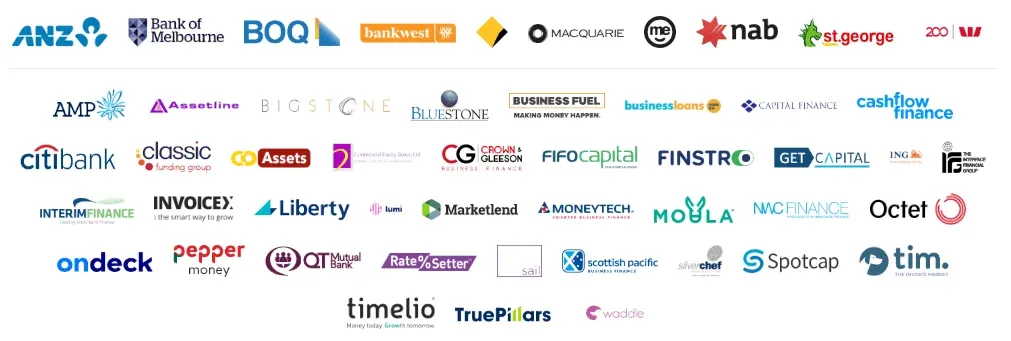
Commercial lenders range from the major banks to smaller banks, specialty lenders and private lenders.
Commercial lenders differ in what they'll lend against, how much they'll lend and what they charge. Here's how the main types compare.
Which lender does what?
Most lenders differ when it comes to risk tolerance, the types of security they specialise in, and how they verify income. Given the constant policy changes and multiple variables like security type, your income situation, the lender’s current risk appetite, and risk tolerance, it’s tough to give a general ‘this lender will be right for you’ statement. Each application and security property is unique.
Here’s a broad overview of the current commercial lending market in Australia:
Major Banks That Offer Commercial Loans
Most banks offer their own commercial property loan products and have limited areas of specialty. If you’re purchasing a simple investment like a warehouse or an office, they’re likely to offer some of the most competitive rates in the market. However, they typically cap their LVR at 65% for commercial property. Examples of the major banks include:
Non-major banks also offer commercial lending. They sometimes offer higher LVRs than major banks but may have higher rates and fees. However, they can be a good option if your tax returns aren’t up to date because they have added policy flexibility and alternative income considerations. Some examples include:
Adelaide And Bendigo Bank Group offers commercial loans through their wholly owned subsidiary,Sandhurst Trust.
Specialty lenders focus on riskier businesses that don’t fit within the bank’s credit policies. They are the go-to for options like low doc and lease doc. They can sometimes be more expensive due to the higher risk involved. Examples include:
In the commercial lending space, hundreds of private lenders exist, usually composed of wealthy individuals or syndicates. They cater more to short-term lending (3 to 6 months) and charge interest per month instead of per annum. Examples include:
The cost of funds varies among lenders in Australia depending on their funding sources. Generally, larger lenders with lower-risk appetites tend to offer lower rates.
Additionally, most of these lenders utilise a risk matrix to quote interest rates on significant transactions. They take into account several factors, such as:
Security property: This includes the location, suburb, and area of the property, its condition and appeal, the state of the surrounding market and competition, and economic conditions that may affect the property.
Sponsor/Loan Guarantor: They consider the level of interest cover and the ability to repay the loan, theLoan to Value Ratio, the net asset position, and the sponsor’s previous experience and track record. The team and other people involved in the transaction are also considered.
Lease/holding income: Factors such as the Average Lease Term (WALE), tenants’ details and their financial capacity, as well as their industry sector and how it might affect the rental are assessed.
As previously mentioned, commercial property loans are more complicated than regular home loans, which only factor in LVR, loan size, and loan amount.
Fees and Charges
When applying for a commercial property loan, consider the associated fees and charges, including establishment and deferred establishment fees. Always ask for the lender’s fee schedule before applying and confirm they do not have any early repayment fees applicable if you refinance or sell the property within a set period.
Other Questions to Consider
As with residential lending, you can choose from fixed or variable rates in commercial lending. If you want certainty and are risk-averse, consider a fixed-rate commercial loan. If you are comfortable with some volatility and want to be able to make additional repayments, a floating or variable-rate commercial loan could be a better option. If you are undertaking a property development or construction project, you must use a variable-rate loan.
Why do fixed rates have an early repayment cost?
Fixed-rate commercial loans are a contract between you, the borrower and your bank. While they give you the certainty of repayment for that set period, they also give your bank certainty about the interest repayments they will receive over the fixed rate term. This lets the bank make hedging and funding arrangements to match. In making these hedging and funding arrangements, the bank will incur interest costs. If you, as the borrower, repay some or all of your fixed rate early or want to switch before the end of the fixed term, the bank will need to change the funding arrangements. For this reason, the bank will charge you an Early Repayment Cost to recover the bank’s ‘reasonable estimate’ of the costs of changing the arrangements.
Case Study: Fixed Rate Break Costs
As an example, say Shaun takes out a 2-year fixed-rate loan of $500k at an assumed 7%. One year later, Shaun decides to fully repay the loan, and at that time, the interest rates in the market are 5%. In that case, Shaun would pay roughly $9.8k ($1,957 per $100k repaid early) to break the fixed rate.
Commercial Property Loan Features
Commercial loans have fewer features than home loans. Here's what to expect.
Product Features
Unlike regular home loans, commercial loans usually have basic features. Here are some of the key characteristics:
Entities: Individuals, trusts, companies, or self-managed superannuation funds (SMSF) are eligible.
Loan term: Up to 25 years for commercial security (depending on the lease term).
Interest-Only Period: Up to 10 years is acceptable (depending on the lease term).
Extra repayments: Available on variable facilities.
Redraw: Sometimes available, depending on the lender.
Cash Out: Available, depends on the purpose.
Capitalised Interest: Available, depending on the purpose.
Internet Banking: Mostly available, depending on the lender.
Offset: Not generally available, depends on the lender.
Different lenders have distinct target markets, so their product features depend on that. For instance, lenders specialising in development and construction finance generally offer products with limited features.
General Security Agreement (GSA)
When applying for a commercial property loan, the bank might require you to sign a General Security Agreement or GSA. This is a form of security in addition to the property that gives the bank security over all the assets owned by a person or company acting as a guarantor to the loan.
If you have sufficient equity in the security property, your mortgage broker could negotiate the exclusion of the GSA. Factors that can help mitigate the need for a GSA include purchasing a standard commercial property, keeping the total lending under $1m, demonstrating strong financials, and showcasing a strong business plan and experience.
Changing Banks: Is it Necessary?
Most banks will require you to switch all your business banking and lending to them as part of the deal if you’re purchasing your own commercial premises. However, it’s possible to switch lenders without moving your business banking.
You can do that by borrowing against a commercial or residential property, reducing the unsecured lending to below $1m, negotiating the annual review requirement, or considering non-bank lenders.
Check to see if you are eligible for a home loan
Choosing A Lender
This section shows how a commercial loan gets put together, and why getting several offers matters.
The Process of Getting a Commercial Loan
Obtaining a commercial loan entails a more detailed procedure than a regular home loan. In commercial lending, significant time is spent upfront on the credit proposal and memo before it even reaches the bank’s credit team. If your mortgage broker has done a good job, they will receive offers from 2-3 banks.
Case Study: Retail Shop Purchase
Here's an example from a few years ago, when rates were much lower than they are now. The rates are out of date, but the gap between the offers still shows why it pays to compare. Three banks offered these terms on a set of retail shops:
Bank
LVR
Establishment Fee
Term
All in Rate
Bank 1
55%
0.40%
2.5 years
3.14%
Bank 2
55%
0.30%
3 years
3.00%
Bank 3 (buyer’s existing bank)
50%
0.50%
3 years
3.30%
The broker then went back to all 3 banks with feedback on their offers and gave each one last chance to sharpen its rate. After the final round:
Bank
LVR
Establishment Fee
Term
All in Rate
Bank 1
55%
0.40%
2.5 years
2.95%
Bank 2
55%
0.30%
3 years
2.80%
Bank 3 (buyer’s existing bank)
50%
0.50%
3 years
3.00%
Bank 2 came out cheapest, even though Bank 3 was the buyer’s existing bank. Bank 3 was also the most expensive and offered the lowest LVR.
The Impact of a 0.50% Rate Difference
You might wonder, what difference does 0.50% make? In this example, the facility was $12m, so an extra 0.50% adds $60k a year, or $180k over 3 years. This demonstrates how slight variations in rates can lead to substantial differences in the cost of a loan, thus emphasising the importance of diligent lender selection.
Annual Reviews
This section focuses on advanced tips and strategies concerning annual reviews in commercial lending. We’ll explore why annual reviews matter and discuss strategies to find lenders who do not necessitate these reviews.
Why Do Banks Need Annual Reviews?
In commercial lending, simply making your loan repayments on time isn’t sufficient. For larger loans, lenders often require regular access to your profit and loss statements to verify your financial health and your ability to continue repaying the loan. This scrutiny can range from quarterly Business Activity Statement (BAS) reviews to ongoing facility monitoring.
Common situations where lenders typically request annual reviews include:
When lending is over $2m
When there are unsecured facilities involved
When specialty properties are used as security
When the Loan-to-Value Ratio (LVR) is high or outside regular parameters
When your repayments have fallen behind
In most cases, lenders will request to see your financials, including profit and loss and balance sheet statements, as well as a cash flow forecast. Some may even require a revaluation of your security property. Beware, if the valuation comes in lower, the bank could use this to label your commercial property as a higher risk, leading to an increase in the margin on your loan!
Which Lenders Do Not Require Annual Reviews?
Several smaller lenders and some specialty lenders that offer 15, 20 or 25 year commercial loans don't require annual reviews. Ask about review conditions before you choose a lender.
Mortgage Broker Or Bank
Many commercial investors use a specialist commercial broker instead of going straight to their bank. Here's why.
Why Choose a Mortgage Broker?
Commercial lenders don't publish most of their pricing, and their policies change often. A specialist commercial broker can help by comparing lenders, negotiating the margin and LVR, and preparing your application.
Will I Get a Better Deal Going Directly to the Bank?
A mortgage broker can often negotiate a better deal with your bank than you could directly. Commercial Relationship Managers in banks are incentivised on portfolio growth and their return on equity. Therefore, they focus primarily on the bank’s profit. This focus can result in you getting less favourable terms when dealing directly with the banker.
How Does a Commercial Mortgage Broker Help?
A commercial broker starts by understanding your deal and your goals, then takes it to the lenders that suit it. They negotiate the margin, LVR and loan terms, then help with valuations, formal approval and document signing.
How Much Do Commercial Mortgage Brokers Cost?
Most commercial brokers are paid a commission by the lender when the loan settles, and some also charge a fee, especially on smaller or more complex deals. Ask any broker how they're paid before you start.
Common Traps And Deal Breakers In Commercial Finance
Buying commercial property can feel straightforward at first. However, several hidden traps can derail your finance approval. Lenders assess commercial deals very differently to residential loans, and small issues can trigger major delays or sudden declines.
Below are the most common deal breakers and how to avoid them.
Why Older Buildings, Asbestos, and Zoning Issues Trigger Lender Hesitation
Lenders scrutinise the asset’s condition because it influences long-term income stability. Older buildings often carry higher maintenance costs. They may also fail compliance checks, which increases lender risk.
Asbestos is another major issue. Many commercial properties built before 1990 contain asbestos materials. Lenders may require environmental audits or asbestos management plans before approval. These reports can delay settlement and increase upfront costs.
Zoning problems also cause fast rejections. A property zoned incorrectly for the intended use can breach council rules. Banks avoid lending on assets with zoning uncertainty because it may affect future resale value. Always check zoning certificates and town planning reports early.
Common red flags for lenders:
Asbestos registers missing or outdated
Unapproved building works
Incorrect zoning for the business type
Significant structural or compliance issues
Buildings older than 40 years without maintenance records
High-Risk Industries and Properties Lenders Often Avoid
Some commercial assets suit only a small pool of lenders. Banks classify certain industries as high risk because of volatile income or regulatory uncertainty. If your property falls into one of these categories, many lenders may decline the loan automatically.
Industries often viewed as high risk include:
Nightclubs, bars, and adult entertainment venues
Service stations and fuel depots
Cold storage and food processing facilities
Vacant industrial sites
Properties with single tenants in unstable industries
Additionally, lenders sometimes avoid specialised properties because they are hard to re-tenant. Examples include medical centres, childcare centres without strong operators, or buildings with heavy fit-outs.
Hidden Costs Buyers Don’t Anticipate When Getting Commercial Property Loans
Many first-time investors underestimate the due diligence costs for commercial property. Some of these costs are essential for lender approval, and failing to budget for them can cause serious delays.
Typical costs include:
Environmental reports (Phase 1 or Phase 2 assessments)
Full commercial valuations
Building and condition assessments
Quantity surveyor reports
Strata building reports
Legal reviews and lease audits
Environmental reports are especially important. Lenders often request them if the site has a history of industrial use. These reports check for contamination, soil hazards, and previous industrial operations. They help lenders minimise long-term liability.
How to Structure Your Deal to Avoid Last-Minute Lender Withdrawal
Last-minute lender withdrawal is more common in commercial lending than most people realise. It usually happens when new risks appear during due diligence. You can minimise this risk by structuring the deal correctly from the start.
Strategies that reduce lender hesitation:
Order valuations early to avoid unexpected shortfalls
Provide full lease documentation and trading history upfront
Confirm zoning and compliance before signing the contract
Request longer finance clauses to protect yourself
Use realistic rental assumptions in servicing calculations
Provide clear evidence of tenant stability and market demand
Working with an experienced commercial mortgage broker also helps. Brokers know which lenders accept older buildings, short leases, or specialised assets. They also help structure your application to highlight strengths and reduce red flags.
When your deal is structured correctly, lenders feel confident. This dramatically lowers the risk of sudden withdrawal close to settlement.
Case Study: Loan Declined Due To A Short WALE
A commercial investor recently came to us after their bank declined their loan. The lender rejected the application because the property had a short WALE, with the main tenant’s lease expiring in less than 12 months. Many banks see this as high risk because a short WALE can affect rental stability and future cash flow.
However, a short WALE does not always mean the deal is unworkable. It simply means you need the right lender, the right structure, and a clear risk explanation.
What Went Wrong With the First Bank
The borrower had solid income and strong equity. Their challenge was the lease profile. The bank assumed the tenant might move out and treated the property as unstable. Because of this, the lender:
Reduced the property’s acceptable servicing income
Increased the risk weighting
Declined the loan due to “insufficient lease security”
This is common. Banks often set minimum WALE requirements of 2 to 5 years, especially for single-tenant assets.
How We Repositioned the Application
We reviewed the deal from scratch. The property was in a strong location with low vacancy rates. The tenant also had a long trading history. We helped the borrower strengthen the application by:
Demonstrating stable historical rental payments
Providing market evidence showing low local vacancy
Highlighting the tenant’s solid financial performance
Positioning the short lease as an upcoming value-add opportunity
This reframed the risk and aligned the deal with lenders that accept shorter WALE profiles.
How Working With a Mortgage Broker Made the Difference
Once we knew the deal no longer suited the first bank, we matched the client with a lender experienced in short-WALE commercial properties. This lender understood the tenant’s strong business history and local market conditions.
We secured:
A competitive commercial rate
A 70% LVR
A loan approval within ten business days
The borrower was able to settle on time and avoid losing the property.
The Outcome
By shifting the application to a more suitable lender, the client turned a declined loan into a successful purchase. The short WALE eventually became a negotiation advantage. The borrower renewed the lease at a higher rent, increasing both yield and valuation.
This case shows that a decline is not the end of the road. With the right strategy, the lender that declined you is rarely the only option.
Would you like to learn about your situation?
Putting Your Best Foot Forward
With commercial lending, it’s critical to present a strong application rather than just filling out a bank’s form and emailing your paperwork. This involves highlighting your deal summary, security property overview, income and servicing position, and other critical details. A well-presented application can present a stronger case to the bank and address any concerns they may have.
Lenders prefer a credit score of 650 or higher. Stronger scores improve approval chances and may lower interest rates.
Most lenders require 30% to 40% of the property value. High-risk or specialised assets may need higher deposits.
Rates vary by lender, property type, lease strength and LVR, and they're usually higher than home loan rates. As an example, ING's published variable rates for commercial loans through brokers were 7.24% to 7.69% p.a. as at 12 October 2026, depending on loan size. Specialised assets, low doc loans and construction finance usually cost more. Commercial rates are priced deal by deal, so get a written quote for your own deal before you compare.
It depends on your goals. Owner-occupied loans suit business premises, while investment loans work for rental income properties.
Some lenders accept a 25% deposit on standard assets up to $2m. Most want 30 to 40%, and anything under 25% usually needs extra security or a guarantor.
Major banks like ANZ, NAB, Westpac, and Commonwealth Bank offer competitive rates. Specialty lenders often handle high-risk or complex deals better.
A business loan finances business operations. A commercial loan uses property as security, often with longer terms and higher limits.
Commercial loans have shorter terms, higher interest rates, larger deposits, and more lender reviews. Residential loans are regulated by the NCCP.
Yes. SMSFs can purchase commercial property if it complies with superannuation laws, including arm’s length dealings and investment strategy requirements.
WALE stands for Weighted Average Lease Expiry. It measures the average remaining lease term across tenants and indicates income stability.
Some lenders offer offset accounts on commercial loans, but they are less common than with residential loans. Check with your broker for options.
Next Steps and Getting Your Commercial Property Loan
Thinking about a commercial purchase in the next year or two? We're not taking on commercial property loans right now, but this is the time to get your ducks in a row. Work through this guide, get your financials, lease details and deposit sorted, and you'll be ready to move when you find the right property and lender.
If you need help with a home loan or investment loan in the meantime, call us on 1300 088 065 orbook a free assessment online.