


Client story
How can one property detail change the loan?
Miles had more than $3m of property supporting an existing loan of about $1.77m. The numbers looked strong until the valuer marked a minor commercial component.
In that past application, the bank applied a 70% limit and removed one business property from the properties backing the loan. The bank would lend roughly $2.5m.
Our team changed which properties backed which loans and moved one property into its own application. That recovered about $300k, taking the available lending to roughly $2.8m.
- About $2.5m
Before restructuring
Available lending under the original assessment.
- About $2.8m
After restructuring
About $300k recovered by changing which properties backed which loans.
A property classification can change the available equity even when your income stays the same.
General information only. It does not consider your objectives, financial situation or needs. Lender policy, waivers and rates can change.
What will you actually own?
A strata lot
You buy a separately titled lot within a scheme, with associated rights and responsibilities for common property.
Company shares
The company owns the property. Your shares give occupancy rights under its governing documents; you are not buying an ordinary strata lot.
A leasehold interest
Your rights depend on the lease, its remaining term and its conditions. The lender must be able to accept that interest as security.
For company title, ask your solicitor to check the constitution and any approval needed to transfer shares, rent the home or alter it. Revenue NSW explains the ownership structure.
Why can company title require a larger deposit?
Check whether the lender accepts company title first, then how much it will lend. Policies include refusals, 80% options without mortgage insurance and conditional options based on the company, development, location and valuation.
Hypothetical: an $800k company-title unit with an 80% loan limit
- $800k
Purchase price
- $720k
Expected 90% loan
- $640k
80% bank limit
I compared 4 lenders' company-title rules. The number of units in the building and whether you need mortgage insurance decide which row may apply.
| Lender group | What that can mean for you | What I check |
|---|---|---|
| An option may exist around 80%: Westpac, St George and ING | Westpac and St George require at least 5 units. ING requires at least 4 dwellings. | I check the company classification, constitution, dwelling count, occupancy rights and valuation. |
| No mortgage-insured option in the current rule: Commonwealth Bank | The share-attached occupancy rights still need to meet the title rule. | I check the constitution and required loan percentage before relying on this option. |
Lender and property checks
An option may exist around 80%: Westpac, St George and ING
- What that can mean for you
- Westpac and St George require at least 5 units. ING requires at least 4 dwellings.
- What I check
- I check the company classification, constitution, dwelling count, occupancy rights and valuation.
- What that can mean for you
- The share-attached occupancy rights still need to meet the title rule.
- What I check
- I check the constitution and required loan percentage before relying on this option.
Lender guides: Westpac · St George · ING · Commonwealth Bank
Lender rules checked 30 July 2026. A general starting-point view of the lenders listed above, not a ranking, a recommendation or credit advice. Lending policy changes without notice, and any loan is subject to the lender's own credit assessment and approval of your full application.
Stratum title is not the same as strata title
Stratum title can divide a building by level or section and rely on easements or shared services. A standard-unit pre-approval does not replace a title check.
Current policies range from standard treatment to state-specific acceptance, an 80% cap without mortgage insurance or refusal. Your title search, plan, state, valuation and shared-service documents decide which of these applies to your property.
Title question
Does the title and plan identify a stratum estate and the rights needed to access and use the property?
Property question
Can the property be valued and sold as acceptable residential security under the lender's policy?
Loan question
Does the required loan percentage fit the title rule, location and mortgage-insurance position?
Will the lease last beyond the loan?
ACT residential Crown leasehold is commonly addressed in lender policy. A lease elsewhere can follow a different rule. I would first identify the lessor, location, unexpired term, permitted use, assignment conditions and any performance obligations.
Example: a 25 year lease and a 30 year loan
- 25 years
Lease remaining
- 30 years
Requested term
- 5 years early
Lease ends before the loan
A 30 year loan would outlast this lease by 5 years. A shorter loan still needs to meet the lender's required buffer and lease conditions.
Published buffers in the policies reviewed range from 5 to 20 years after the loan ends. With 25 years left on the lease, that could mean a maximum loan term of 20 years with one lender and 5 years with another. Check the rule for the lender and lease type.
A lease lasting beyond the loan term does not guarantee approval. Some policies distinguish ACT Crown leasehold from non-ACT Crown leases, private leases, snowfields leases and other specialist arrangements.
Leasehold land is different from a residential park site
A manufactured home in a residential park can involve owning the home while renting the site. That is different from the Crown leasehold arrangements discussed above. Check the site agreement and the finance available for the exact ownership structure. The Queensland site agreement guide explains rent, utilities and other terms to review.
How do multiple dwellings change the assessment?
A listing may describe a house, cottage and granny flat as 3 dwellings. First I confirm how many are legal, approved, self-contained and included in the valuation.
Example: a $900k property with 3 approved dwellings
- $900k
Accepted value
- $630k
Loan at 70%
- $270k
Contribution before costs
Some current residential policies can consider 3 established dwellings but reduce the loan percentage or require a credit exception. Other policies stop at 2.
If the same borrower plans to build the 3 dwellings, the construction limit can be tighter. The established-security rule does not answer progress payments, builder requirements or the as-if-complete valuation.
What I check:
- Approval and completionApprovals, existing versus proposed dwellings, and whether construction is involved.
- Use and valuationOwner-occupied or investment use, rent relied on, valuation basis and saleability as one title.
If building is involved, use the construction financing guide as a separate decision. A lender accepting the finished security does not automatically mean it will fund the build.
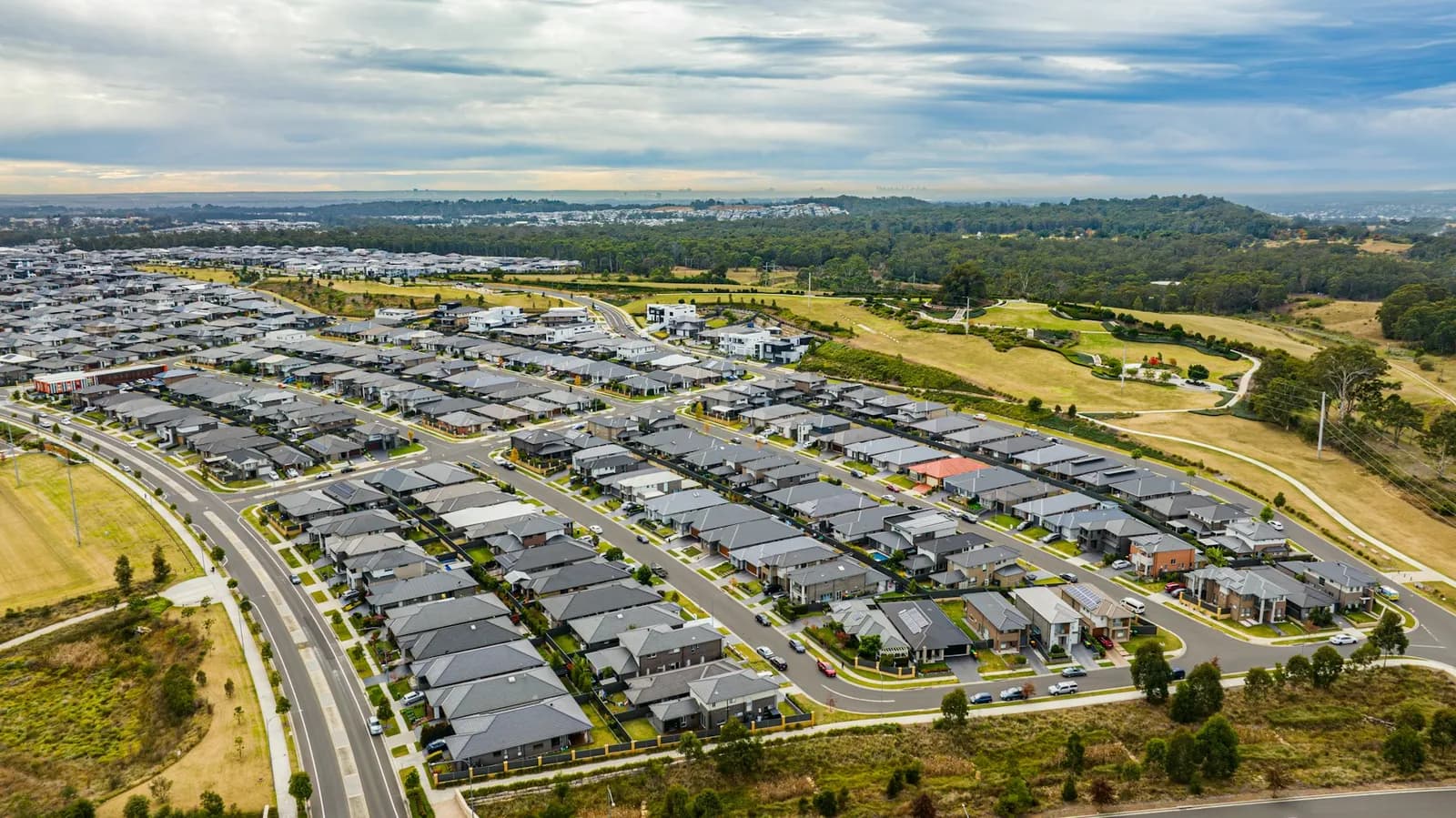
Dual key, duplex or granny flat: check the title
A listing label doesn't confirm separate ownership. Check the approved layout, number of legal dwellings and registered titles. If several dwellings share one title, do not plan on selling or refinancing each dwelling separately without checking the legal and lender requirements.
For apartment size and building rules, see the apartment home loan guide. If you plan to add a dwelling, start with the approvals and construction finance process.
How lenders assess homes with commercial use
A home office, a shop and residence on one title, and a separately titled home above a shop can be assessed differently.
I line up these facts first:
- Title and planningTitle, zoning and approved use.
- Occupation and valuationActual use, valuation basis, commercial floor area, and any lease or management rights.
Residential use in mixed zoning
Some current policies can use residential treatment where occupation is permitted and a residential valuation is returned.
Residence above a shop on its own title
Some policies may consider it where the separate title, residential use and valuation fit. Others exclude homes above shops.
Residential and commercial use on one title
Current positions range from a lower loan percentage with a full valuation to refusal or another assessment path.
Completed warehouse conversion
Some current policies accept a legal residential conversion, while others exclude property converted from a previous commercial use.
In Miles's case, the 70% limit came from the commercial classification, not a lower dollar value.
A wrong use, floor area or title detail may support a valuation review. A correct mixed-use classification needs a lender whose rules fit.
Use the bank valuation challenge guide if you already have the report.
How an easement can affect the loan
An easement can give another party a right to use part of the land for access, drainage, sewerage, electricity or another registered purpose. Your solicitor or conveyancer should explain what the dealing allows and whether it affects your plans for the property.
I check whether the easement affects building position, access, proposed work, use, value or resale.
For utility or access easements, our power lines and easements guide separates the title, measurement, building-permission and finance questions.
Which document will answer the lender's concern?
Company title
Contract, company constitution, ASIC company search, shares and occupancy rights, development details and any existing valuation.
Stratum title
Title search, deposited plan, easements, shared-service arrangements and valuation.
Leasehold
Complete lease, lessor, expiry, permitted use, assignment terms, performance conditions and proposed loan term.
Several dwellings
Title, council approvals, plans, leases, valuation and a clear statement of which dwellings are complete or proposed.
Mixed use
Title, zoning and approved use, floor plan, commercial floor area, leases, planning records and valuation wording.
Easement
Title search, registered dealing, survey or site plan, building position, proposed work and any valuation comments.
Frequently asked questions
Related guides
Home loans by property type
Start with the property checks that apply to your purchase.
Read guideApartment home loans
What lenders check about size, location, title and building risk.
Read guideChallenge a bank valuation
What to do when one valuation leaves you short.
Read guideCheck a property for flood risk
Use the available report before finance and contract deadlines.
Read guideQueensland property disclosure
What sellers must disclose and what buyers should still check.
Read guideHow to value a property
Use comparable sales and more than one source before you offer.
Read guideLVR calculator
Compare the property value with the loan amount the lender is being asked to approve.
Read guidePower lines and easements
Understand registered rights and proposed building work.
Read guide

Experience and sources
How this guide was checked
Reviewed 29 September 2026 by Jayden Vecchio.
Confirm your lender's current requirements for your property before applying.

Nathan is a director and mortgage broker at Hunter Galloway. He has worked in mortgage broking since 2015, helping home buyers, property investors and borrowers whose applications have been declined elsewhere.
General information only. It does not consider your objectives, financial situation or needs. Lender policy, waivers and rates can change.
Send me the property documents before you rely on the loan
Send the contract or listing, title type, state, property use, dwelling count, price, proposed loan and finance date. I will check which property rules apply and what documents the lender needs.
Check whether my property fitsor call 1300 088 065
Lenders can change their rules and may assess the complete property and application differently. Hunter Galloway Finance Pty Ltd T/A Mortgage Broker Brisbane - Hunter Galloway ABN 20 605 252 926. Credit Representative 476903 is authorised under Australian Credit Licence 389328. Your full financial situation would need to be reviewed before any offer or product is accepted.
Client examples are based on real situations. Names and identifying details have been changed.