

You can research listings, compare sales and negotiate your own purchase without hiring a buyer's agent. You still need to arrange finance, inspections and legal advice. The steps below explain the work you will be taking on.
Buyer's agent fees vary: some charge a fixed fee and others a percentage. A quoted 2.5% fee on a $1 million purchase would be $25,000. Doing the search yourself avoids that particular fee, but does not guarantee a lower purchase price or remove other buying costs.

Step 1: understand your borrowing capacity and budget
Work out your purchase budget before inspecting homes. Include repayments, buying costs and cash you need after settlement.
A broker can compare lenders and help you seek a fully assessed pre-approval based on your income, expenses, debts and credit history. It is still subject to its conditions, the property and final approval.
Leave room for changes in mortgage rates and your living costs. A lender's borrowing limit is not necessarily a comfortable repayment budget for you.
Tell the agent what you are looking for and when you can proceed, but keep your maximum budget private. Finance preparation helps you assess an opportunity; it does not guarantee a discount or access to an off-market property.
Doing your due diligence at this stage means looking at your budget from all angles. Consider stamp duty, conveyancing costs, inspection fees, potential renovation costs, and future interest rate changes. These are essential to responsibly climbing the property ladder, especially if you're planning your first property investment.
Step 2: write a buyer's brief
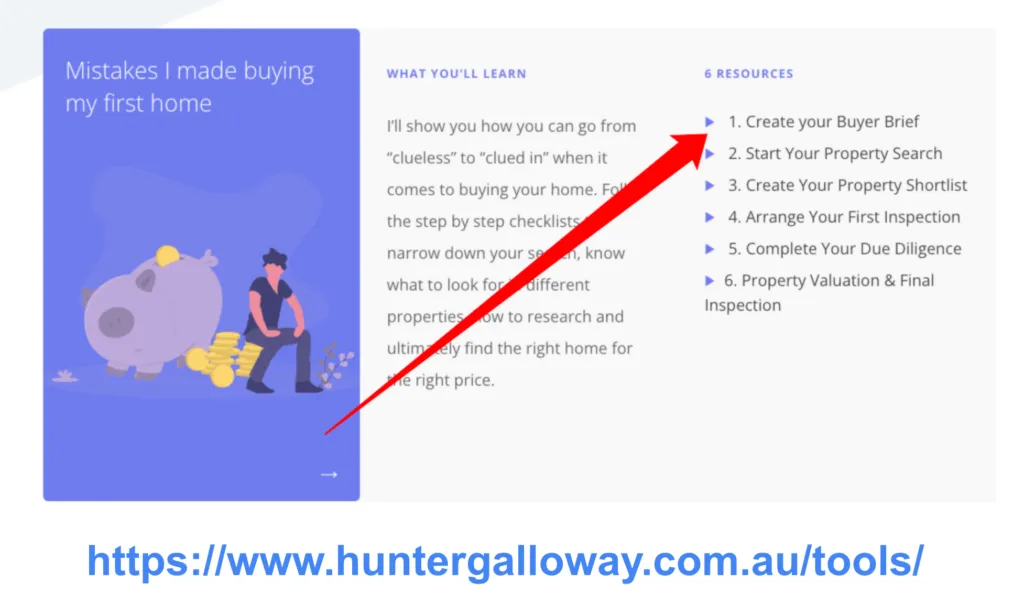
Write a buyer's brief that separates requirements from preferences. Use it to screen listings and explain your search to local agents.
Set the price ceiling before you inspect. Decide which features you would trade off and which would rule a property out.
A buyer's brief should include:
- Your ideal property type (apartment, townhouse, house, etc.)
- Number of bedrooms and bathrooms
- Preferred suburbs or postcodes
- Must-have features (e.g. garage, outdoor space, proximity to public transport or schools)
- Nice-to-have features (e.g. pool, renovated kitchen)
- Your purchase budget and ceiling price
- Your long-term goals (e.g. owner-occupier vs property investment)
What are the advantages of using a buyer's brief?
- Use the same criteria to compare every property, including attractive homes that stretch the budget.
- Record the questions and inspections you need before making an offer.
- Give local agents your property criteria so they can tell you about matching listings, including any not yet advertised.
- Compare recent sales of homes with similar features, condition and location.
You can download a free buyer's brief template from us here.
Step 3: check your budget against your suburbs
Compare your budget with recent sales in each target suburb, not just current asking prices.
If comparable homes exceed your ceiling, widen the area or change the property criteria before making offers.
One of the best tools for this task is the realestate.com.au/neighbourhoods portal. It provides detailed suburb profiles including historical growth, median house prices, and demographic insights to help you make informed choices.
Key factors when comparing suburbs
Median House Prices- Start by comparing the median property prices with your budget. If your budget is $800,000 but the median price in a suburb is $1 million, there's likely a mismatch. If you want a 4-bedroom home in Albany Creek, your $800,000 might only stretch to a townhouse or smaller home, if anything.
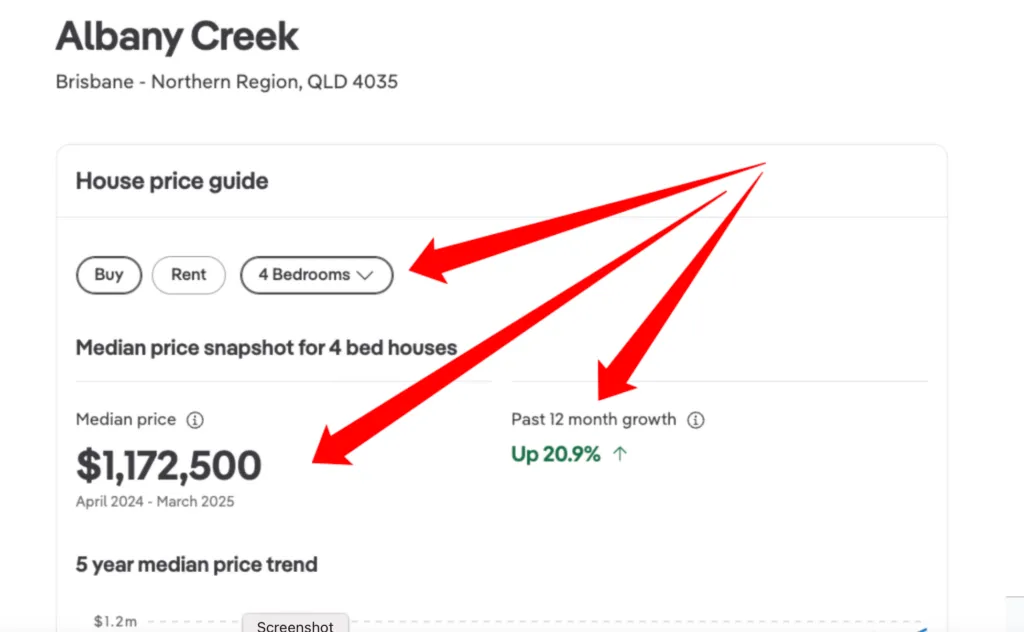
Capital growth trends: Use past growth as context, then check recent comparable sales. An annual growth figure does not predict next month's price. Keep your offer within your repayment and cash budget, and refresh a pre-approval that is nearing expiry.
Lifestyle fit: Check travel to work, schools, public transport, services and places you use regularly. Test the trip at the times you would actually travel.
Investors: Compare rental yield and vacancy data, then budget for rates, insurance, management, maintenance and periods without rent. A high gross yield does not establish a profitable investment.
Check to see if you are eligible for a home loan
Step 4: research recent sales data and property values
Look at completed sales of comparable homes. Note the sale date, condition, land size and features that differ from the home you are considering.
Price evidence: Compare actual sales rather than assuming the asking price reflects value.
Identify trends: Spot patterns in the types of properties that are selling fast or at premium prices, such as renovated homes, those with land, or properties close to schools and transport. Are townhouses outperforming apartments? Are fixer-uppers sitting on the market longer?
Offer evidence: Keep the comparable sales you used to choose your offer and maximum price.
Purchase budget: Add likely repairs and buying costs before deciding what you can afford to offer.
How to conduct property market research
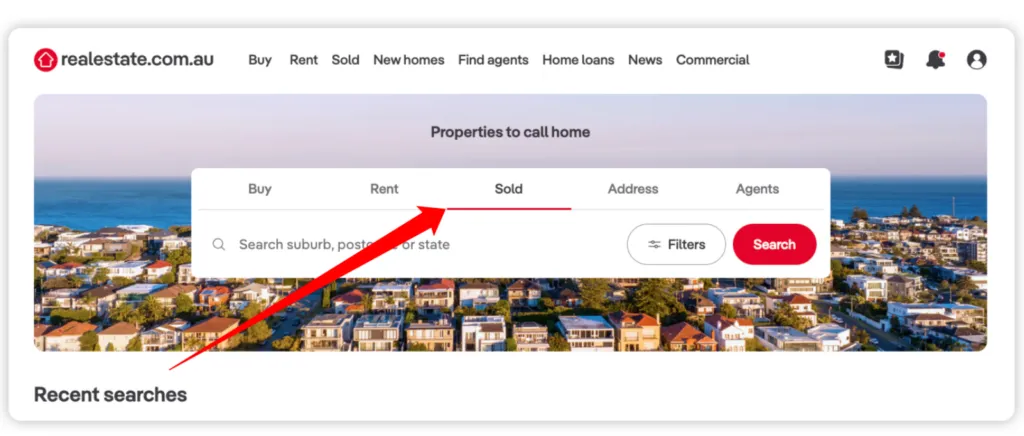
Visit the 'sold' section on RealEstate.com.au:
- Go to realestate.com.au and navigate to the "Sold" listings tab.
- Type in your target suburb.
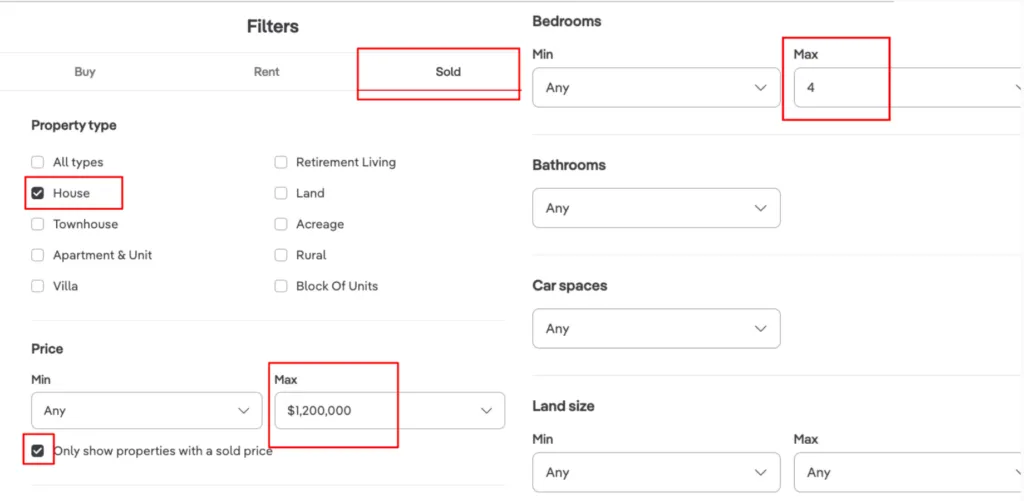
- Apply relevant filters:
- Sort the results by "Newest First" to see the latest sale data, which reflects current market sentiment.
Analyse the listings
- Match Like for Like: Look closely at homes similar to what you're targeting. How do their sold prices compare to your expectations?
- Condition & Presentation: Are these homes renovated, partially updated, or in need of major repairs? The condition can significantly affect value.
- Time on Market: Homes that sell quickly often reflect high demand. Those that linger could signal overpricing or lower buyer interest.
- Sales Notes: If available, read agent notes to understand if a property sold at auction, had multiple offers, or was discounted before sale.
Repeat for each suburb
- Perform the same analysis for every suburb on your shortlist.
- Compare average prices, days on market, and property features.
- Identify which suburbs offer the best balance between price, value, and lifestyle.
Building your shortlist
Narrow the search to a few suburbs that fit your budget and brief. You will then have fewer sales and listings to track.
Focus on the suburbs where:
- Homes sell quickly (but not frantically)
- Prices are within reach
- Properties meet your ownership or investment needs after costs and risks are considered.
Step 5: use the buyer's agent community to find off-market properties in Australia

Off-market means a property is not publicly advertised. Ask local selling agents about upcoming listings, but research them as carefully as advertised homes.
Agents may discuss a listing with their buyer contacts while marketing is being prepared. The lead time varies; there is no standard 4 to 6-week window or guarantee of a better price.
Here's a simple, effective strategy to start uncovering off-market opportunities:
1. Shortlist your target suburbs
Focus on up to three suburbs that fit your budget and property needs. Keep notes of local agents and comparable sales.
2. Get active on the ground
Attend suitable open homes and introduce yourself to local agents. Ask about upcoming listings that fit your brief.
3. Introduce yourself with a clear brief
Give agents a concise written brief with your property requirements and timeframe. Explain your finance position accurately, including any pre-approval conditions, without sharing your maximum borrowing limit.
4. Follow up and stay in touch
Follow up every week or two if you are actively searching. Ask about new listings and update agents if your criteria change.
Step 6: negotiate the price and terms
Set a researched price limit and consider the seller's preferred timing. Agree only to terms that your lender and solicitor can accommodate.
Do your due diligence first
Before entering any negotiation, your first job is research. This is your competitive edge. Look up when the property last sold and at what price, check the current land value, and compare similar sales in the suburb. Many of these details can be found through online property portals, government records, or paid tools used by professionals.
Understand the seller's motivations
Ask about the seller's preferred settlement timing. For example, a 90-day settlement may suit someone coordinating another purchase better than 30 days. Check that your finance approval and contract conditions remain suitable.
You may negotiate the contract deposit, settlement date, inclusions or access for quotes. Ask your solicitor to document agreed terms.
Understand market conditions
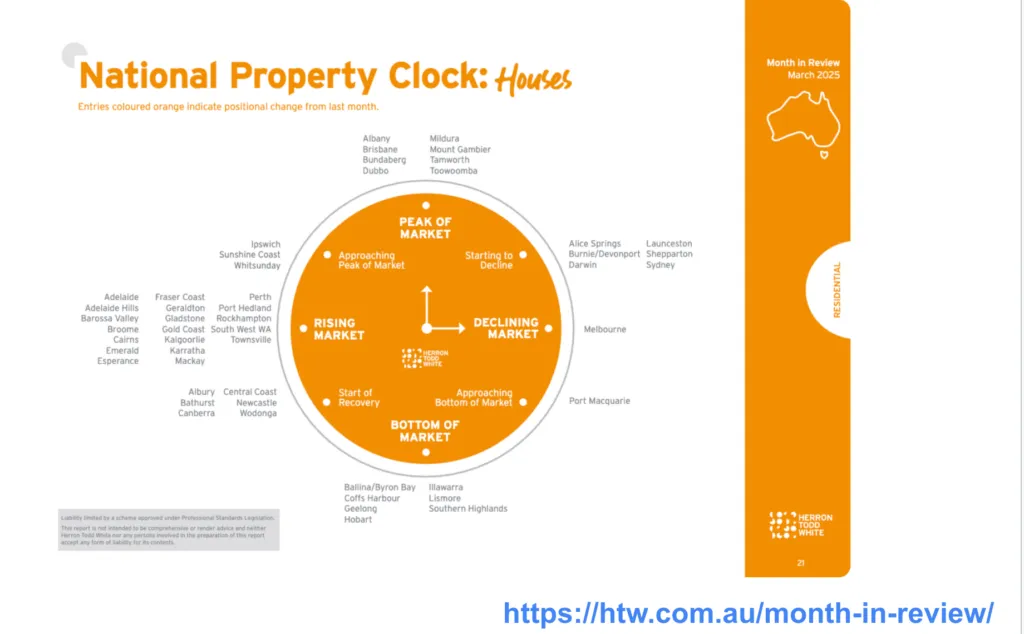
Compare competing listings and recent sales before making an offer. A seller may reject a low offer; use evidence and your budget rather than assuming a particular negotiation tactic will work.
Step 7: make your offer

Check the price, deposit, conditions and deadlines with your solicitor before making a binding offer.
In Queensland, signing a proposed contract can lead to a binding purchase when the seller accepts and signs. Appoint a solicitor or law practice to review it first. Requirements differ by state; use a legal representative authorised there.
Have your legal representative confirm how agreed price and terms should be recorded. Do not rely on an informal assurance that a contract condition can be added later.
Include key clauses, even with pre-approval
A pre-approval is not final loan approval for the property. Discuss suitable finance and building-and-pest conditions with your solicitor, including the deadlines your lender and inspector need.
Without an appropriate finance condition, refusal of the final loan can leave you unable to settle. Ask your solicitor to explain the consequences before signing an unconditional contract.
Base your price on evidence and a firm limit
Whether you offer $600,000, $610,000 or $613,500, the amount should fit the comparable sales and your budget. A precise number does not prove it is your limit or prevent a counteroffer.
We can check finance timing and the borrowing budget. Your solicitor should advise on the offer and contract conditions.
Would you like to learn about your situation?
Step 8: be prepared to walk away

Keep your price ceiling and alternatives in view. Before signing, you can choose not to proceed if the price or risks do not fit. Once bound by a contract, you cannot simply walk away without considering its conditions and legal consequences.
Check your finance before making an offer
At Hunter Galloway, we help homebuyers across Australia prepare for a fully assessed pre-approval. In most circumstances we do not charge a customer broker fee for residential home and investment loans; we disclose any fee and commission before you proceed.
If you want to get started, please give us a call on 1300 088 065 or book a free assessment online to see how we can help.

Our team of home loan experts is here to help you buy a home in Australia