


If I were narrowing down an Ipswich search, I'd start with the budget and the trip to work. Goodna is worth comparing for units and an existing train connection, Tivoli and North Ipswich for lower house medians, and Springfield for buyers who want access to the wider Springfield area's shops and services.
The price gap is substantial. In the September 2025 to August 2026 sales figures, Goodna's unit median was $630,000, while Springfield's house median was $1.03 million. That gives you very different loans, maintenance costs and options for where to live. Neither figure tells you what a particular property is worth.
Below, I've compared 16 suburbs, including established homes near central Ipswich, the eastern rail corridor and newer estates around Ripley. Use the shortlist to decide where to inspect, then check the street and the property. Flood exposure, former mining and nearby industrial activity need a closer look than a suburb reputation can give you.
Which Ipswich suburbs should you shortlist?
Start with North Ipswich and Tivoli houses, or Goodna units. Compare the condition and ongoing costs of the homes you can actually buy.
Compare Goodna, Redbank and Ipswich, plus Springfield on its separate rail line. Include the trip from the front door to the platform.
Look at Springfield Lakes, Ripley, South Ripley and nearby alternatives. Work backwards from school, work and the facilities already open.
Compare Woodend, Sadliers Crossing and Coalfalls. Allow for the cost of repairs and any restrictions on the changes you want to make.
Compare Ipswich house and unit prices
Every price below is a median sold price from realestate.com.au for September 2025 to August 2026. Using one period makes the comparison more useful. The Ipswich row shows the suburb of Ipswich, which is one part of the wider council area. Springfield and Springfield Lakes are also separate suburbs.
Median sale prices: September 2025 to August 2026
Scroll to see more columns
| Suburb and source | Houses | Units |
|---|---|---|
| North Ipswich | $772,500 | Not shown* |
| Tivoli | $787,500 | Not shown* |
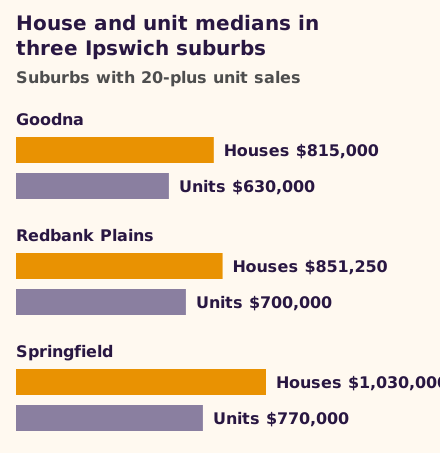
| Goodna | $815,000 | $630,000 |
| Ipswich | $850,000 | Not shown* |
| Sadliers Crossing | $850,000 | Not shown* |
| Redbank Plains | $851,250 | $700,000 |
| Redbank | $862,500 | Not shown* |
| Coalfalls | $891,000 | Not shown* |
| Collingwood Park | $903,000 | Not shown* |
| Ripley | $905,000 | Not shown* |
| Woodend | $930,000 | Not shown* |
| South Ripley | $960,000 | Not shown* |
| Springfield Lakes | $970,000 | Not shown* |
| Springfield | $1,030,000 | $770,000 |
| Spring Mountain | $1,061,000 | Not shown* |
| Brookwater | $1,580,000 | Not shown* |
Source: linked realestate.com.au profiles, checked 1 October 2026. *Unit medians with fewer than 20 sales aren't shown.
North Ipswich has the lowest house median in this selected group, and Goodna has the lowest unit median shown. That's a starting point for your search. There may be cheaper suburbs elsewhere in the region. Compare homes with similar bedrooms, land or floor area and condition using our property research guide.
Lower-budget options: North Ipswich, Tivoli and Goodna
North Ipswich: an established house search
North Ipswich has the lowest house median in this table at $772,500, based on 85 sales. It's worth a look if you want an established home on the northern side of the city. An older house may offer the layout or land you want, but leave room for maintenance after settlement.
Inspect the roof, drainage and previous additions carefully. Ask about approvals and price any work before comparing it with a renovated property. For commuting, test the actual route to work or the station, even if the home is near central Ipswich.
Tivoli: compare the block as well as the house
Tivoli's house median was $787,500 on 35 sales. That smaller sample can move with the mix of homes sold, so recent comparable sales matter. It may suit buyers looking north of the city centre who are happy with the daily drive and have found a property that fits their budget.
I'd pay attention to the land, drainage, building condition and access. There's also regulated composting activity at North Tivoli, so check the current government odour information for the exact address, as the impact can differ across the area. Visit more than once, including when you'd normally be home.
Goodna: units and access to the Ipswich train line
Goodna's $815,000 house median and $630,000 unit median make it useful for comparing two quite different ways to buy. It has an operating station on the Ipswich line, so start with homes that make the walk, bus connection or station parking practical for you.
The $185,000 gap between the house and unit medians is substantial, but the unit still needs to work as a home. Read the body corporate records, current levies and planned building work. For either property type, check the address against historical flood maps and current flood and overland-flow mapping, then get an insurance quote before making your decision.
Established suburbs with rail access
Ipswich: central services and older housing
The Ipswich suburb house median was $850,000 on 47 sales. A home near the centre can put shops, services and the station closer to your day-to-day routine. Ipswich Art Gallery is in d'Arcy Doyle Place in the CBD. Look at the actual walking route and nearby traffic or commercial activity, because two central streets can feel very different.
For an older house, the purchase price is only part of the budget. Have the building inspected and ask your conveyancer about heritage or character controls before planning major changes.
Redbank: check the station trip and nearby uses
Redbank's house median was $862,500 on 44 sales. It has its own station on the Ipswich line and is worth comparing if that connection suits your work. Check the route between the property and station, plus traffic, rail noise and neighbouring land uses at the times you'd notice them.
Redbank is different from Redbank Plains. Redbank Plaza is on Collingwood Drive in Redbank. Work out how you'd reach the shops and station from the homes on your shortlist, as those trips can be quite different.
Springfield: useful connections, a higher house budget
Springfield's house median was $1.03 million and its unit median was $770,000. The gap between the two makes it worth comparing a unit here with houses elsewhere in your budget.
Springfield has a rail connection towards Brisbane. Major facilities such as Orion shopping centre, the hospital and university are nearby in Springfield Central, a separate suburb. Check how you'd get to the facilities you need from the property itself, especially if a second car would stretch the budget.
There's an operating Route 501 bus between Springfield Central and Ipswich. The proposed Ipswich-to-Springfield rail corridor through Ripley remains in planning. Choose a home that works with the transport available now, and treat any future line as a possibility only.
Character homes near central Ipswich
Woodend, Sadliers Crossing and Coalfalls are worth comparing if you like established streets and older homes near the centre. Their house medians range from $850,000 in Sadliers Crossing to $930,000 in Woodend, with Coalfalls at $891,000. Those figures use 40, 28 and 22 sales respectively, so inspect comparable properties before drawing much from the difference.
A renovated home and a house needing restumping, a roof or drainage work can sit in the same suburb median. Get a written estimate for urgent work and ask what approvals any additions have. If the appeal is a particular school, check the current catchment for the exact address before making an offer.
Family homes and newer estates
Springfield Lakes, Spring Mountain and Brookwater
Springfield Lakes has a $970,000 house median, compared with $1.061 million in Spring Mountain and $1.58 million in Brookwater. That's a wide price range for one area. Shortlist around the space you need, the school run and access to work.
If you're comparing an established family home with a newer one, look at cooling, shade, storage, parking and usable outdoor space. For any property with shared facilities or a community title, check ongoing levies and restrictions. Try the school-and-work trip on a weekday before you decide the location is convenient.
Ripley and South Ripley: price the whole move
Ripley's house median was $905,000 and South Ripley's was $960,000. They're starting points for comparing existing homes in the area. A new house-and-land package needs its own budget for land, site costs, inclusions, variations and somewhere to live until completion.
Look at the shops, school places, roads and public transport available at the time you need them. An estate plan can show facilities that aren't open yet. Check nearby approved land uses and current odour updates where relevant, and test the commute using today's services. Our construction loans guide explains the finance side of a build.
Redbank Plains and Collingwood Park
Redbank Plains has a house median of $851,250 and a unit median of $700,000; Collingwood Park's house median is $903,000. For both suburbs, work out how you'd reach the station, shops and work from the homes on your shortlist.
For a bus connection, check the current timetable and the walk to the stop. Routes 522 and 523 connect parts of the eastern corridor with Springfield Central. In Collingwood Park, former mining is a real but location-specific issue. Check the planning overlay for the block itself and ask whether specialist advice is needed.
If you're weighing Ipswich against another region, our Brisbane, Gold Coast and Sunshine Coast suburb guides give you other locations to compare. Keep the property type and total budget consistent.
Tell us your deposit and the price range you are looking at. We can check the loan and repayments before you narrow down the shortlist.
Which Ipswich suburbs fit your borrowing budget?
What the market figures mean for buyers
REIQ's June 2026 quarter figures put the Ipswich council area's house median at $915,000, up 0.77% from the previous quarter. Its unit median was $700,000, down 2.10%. These cover a different area and period from the suburb table, so they won't match row for row.
House and unit medians moved in different directions over the quarter. Recent comparable sales, the seller's circumstances and how much work the home needs are more useful when deciding what to offer. Past suburb growth can't tell you what the next buyer will pay for your home.
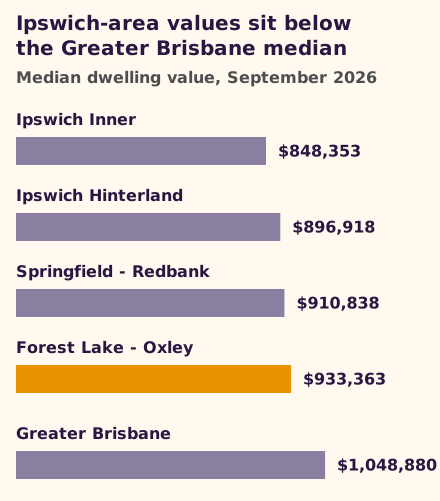
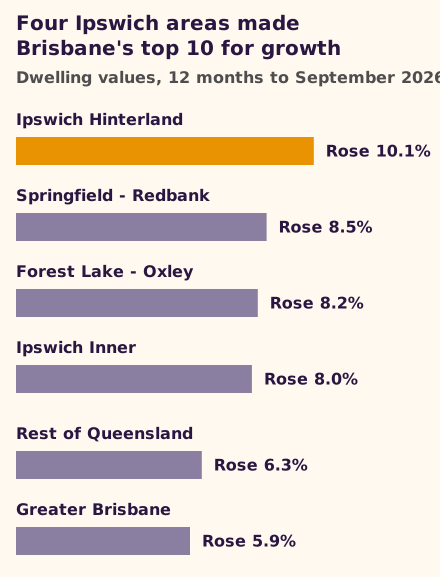
Values in the same four areas have grown faster than in Greater Brisbane. Over the 12 months to September 2026, Ipswich Hinterland rose 10.1%, while Greater Brisbane rose 5.9%.
Buying an investment? Keep the running costs in view
For an investment, compare the rent as well as the purchase price. The house figures below cover five suburbs with different starting budgets. The selling times below describe past listings. Your own property could sell faster or slower.
House rental and market figures: source profiles checked 1 October 2026
Scroll to see more columns
| Suburb | Weekly median rent | Median sale days | Annual price growth |
|---|---|---|---|
| Tivoli | $580 | 23 | 17.5% |
| Goodna | $580 | 28 | 16.4% |
| Springfield | $695 | 21 | 18.7% |
| Ipswich | $595 | 34 | 12.6% |
| Redbank | $600 | 31 | 18.7% |
Source: linked realestate.com.au profiles, September 2025 to August 2026. Tivoli rent uses 20 leases. Growth figures show past changes only.
Get a local rental appraisal for the actual home, then deduct rates, insurance, management fees, maintenance, vacancy and any body corporate levies. Compare the result with repayments at the loan rate available to you. Our investment home loans guide covers how lenders assess the borrowing side.
Check the property before making an offer
Four checks worth doing early
- Flood maps and insuranceRead both historical flood mapping and the current flood and overland-flow overlay for the address. Get an insurance quote before committing.
- Former mining and the buildingCheck Mining Influence Areas, arrange building and pest inspections and ask whether the block needs specialist geotechnical advice.
- Nearby activity and daily travelVisit at different times. Look at approved industrial uses, odour information, road noise and the trip you'll make to school or work.
- Contract, costs and financeHave your conveyancer review the contract and searches. Confirm repair costs, any body corporate obligations and lender acceptance of the property.
Use both historical and current flood information
Ipswich Council's flood mapping includes historical events and points to the current City Plan's OV12 Flood Risk and Overland Flow overlay. Historical maps show estimated past extents, so a building inside one may not have flooded. A home outside an old flood extent can still carry future risk.
Ask your conveyancer which property searches or flood reports are appropriate. Then put the insurance premium and excess beside the repayments. A lower purchase price is less helpful if the ongoing costs stretch you.
Keep mining and odour checks specific to the address
The Ipswich City Plan mapping includes Mining Influence Areas. Former mining has affected parts of the city, including parts of Collingwood Park. A standard building and pest inspection shouldn't be treated as a mining assessment, so ask whether specialist geotechnical advice is needed for the block.
For homes near waste-processing or industrial land, use the Queensland Government's Swanbank and New Chum updates. The linked community information also covers North Tivoli. Regulatory deadlines don't establish that odour has disappeared. Visit at different times and ask neighbours about their experience without treating one report as a verdict on an entire suburb.
How to use crime information without a suburb stereotype
You can search a suburb or address on the QPS Online Crime Map. Use the same dates and offence categories when comparing locations. Recorded offences, police-division totals and city-wide rates answer different questions; none is a score for how safe a particular street will feel.
Walk the route you'd use after dark, look at lighting and access, and visit at the times you'd normally be home.
Allow for the deposit and the costs after it
At an $800,000 purchase price, a 5% deposit is $40,000, leaving $760,000 to finance before buying costs. You still need money for legal fees, inspections, government charges, any transfer duty and a buffer after settlement. The RBA lifted the cash rate to 4.60% on 29 September 2026, so if your pre-approval was issued earlier in the year, ask for it to be reassessed before you make an offer. Our deposit calculator helps you compare the starting figures.
Eligible buyers may use the Australian Government 5% Deposit Scheme without paying Lenders Mortgage Insurance. The Ipswich locations in this guide fall within the $1 million capital-city cap; confirm the exact suburb and postcode with a participating lender. House medians in Springfield, Spring Mountain and Brookwater sit above that cap, so look at individual listings there, as some may still come in under it. Both the purchase price and the lender's assessed value must meet the cap, and you still need loan approval. Our 5% Deposit Scheme guide explains the conditions.
Queensland's $30,000 First Home Owner Grant applies to eligible contracts signed from 20 November 2023 and continues past 30 June 2026. It applies to qualifying new homes valued at less than $750,000, including land. An established home is ineligible, and a home valued at exactly $750,000 is over the grant limit. Read our Queensland grant guide and check any separate stamp duty concession with your conveyancer.
Before inspecting seriously, check your pre-approval and buying costs. When you find a property that fits, our making an offer guide explains the next steps.
Ipswich suburb questions
Sources
Sources and how we chose the shortlist
Checked 1 October 2026. Suburb figures use realestate.com.au profiles for September 2025 to August 2026, linked in the tables. Our editorial threshold for unit medians is 20 sales, because smaller samples can distort comparisons. The unit figures shown use 37 sales in Goodna, 108 in Redbank Plains and 23 in Springfield. REIQ's regional comparison uses the June 2026 quarter for the Ipswich local government area. The shortlist compares only budget, housing and everyday access. Check each property's value, safety and growth prospects separately. Council, QPS, transport and government sources inform the property checks and scheme information in this guide.

References
- REIQ: June 2026 quarter property market release, 31 August 2026
- Cotality: Home Value Index, October 2026 edition, data to 30 September 2026
- Ipswich Art Gallery: location and visitor information
- Redbank Plaza: centre location
- QPS: maps and statistics
- Ipswich Council: flood mapping
- Ipswich Council: planning scheme supporting documents and mining resources
- Queensland Government: Collingwood Park mine subsidence
- Queensland Government: odour community questions, including North Tivoli
- Translink: new Ipswich bus services, November 2025
- Translink: current network maps
- TMR: Ipswich to Springfield Public Transport Corridor Study
- Housing Australia: 5% Deposit Scheme property caps and postcode search
- Queensland Government: First Home Owner Grant
- Hero photograph: Ipswich CBD and surrounds (2016), Kpravin2 / Wikimedia Commons
- Hero photograph licence: CC BY-SA 4.0; displayed with a responsive crop

Plan your purchase
Work out your Ipswich buying budget
Tell us your deposit, income and the type of home you have in mind. We can compare loan options across the lenders we can arrange and help you set a budget before you make an offer.
or call 1300 088 065
Your full financial situation needs to be assessed before a loan can be recommended.