

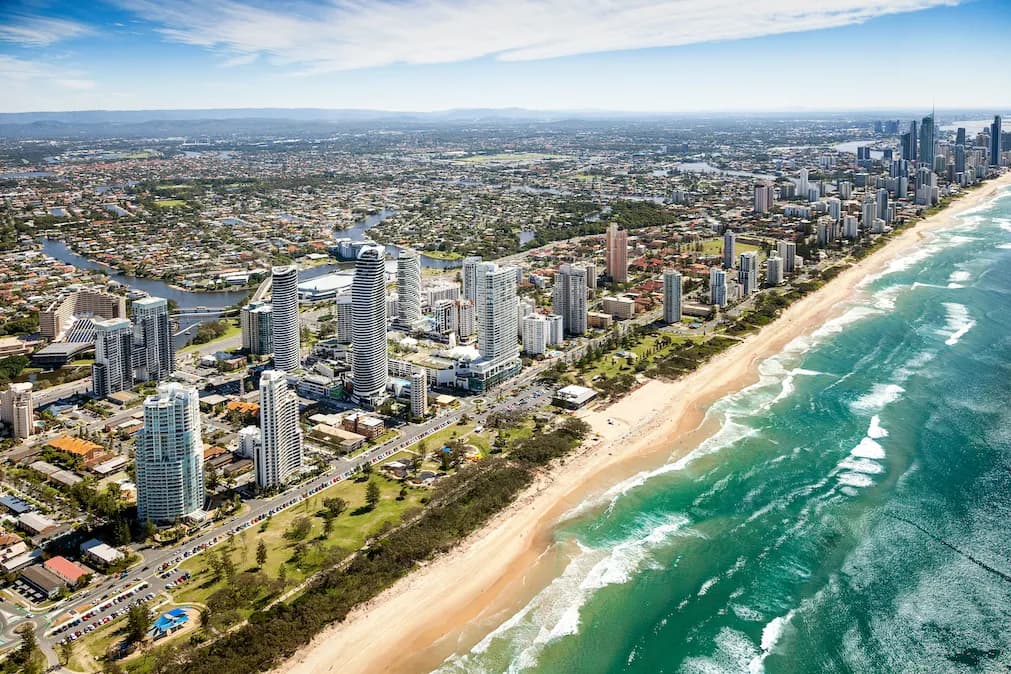
For a first home on the Gold Coast, start by comparing Pimpama and Coomera for a northern-suburbs search, Nerang and Pacific Pines for established inland options, and Southport for apartments near the tram. Robina, Varsity Lakes and the beachside suburbs can also make the shortlist if the property and its ongoing costs fit your budget.
The best choice depends on what you can comfortably spend and where you need to be each day. A smaller apartment near work may suit you better than a house that adds a long commute. A cheaper purchase can also become expensive once you allow for repairs, insurance and body corporate levies.
I'd work out those limits before choosing a favourite suburb. The comparison below helps you narrow the search, then check the property itself. It's a starting shortlist.
Which Gold Coast suburbs should you compare?
Choose the row that fits your day-to-day needs, then search current listings within your approved budget. Compare like with like: a 2 bedroom unit, a townhouse and a detached house are different purchases even when they share a postcode.
Gold Coast first home buyer shortlist: location and property trade-offs
Scroll to see more columns
| Area to investigate | Why consider it? | Check before you commit |
|---|---|---|
| Pimpama and Coomera | Northern Gold Coast options with train stations; worth comparing if you're looking at houses or townhouses. | The whole trip to work, including getting to the station or onto the M1. Check what's already built around the address. |
| Nerang | An inland option with a train station and established housing to compare. | Building condition, maintenance and flood exposure at the particular address. A lower price may leave work to do. |
| Pacific Pines | An option to investigate if a house and outdoor space matter more than being near the beach. | The school and work run. Check the route to Helensvale station if you plan to use the train or tram. |
| Robina and Varsity Lakes | Useful areas to compare around the southern end of the train line, with houses, townhouses and apartments to investigate. | Distance from the property to the station and your regular destinations. Include body corporate costs where applicable. |
| Southport | A starting point for an apartment search with access to the tram network. | Building finances, apartment size, parking, nearby noise and whether the lender accepts the particular property. |
| Broadbeach and Burleigh Heads | Worth comparing if being near the beach is a priority and you're open to an apartment. | Purchase price plus levies, insurance and maintenance. Visit the actual street when it's busy. |
- Why consider it?
- Northern Gold Coast options with train stations; worth comparing if you're looking at houses or townhouses.
- Check before you commit
- The whole trip to work, including getting to the station or onto the M1. Check what's already built around the address.
- Why consider it?
- An inland option with a train station and established housing to compare.
- Check before you commit
- Building condition, maintenance and flood exposure at the particular address. A lower price may leave work to do.
- Why consider it?
- An option to investigate if a house and outdoor space matter more than being near the beach.
- Check before you commit
- The school and work run. Check the route to Helensvale station if you plan to use the train or tram.
- Why consider it?
- Useful areas to compare around the southern end of the train line, with houses, townhouses and apartments to investigate.
- Check before you commit
- Distance from the property to the station and your regular destinations. Include body corporate costs where applicable.
- Why consider it?
- A starting point for an apartment search with access to the tram network.
- Check before you commit
- Building finances, apartment size, parking, nearby noise and whether the lender accepts the particular property.
- Why consider it?
- Worth comparing if being near the beach is a priority and you're open to an apartment.
- Check before you commit
- Purchase price plus levies, insurance and maintenance. Visit the actual street when it's busy.
A suburb median sums up past sales. The home you want could sell for more or less. Check recent settled sales for properties with similar bedrooms, land or floor area, condition and location. If one sale is much cheaper, find out why. Our property research guide explains how to make those comparisons.
Train access is useful only if the whole trip works
Pimpama station opened on 20 October 2025. It's already operating, alongside the existing Gold Coast line stations such as Coomera, Nerang, Robina and Varsity Lakes. Use Translink's maps and journey information to check the service and the walk, bus trip or drive at each end.
Test the trip at the time you actually travel. Add school drop-off, parking and a missed connection to the best-case drive time. If you work shifts, check the first and last services too.
For southern suburbs such as Tugun, don't assume a future tram will solve the commute. Planning for the Burleigh Heads to Coolangatta light rail extension stopped in September 2025. The current Gold Coast Transport Plan includes proposed metro-style services. Plan around the services you can use today. If you're weighing up other regions, compare our Brisbane, Sunshine Coast and Ipswich suburb guides.
Set your price limit before the suburb search
Your savings and your borrowing capacity set different limits. A 5% deposit doesn't prove you can afford the remaining 95%. The lender still checks your income, debts, living costs and the property, and you need room in your own budget after settlement.
Here's what a 5% deposit looks like at different purchase prices. These simple calculations aren't current property offers or loan approvals. They exclude buying costs and assume the lender accepts the purchase price as the property value.
Purchase-price examples with a 5% deposit
Scroll to see more columns
| Purchase price | 5% deposit | Remaining price to finance |
|---|---|---|
| $600,000 | $30,000 | $570,000 |
| $700,000 | $35,000 | $665,000 |
| $850,000 | $42,500 | $807,500 |
| $1,000,000 | $50,000 | $950,000 |
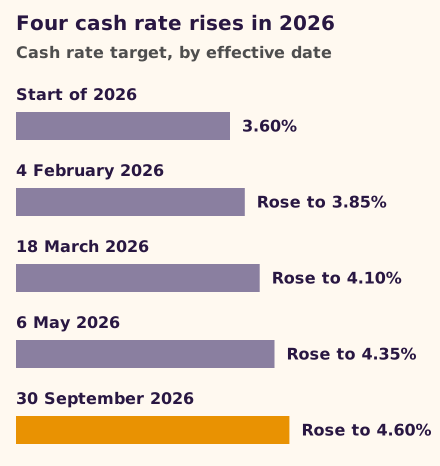
Set aside legal fees, inspections, government registration fees, any transfer duty and moving costs separately. Get quotes for your own purchase. Leave a cash buffer for expenses that arrive straight after you move in. The RBA lifted the cash rate to 4.60% on 29 September 2026, so if your pre-approval was issued earlier in the year, ask for it to be reassessed before you set your search range.
Our first home buyer guide covers the buying process. A pre-approval can help establish a search range, but it remains subject to its conditions and the lender accepting the property you choose.
Check which first home buyer support fits
The deposit scheme, the Queensland grant and transfer duty concessions have different rules. You can qualify for one and miss out on the others. Check your own eligibility before using any saving in your budget.
A 5% deposit can work without LMI
Eligible buyers can use the Australian Government 5% Deposit Scheme through a participating lender without paying Lenders Mortgage Insurance (LMI). For the Gold Coast, the property price cap is $1 million. Both the purchase price and the lender's assessed value must meet the cap; check the exact suburb and postcode with the lender.
For example, a $700,000 purchase has a $35,000 deposit at 5%, before other buying costs. Whether you can borrow the remaining $665,000 depends on the lender's assessment. A property under the scheme cap doesn't guarantee approval.
If you're not using the scheme, LMI may apply when borrowing more than 80% of the property value, unless another exception applies. It protects the lender. Our LMI guide explains that cost.
The $30,000 grant has a lower property limit
The Queensland First Home Owner Grant provides $30,000 for eligible buyers buying or building a qualifying new home valued at less than $750,000, including the land. It doesn't generally apply to an established home. Grant payment timing matters, so don't assume you'll have the money available when your contract deposit is due.
That means an established $700,000 unit and a qualifying new $700,000 unit can receive different support. Check the Queensland first home owner grant rules before comparing the cash you need for each.
Transfer duty depends on the property and your eligibility
Eligible first home buyers purchasing an established home valued at $700,000 or less can pay no transfer duty. A partial first home concession applies above $700,000 and below $800,000. Eligible new-home purchases under contracts from 1 May 2025 can receive a full concession without a property value cap.
These concessions have ownership, occupancy and other requirements. For transactions from 1 August 2026, citizenship or residency conditions also apply. Ask your conveyancer to confirm the amount for your contract. Our Queensland stamp duty calculator can help you prepare an estimate.
Compare a house and an apartment on total cost
If the house you want is out of reach, compare townhouses and apartments in the same area before moving your search further away. You may gain a shorter commute or a more useful location. Check how much space, parking and outdoor area you'd give up.
With an apartment or townhouse, ask for the body corporate certificate and relevant records. Check regular levies, building insurance, planned work and whether there are special levies. A low advertised levy doesn't tell you whether the building has enough money set aside for repairs. Ask your conveyancer which searches you need.
A house means budgeting for the work you may otherwise share with other owners, such as roof repairs and external maintenance. Some freestanding houses are also in community titles schemes, so check the title for a body corporate.
The lender also needs to accept the property. If an apartment is very small, has restrictions on occupancy or forms part of a serviced-apartment arrangement, raise that before you sign. A pre-approval doesn't cover every property within the price limit.
There's no need to predict which property type will grow faster to make a sensible first purchase. Compare what you can afford to own, whether it suits the years ahead and how much flexibility you'd have if your circumstances changed.
Check the address before making an offer
Suburb-level descriptions can't tell you whether a particular home floods, suits your school plans or will be comfortable to live in. Do these checks on each property that makes your final shortlist.
Four checks before you commit
- Check flood exposure and insuranceUse the council’s mapping and property searches, and ask about flood and overland-flow exposure. Obtain an insurance quote for the exact address. Elevated parts of a suburb don't make every property flood-free.
- Visit at the times you'll be thereCheck the street on a weekday and in the evening. Test the work or school trip, look at parking and listen for traffic or nearby venues.
- Read the property recordsHave your conveyancer review the contract and relevant searches. Arrange appropriate inspections. For a body corporate property, check its finances, planned works and rules.
- Confirm the loan and your cash bufferAsk your lender or broker about the specific property, scheme eligibility and any outstanding conditions. Confirm the cash needed by each deadline before committing.
For crime information, use the Queensland Police maps and statistics. Check the reporting period and type of offence. A single total doesn't tell you the risk to your household, so inspect the area yourself.
School access also needs an address check. Use the Queensland school catchment map and confirm enrolment arrangements with the school. Being in a well-known family suburb doesn't confirm that a particular home is in the catchment you want.
For flooding, use the City of Gold Coast's current flood mapping and ask your conveyancer which property searches to obtain. The Queensland Government's flood-risk guide explains why flood information needs to be read for the particular property. Obtain insurance quotes early enough to use the answer in your decision.
Gold Coast first home buyer FAQs
Sources
Sources and how to use this guide
Government support and transport information checked on 1 October 2026. The suburb shortlist compares location and property trade-offs, with no valuations, safety rankings or growth forecasts. The deposit examples use 5% of the stated purchase price and exclude buying costs. Check current listings, comparable sales and the conditions relevant to your purchase.

References
- Cotality: Home Value Index, October 2026 edition, data to 30 September 2026
- RBA: cash rate target and effective dates
- Housing Australia: 5% Deposit Scheme
- Housing Australia: property price caps
- Queensland Revenue Office: first home owner grant
- Queensland Revenue Office: first home concession
- Queensland Revenue Office: transfer duty concession rates
- Cross River Rail: Pimpama station
- Translink: public transport maps
- Transport and Main Roads: Gold Coast Transport Plan
- Transport and Main Roads: Light Rail Stage 4 status
- Queensland Government: buying a body corporate property
- Queensland Police: maps and statistics
- Queensland Government: understanding flood risk
- Queensland Government: school catchment map
Plan your first purchase
Work out your Gold Coast buying budget
Tell us your deposit, income and the type of home you're looking for. We can check borrowing options through our lender panel and explain which first home buyer pathways may fit before you commit to a property.
or call 1300 088 065
Your full financial situation needs to be assessed before a loan can be recommended.