
You want to pay a fair price, not the price the agent or your own excitement talks you into. Most of the overpaying I see comes down to a handful of mistakes. Here they are, and what to do instead.
Mistake 1: Taking the agent's word on price. The selling agent works for the seller. Their job is to get the seller the best price, so what they tell you will lean that way. Use it as one input, then check it against recent sales.
Mistake 2: Comparing the wrong homes. A renovated 3-bedroom house on 600 sqm and a tired 3-bedroom on 400 sqm are not the same property, even on the same street. Compare like with like using the checklist below, and adjust for anything you can't match.
Mistake 3: Letting emotion set the price. Emotion is an important part of buying a home because you want to live somewhere that makes you feel good. But if you get too emotional, you can end up making costly mistakes. Write your limit down before the inspection, and don't move it on the day without new evidence.
Mistake 4: Valuing from the headlines. News stories talk about whole cities and averages. Your price depends on recent sales of homes like the one you want, in that suburb. For that, use sold data from Cotality (formerly CoreLogic) or a free property report.
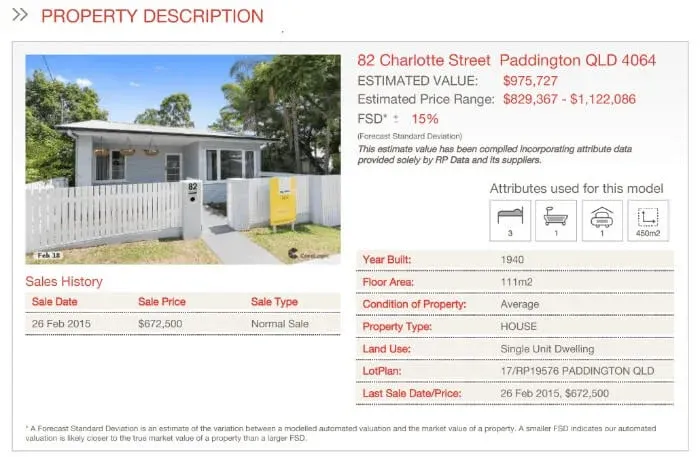
Mistake 5: Treating an online estimate as the value. Automated estimates are built from sales data, not an inspection. They can be well off for renovated homes or unusual blocks. Use one as a starting point, then test it against the sales.
Mistake 6: Forgetting the bank does its own valuation. Your lender orders its own valuation, and it generally lends against that figure or the price, whichever is lower. If the valuation comes in under your price, you'll need to cover the gap with cash. If you think it's wrong, there are ways to challenge it.
The cleanest way to avoid all 6 is to build your own number from the sales, then get the bank's view before you commit. Send us the property and we can run the numbers properly before you make an offer.