In our first chapter, we’re going to address one of the first and most important questions that goes through any first home buyer’s mind: What can I afford to pay for my first home?
You might have already spent some time trawling brokers and banks’ websites, and even played around with a few online calculators. But can you trust the results that they give you?
Buying your first home is one of the largest financial decisions of your life. When you’re borrowing hundreds of thousands of dollars from the bank, you want to make sure that you can afford it.
The last thing you would want to do is to overextend and get a loan that puts you in financial stress. Believe me, I know. I’ve been there.
Way back in 2009-2010 I was on my way to becoming a property mogul (in my own head). I had just bought my second property, a small unit on Newton Street in Alexandria which I was planning on renovating and flipping for a massive profit… so I thought.
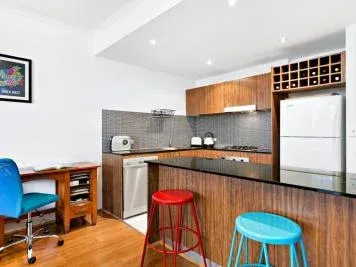
The unit I nearly lost from overextending myself.
It was around this time that the Reserve Bank of Australia (RBA) started increasing interest rates, and in the space of six months, the interest rate on my loan had risen by 1.5 percentage points.
My interest rate went from a barely manageable 6% to 7.50%. That may not seem like much, but the monthly interest on that loan went from $3,500, which I could barely afford, to $4,375. That was an extra $875 a month.
Being the gung-ho property investor that I was, I hadn’t left myself any room for increased payments. I literally had no money left when I was paying $3500 per month, so finding $875 was literally impossible and I was in deep, deep mortgage stress.
I managed to maintain my repayments for a short time (using borrowed money and a cash advance on my credit card) but I ultimately had to sell my second property quickly to prevent myself from getting into more and more debt.
I walked away having made no profit on the entire exercise and put myself through hell in the process. I even risked losing my home!
So, how exactly do you find out how much you can borrow? And once you know how much you can borrow, how much should you borrow?
It starts with understanding some of the basics of loans and finance.
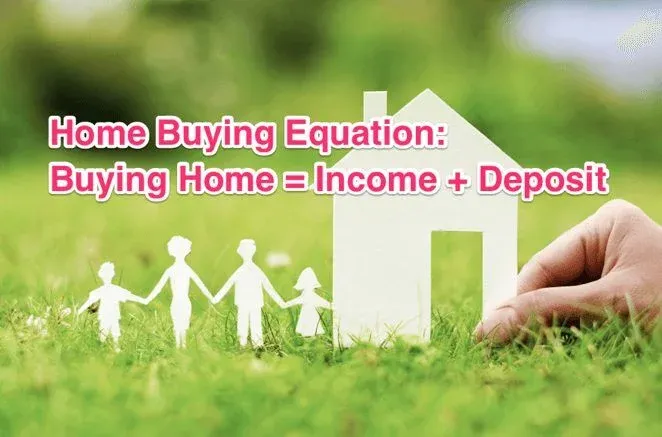
Your budget starts with your income and deposit, then depends on debts, living costs, dependants and the lender’s assessment.
The first step in understanding how much you can afford to borrow is to learn about borrowing power.
Borrowing power is an estimate of the maximum a lender may offer. It depends on income, debts, expenses, dependants and the lender’s assessment. The property and your deposit affect which loan you can use.
We’ll go further into the details of your borrowing power and how it relates to your home buying budget in more detail as we go along.
Set your own budget before you look at the lender’s maximum. Allow for buying costs and check that repayments would still fit if rates or expenses went up.
There are three more financial terms that you need to be across before we get into the details: LVR, LMI and Genuine Savings.